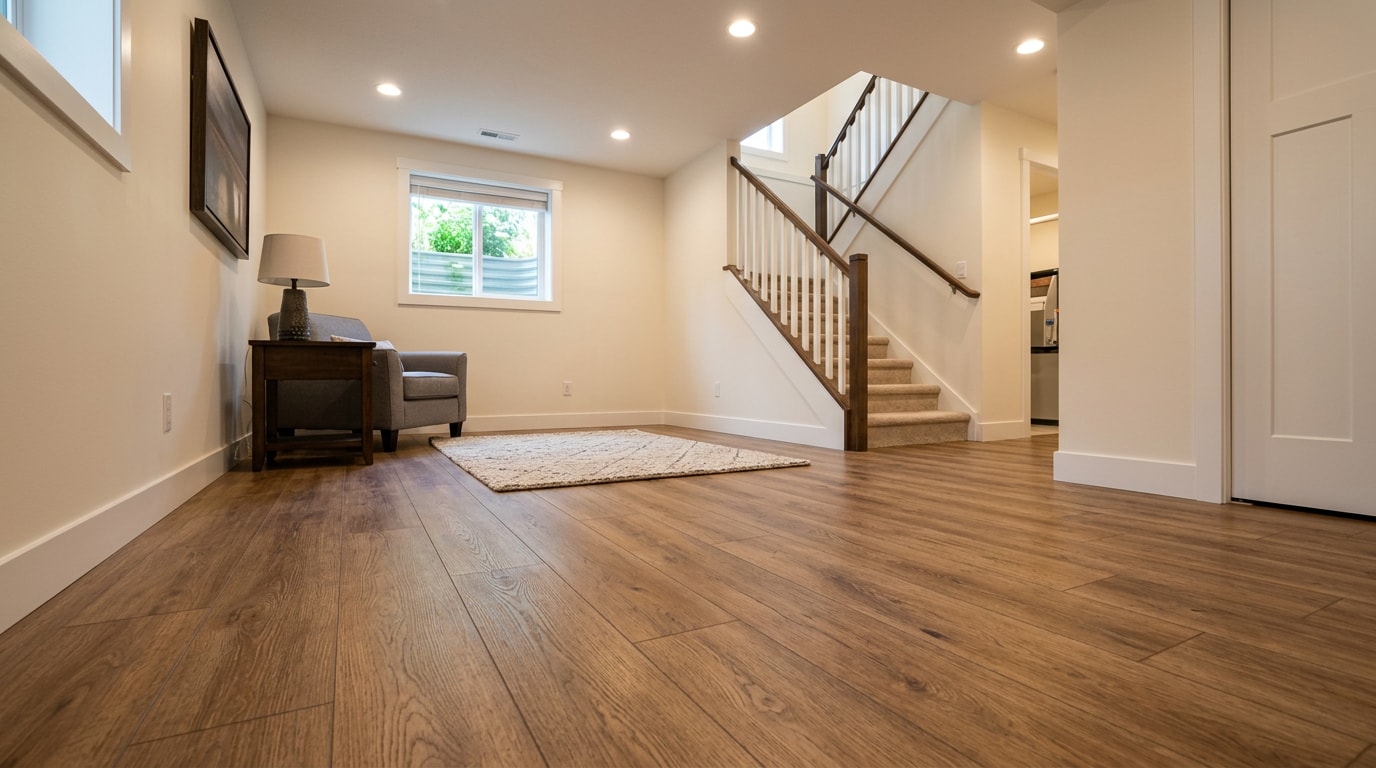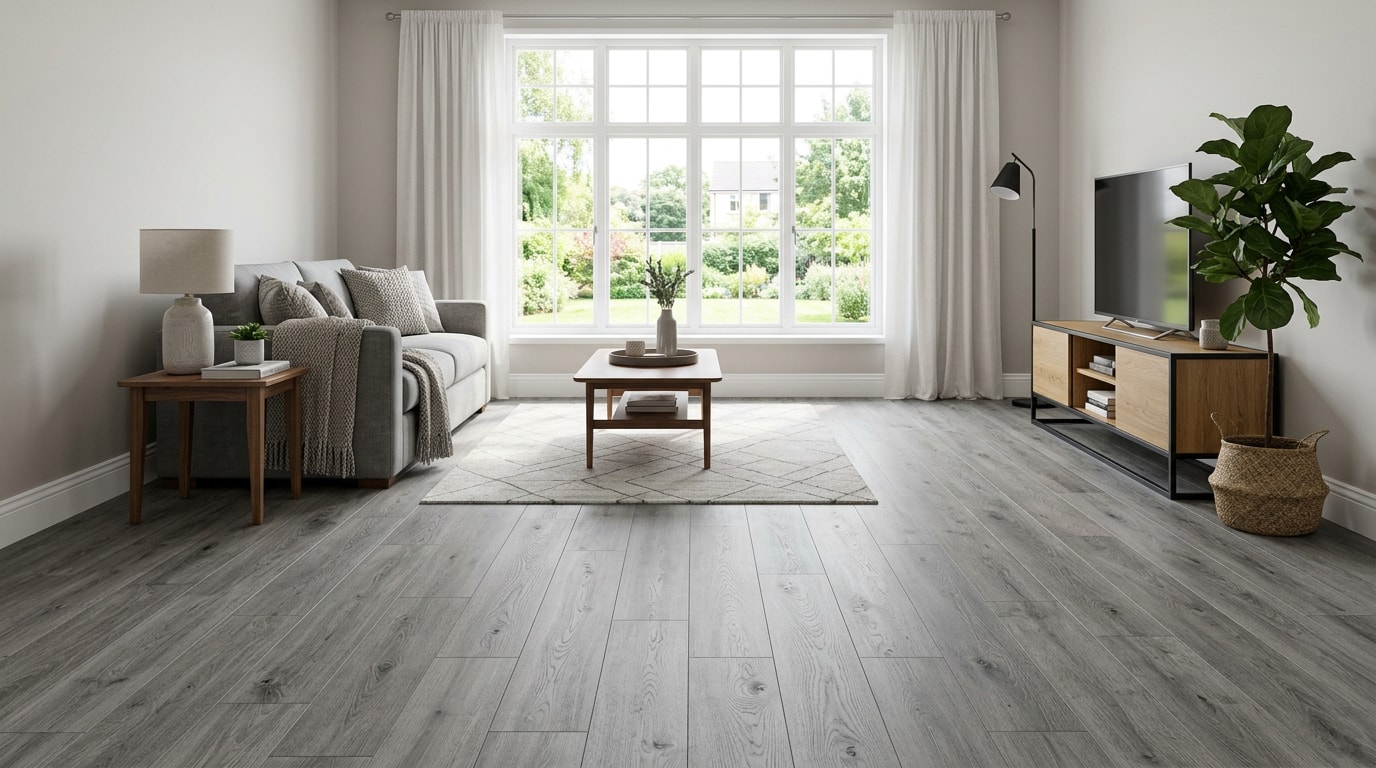
Do you need underlayment for vinyl flooring in DuPage County, IL? It depends on three things: your subfloor material, whether your planks already have a pad attached, and how your home handles Chicagoland's humidity swings. Some installations genuinely need it for moisture protection and sound control, while others don't need a single extra layer. Here's how to tell which situation you're in before you buy a single plank.
How Do I Know If I Need Underlayment for Vinyl Flooring?
Two questions settle this for almost every DuPage County home: what's under your vinyl right now, and what kind of plank are you installing on top of it?
When You Need Underlayment
You generally need underlayment when installing vinyl plank over concrete, bare wood subfloors, or uneven surfaces. Concrete has zero give, so underlayment adds cushioning and takes the edge off the cold. On an uneven subfloor, underlayment smooths out small dips and high spots so planks lock flat instead of creaking or lifting later.
Hardwood subfloors usually need it too, since boards can have slight seams or movement that underlayment helps bridge.
When You Can Skip It
Some vinyl planks already include an attached pad. If your vinyl plank already has a pad-attached underlayment, you don't need to add another. Doubling up can create a mushy feel underfoot or void the manufacturer's warranty.
Installing over an existing vinyl floor is another common skip-it scenario. If that floor is flat, intact, and well-bonded, it already does the job of an underlayment layer. The exception: a warped or damaged floor beneath it means you should remove it or add prep first, rather than stacking underlayment on top of a flawed surface.
What Is Underlayment for Vinyl Flooring?
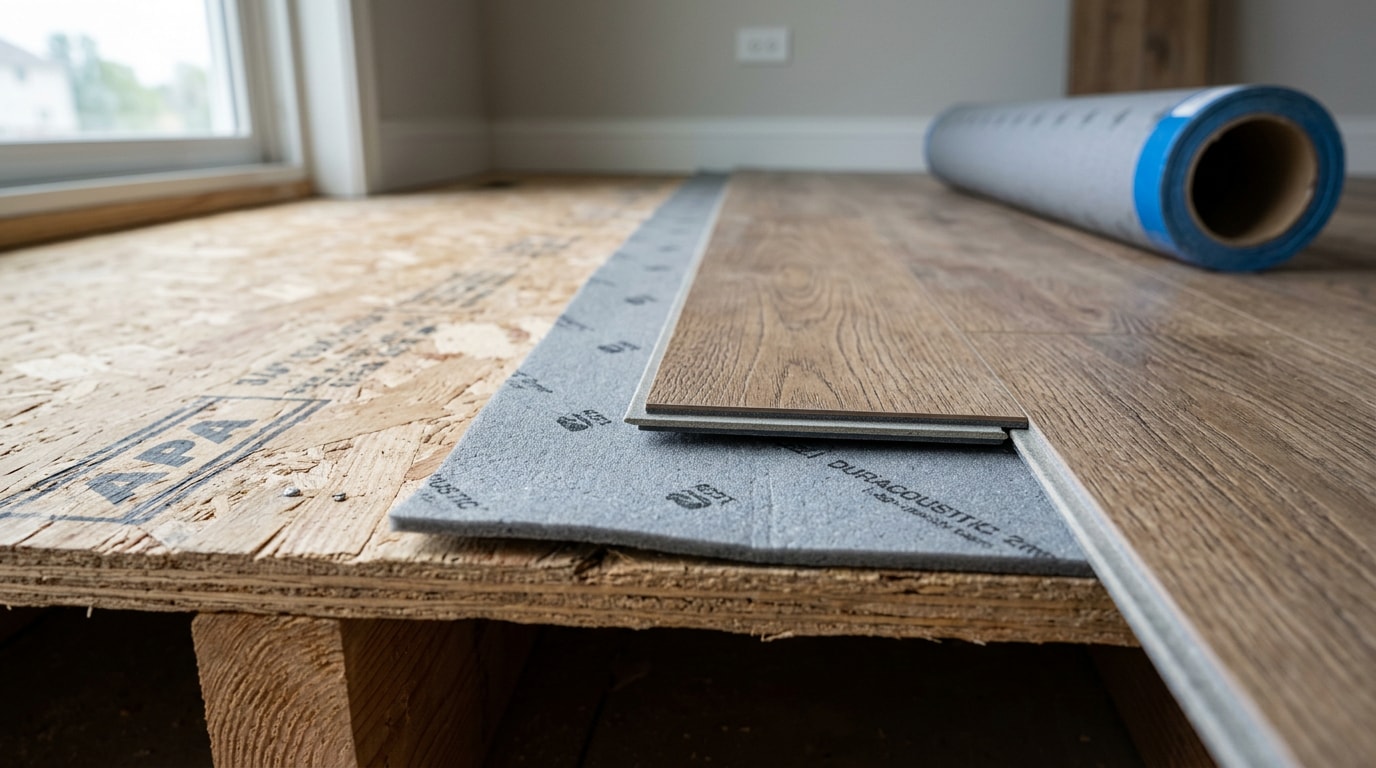
Underlayment is the thin layer installed between your subfloor and finished vinyl flooring, usually made from foam, cork, felt, or rubber. For a floating floor installation, it absorbs minor subfloor imperfections so planks lock together without rocking or gapping.
Underlayment made for luxury vinyl plank tends to be thinner and denser than laminate underlayment, since it needs to support thinner planks and their click-lock systems without compressing too much underfoot.
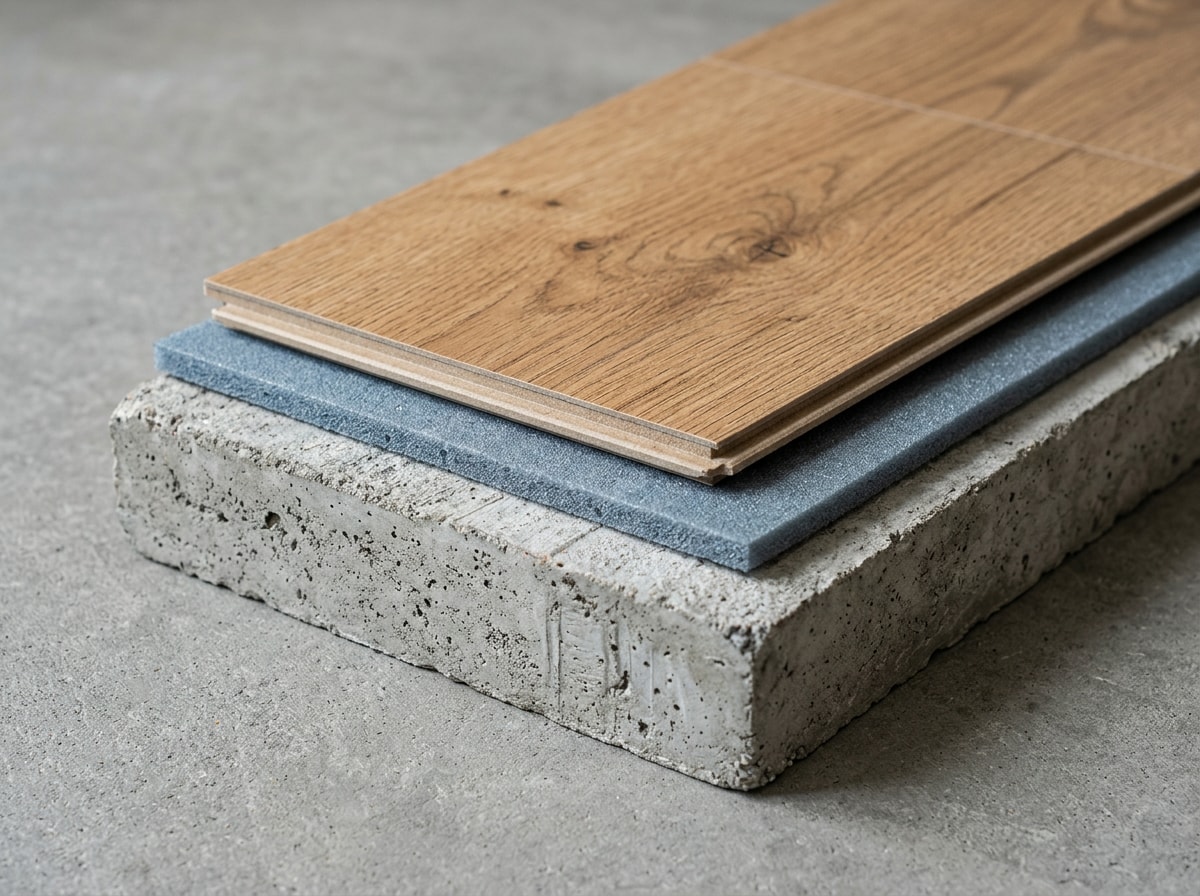
If you're working with a specific subfloor type, our Elgin, IL underlayment guide breaks down the plywood scenario in more detail than we'll cover here.
What Kind of Underlayment Do I Need by Subfloor Type?
The right underlayment changes based on what's beneath your vinyl. Concrete, plywood, and existing flooring all behave differently.
Concrete Subfloor
Moisture protection is the top priority here. Concrete slabs, especially in basements, can wick moisture upward even when they look and feel dry, and that vapor can damage planks marketed as waterproof, causing warping, buckling, or delamination over time.
Many manufacturers require a poly sheeting moisture barrier at least 6 mils thick laid directly over concrete before installation. Before skipping that step, a professional installer can run a relative humidity test following the quantitative determination of percent relative humidity in concrete slabs outlined in the ASTM F2170 standard to confirm the slab is actually dry enough to go without one.
Plywood Subfloor
There's no need for a moisture barrier underlayment on plywood. It's more important that the underlayment dampens sound and feels comfortable underfoot. A plywood subfloor shifts the underlayment's job from vapor protection to cushioning and noise control.
Existing Flooring (Tile, Vinyl, Hardwood)
Underlayment is generally needed if you're installing vinyl plank flooring over tile, existing vinyl flooring, or hardwood. It smooths out seams and grout lines so planks don't telegraph those imperfections. And again: you won't need an underlayment if your vinyl plank flooring already has underlayment installed, though you may still need a separate vapor barrier if that subfloor is concrete.
Benefits of Vinyl Plank Underlayment
Beyond bridging subfloor imperfections, underlayment adds real day-to-day benefits:
- Sound dampening between floors and rooms
- Moisture protection when paired with a vapor barrier
- A more stable, less hollow feel underfoot
- Minor leveling over small dips and high spots
Sound matters more than people expect in multi-level DuPage County homes, especially townhomes and split-levels. The International Building Code sets a minimum requirement of STC 50 and IIC 50 for airborne and impact sound performance in multifamily buildings , and the underlayment you choose plays a direct role in hitting that number. A bare subfloor install can fall well short of it, while an underlayment-backed install can be the difference between hearing every step from upstairs and barely noticing foot traffic at all.
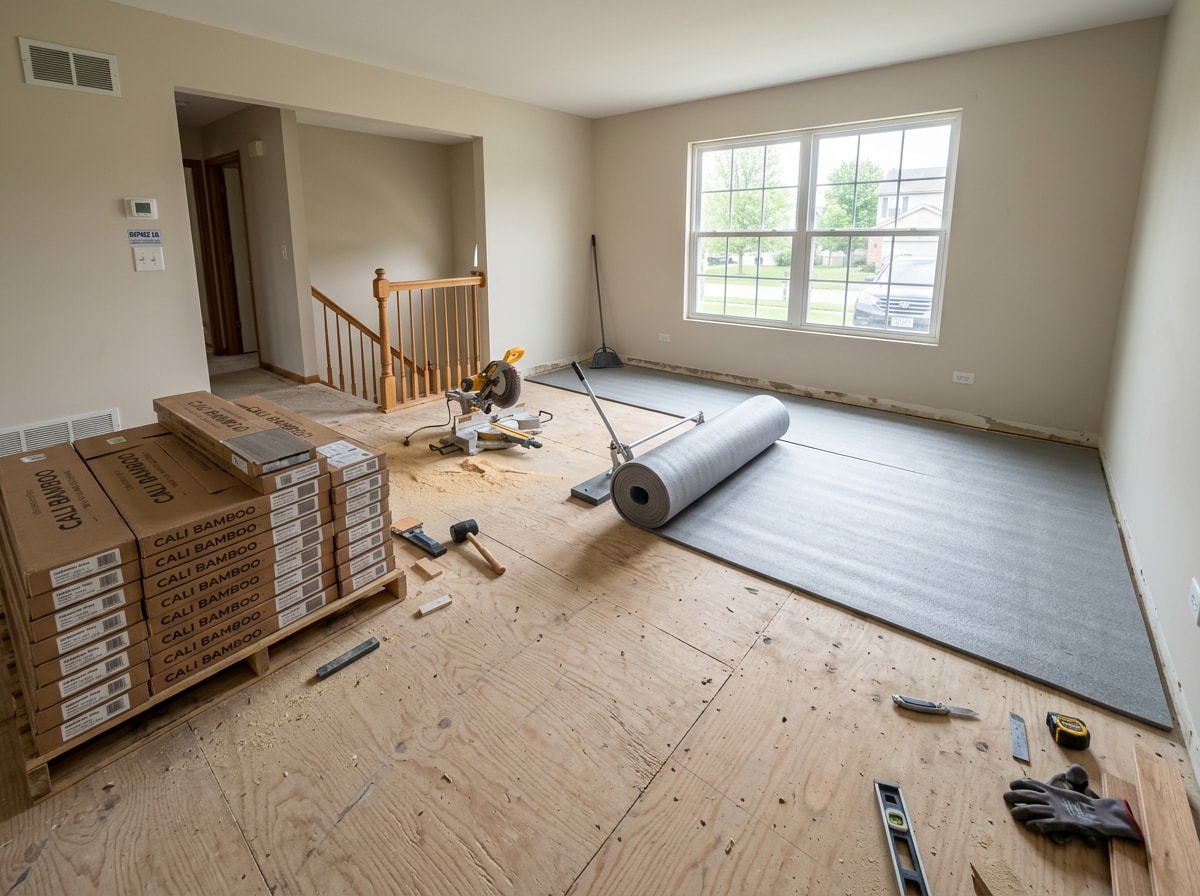
DuPage County Homes, Chicagoland Weather
Chicagoland's weather swings hard between seasons, and that matters for subfloor prep. Average temperatures range from around 25°F in January to roughly 75°F in July in the Chicago area, and precipitation is fairly consistent year-round rather than concentrated in one season. Dry winter air can shrink wood subfloors slightly, while humid summers push moisture levels up, both conditions that reveal weak prep work fast, especially along long plank runs and entryways.
Basements and lower levels in DuPage County often do better with a more rigid, moisture-stable underlayment build, since below-grade concrete holds onto humidity longer. Main living spaces can prioritize comfort and noise control instead. In my years installing flooring across DuPage County basements, the exterior wall is almost always the first spot to show trouble when a vapor barrier gets skipped on an unsealed slab. Newer townhomes in towns like Wheaton and Glen Ellyn, by contrast, often just need better sound control between floors rather than moisture protection.
Our DuPage County flooring team can evaluate your subfloor conditions before you commit to a product, whether your home is in Naperville, Winfield, Lisle, or anywhere else in the county. Get a free estimate and we'll walk your subfloor with you before you buy a single box of planks.
Material Quick Guide: LVP/LVT, SPC & WPC
Underlayment needs also depend on the vinyl core material itself.
| Core Material | Feel Underfoot | Best For | Underlayment Need |
|---|---|---|---|
| LVP/LVT | Flexible, standard | General living spaces | Often needed unless pad-attached |
| SPC (stone plastic composite) | Dense, rigid, stable | Basements, entries, heavy traffic | Minimal; core resists flexing |
| WPC (wood plastic composite) | Softer, warmer | Main living spaces, upper floors | Helpful for added sound absorption |
SPC is a strong fit for basements and high-traffic areas since the rigid core resists flexing on its own. WPC has a softer, slightly warmer feel with better natural sound absorption, often preferred for main living spaces and upper floors. If you're comparing cores for a specific room, our Batavia, IL SPC guide and Wheaton, IL WPC guide go deeper on each.
Whichever core you choose, pairing it with the right underlayment supports a cleaner finished feel and better long-term performance. Browse our luxury vinyl plank installation services to compare options, or visit our flooring installation and repair page for the full range of services we offer across DuPage County.
FAQ
Do I need underlayment for vinyl plank flooring with attached pad?
In most cases, no. Adding a second layer of underlayment under luxury vinyl plank flooring that already has an attached pad creates too much cushion. You may still need a separate vapor barrier over a concrete subfloor, especially below grade.
Does vinyl flooring need underlayment?
Not always. If your subfloor or existing vinyl floor is sturdy, flat, smooth, and dry, sheet vinyl or LVT can often be installed directly on top without any underlayment.
What is the best underlayment for vinyl plank flooring over concrete?
The best option typically pairs a 6-mil poly moisture barrier with a thin, dense foam underlayment rated for vinyl. Confirm the slab's moisture level first; see the Concrete Subfloor section above for testing details.
Do I need a moisture barrier on a plywood subfloor?
No. There's no need for a moisture barrier underlayment on plywood. Focus on cushioning and sound-deadening instead.
What thickness underlayment should I use for vinyl plank flooring?
Most vinyl-rated underlayment runs 1mm to 3mm thick. Thicker isn't always better. Going too thick can destabilize click-lock seams, so stick with what the plank manufacturer specifies.
Will adding underlayment void my vinyl flooring warranty?
It can. Installing the wrong underlayment, or doubling up on pad-attached planks, may void your manufacturer's warranty. When in doubt, check the installation instructions that came with your specific product.
---
About the Author: This guide was written by the flooring team at SC Floorsmith, a flooring installation company serving Naperville, Wheaton, Glen Ellyn, and the rest of DuPage County, IL. Our installers handle subfloor evaluations and vinyl plank installations on concrete, plywood, and existing flooring throughout Chicagoland. Questions about your specific subfloor? Contact us or browse recent projects for examples of our work.