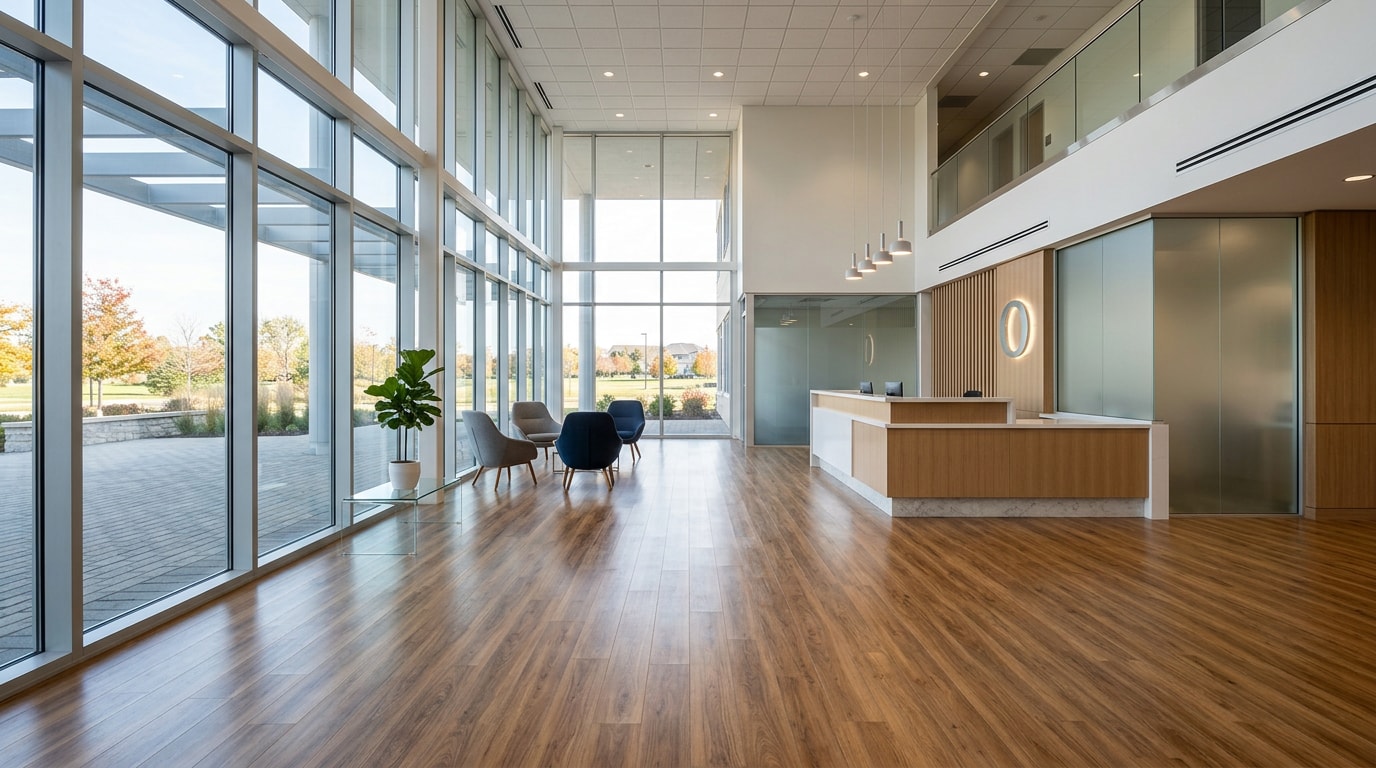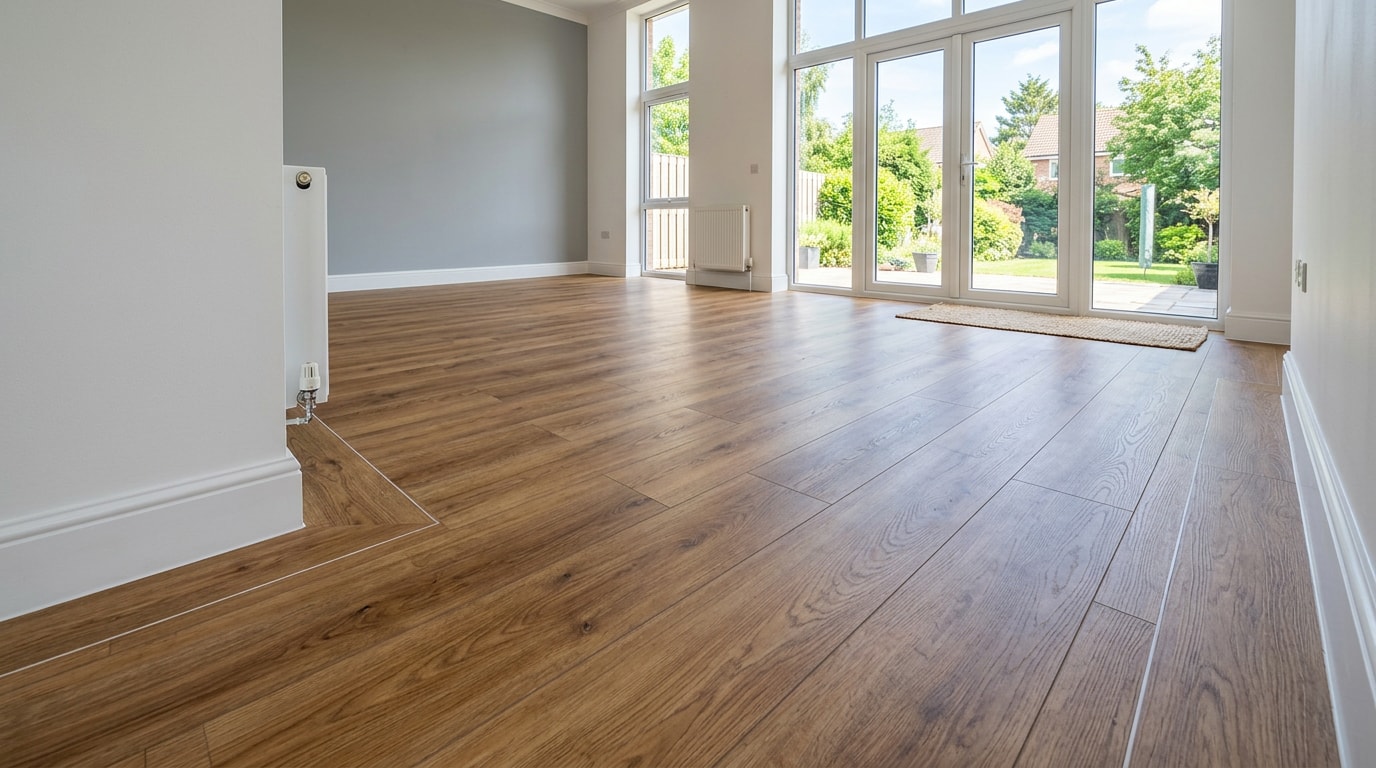
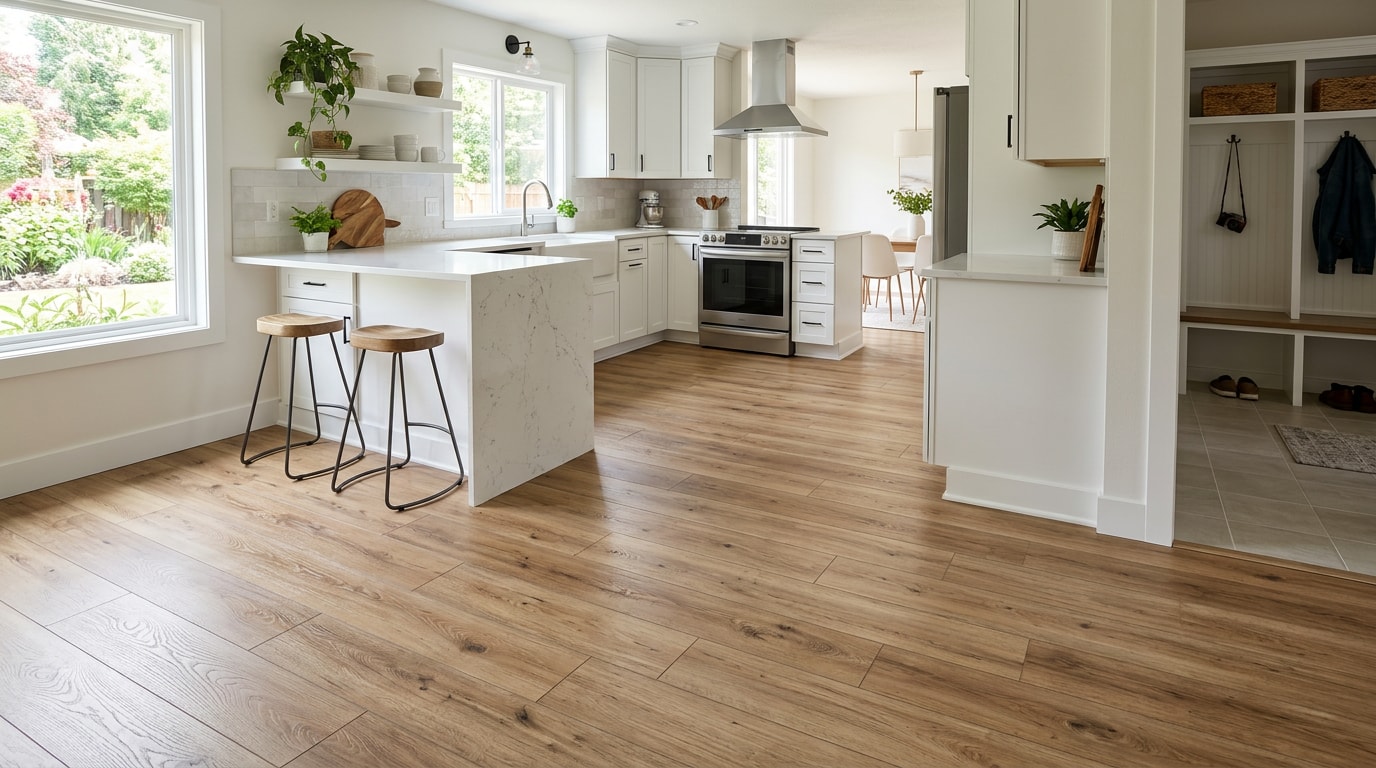
WPC flooring is a rigid-core, fully waterproof vinyl flooring built around a wood-plastic composite core, and it's become one of the most requested materials for Wheaton, IL kitchen and basement remodels. It costs more than basic vinyl but feels warmer and quieter underfoot than its stone-core cousin, SPC. Here's how it's built, how it compares, and whether it fits your DuPage County project.
Visit SCV Floorsmith Inc. to see our services and request a free estimate.
What Is WPC Flooring?
WPC stands for wood plastic composite, sometimes labeled wood polymer composite. It's a category of rigid-core luxury vinyl flooring, not a single branded product.
The core combines wood fiber or wood flour with thermoplastic resins and a foaming agent, which is what gives the plank its rigidity and water resistance. The core of WPC flooring consists of wood fibers or wood flour mixed with thermoplastic materials, creating a composite that offers exceptional stability and water resistance, and this wood plastic composite core provides a soft, warm feel underfoot that many homeowners prefer.
You'll often see WPC and its stone-core relative, SPC, grouped under the same umbrella terms in flooring catalogs. LVT and LVP are umbrella terms that describe the format and appearance of the tile or plank flooring rather than the internal construction, and both WPC and SPC products are technically LVT/LVP, depending on their design. That's why two "luxury vinyl" samples at the same store can feel completely different underfoot.
If you're weighing WPC for a remodel in Wheaton, the short version is this: it's a thicker, softer-underfoot alternative to standard vinyl plank, built to shrug off spills and hold up in rooms where hardwood and laminate struggle. Browse our luxury vinyl plank installation services to see styles suited to Chicago-area homes.
How Is WPC Flooring Constructed?
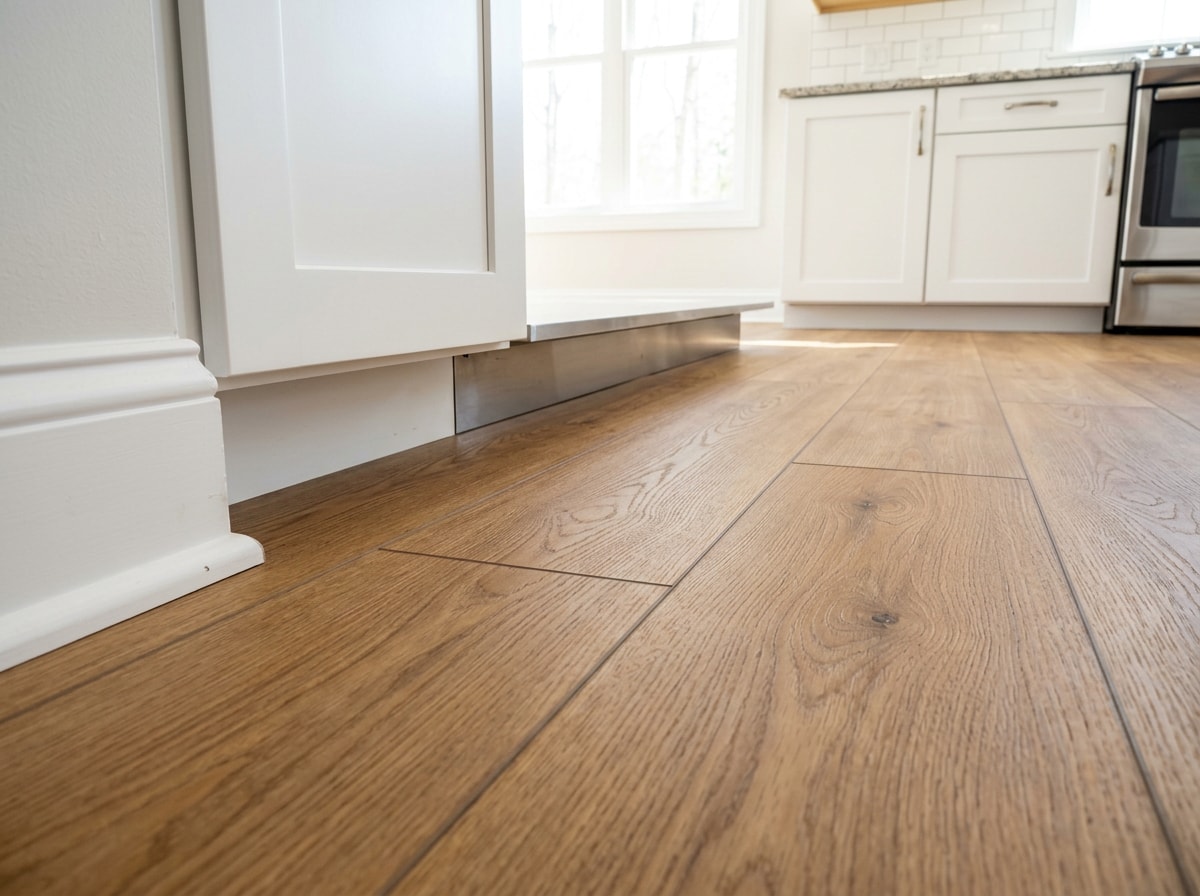
WPC flooring is built in layers: a clear wear layer on top, a printed design layer beneath it, a rigid WPC core in the middle, and often an attached underlayment on the bottom.
Wear layer. This clear top coating resists scratches and stains and determines how long the floor looks new. Thicker is generally better in busy households. One manufacturer's residential WPC line, for example, uses an embossed 20 mil urethane wear layer that offers superior durability , which is on the thicker end for this category.
Printed design layer. This is the vinyl sheet that creates the wood-look or stone-look finish you actually see.
WPC core. This is where the flooring earns its name. WPC is typically thicker than SPC, usually 6mm to 8mm or more, and feels closer to real hardwood when you walk on it. A thicker core doesn't just feel sturdier, it also smooths over minor subfloor imperfections that thinner vinyl products can't manage as well.
Backing and underlayment. The backing layer is the bottom-most part of WPC flooring, and its primary function is to stabilize the plank and ensure it lies flat against the subfloor, often including an attached underlayment made from cork or foam that offers additional sound dampening and a softer feel underfoot. Most WPC planks also use a click-lock edge system, letting planks snap together without glue or nails.
Construction quality isn't guesswork, either. Rigid-core vinyl flooring, including both WPC and SPC, is measured against a formal industry benchmark. ASTM F3261 is the industry standard specification for rigid core luxury vinyl flooring, covering critical performance criteria such as dimensional stability, thickness, locking strength, and overall durability. You can review the full ASTM F3261 specification if you want the technical detail behind those ratings.
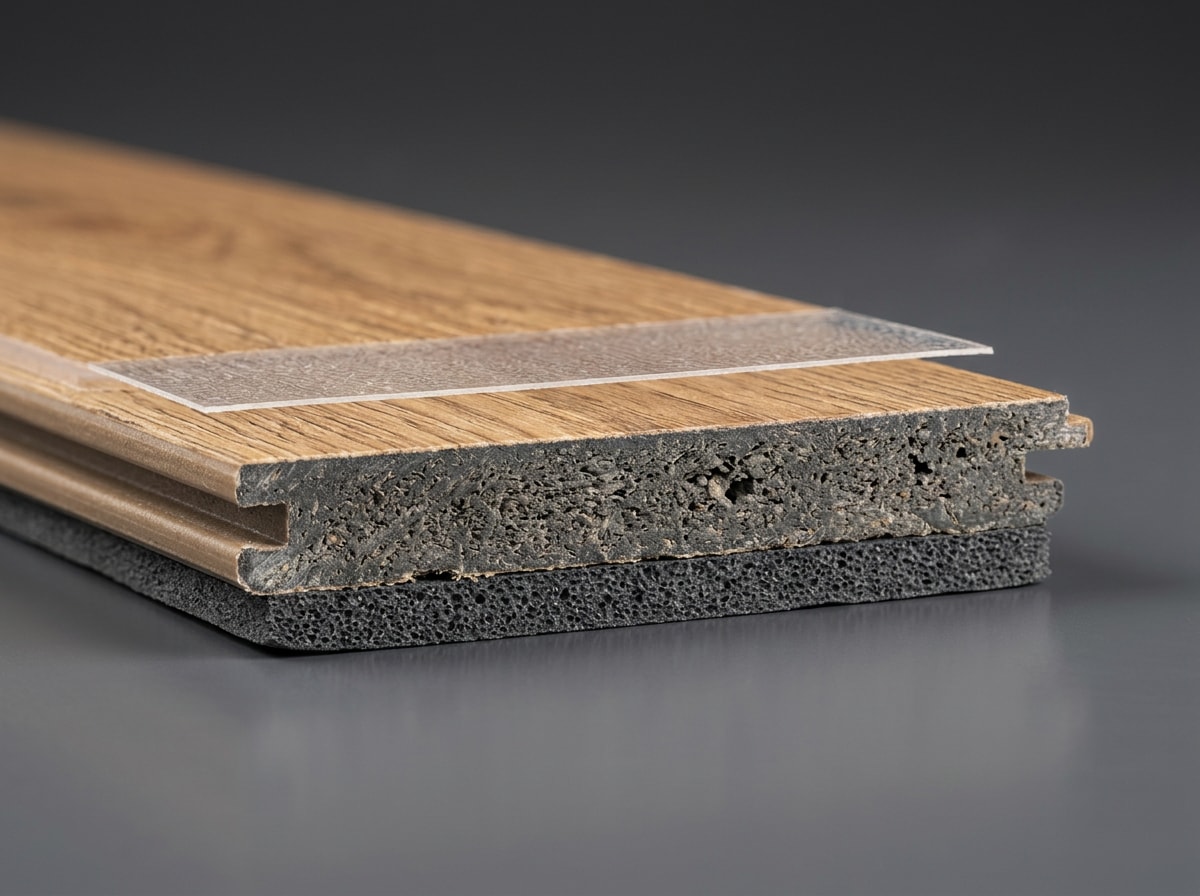
WPC vs. SPC: What's the Difference?
Both are rigid-core vinyl, but the core material changes how each floor feels and performs.
| Factor | WPC | SPC |
|---|---|---|
| Core material | Foamed wood fiber + thermoplastic | Limestone powder + PVC |
| Typical thickness | 6mm to 8mm or more | 4mm to 6mm |
| Feel underfoot | Softer, warmer | Harder, firmer |
| Sound absorption | Better | Less |
| Dent/impact resistance | Moderate | Higher |
| Best rooms | Living rooms, bedrooms | Kitchens, entryways, high-traffic commercial |
SPC flooring is significantly denser than WPC, making it more resistant to dents and heavy impacts, which makes SPC an ideal choice for high-traffic environments such as retail spaces, offices, and garages. WPC gives up a little of that dent resistance in exchange for comfort and quiet.
Neither option is universally better. If comfort and sound absorption matter more to your household, WPC is the stronger fit. For maximum durability in a high-traffic commercial space, SPC may edge ahead, and our commercial vinyl flooring installation team can help you weigh both for an office or retail buildout.
Benefits of WPC Flooring
Completely Waterproof
Standard vinyl and laminate fall short here. Laminate and hardwood floors are not waterproof, and even standard vinyl is only water-resistant, not waterproof, but with WPC vinyl flooring you get completely waterproof floors that can be installed in areas where these other flooring types should not be used, such as bathrooms, kitchens, laundry rooms, and basements.
If indoor air quality matters to your household, look for a FloorScore-certified product. FloorScore is the most recognized indoor air quality certification standard for hard surface flooring materials, adhesives, and underlayments. You can check a manufacturer's certification status directly through SCS Global Services.
Warm and Comfortable Underfoot
WPC products typically feature a thicker profile compared to SPC, giving them a more cushioned feel when walked upon, and the WPC core provides natural insulation properties, making WPC vinyl flooring a comfortable option in colder climates. For Wheaton homeowners dealing with cold Midwest winters, that added warmth can make a real difference in a kitchen where you're standing for long stretches.
WPC Flooring Drawbacks
No flooring is perfect. Because the WPC core is softer than SPC, it's a little more prone to compression. The WPC core doesn't offer the same level of rigidity as SPC, which could be a concern in areas with heavy foot traffic. Furniture legs without protective pads are the most common culprit we see on installed jobs.
WPC also costs more than basic vinyl. While WPC tends to be more expensive than other vinyl options, its comfort and acoustic benefits make it a popular flooring option for residential applications. For most households, that trade-off is worth it, but it's a fair consideration if budget or heavy furniture use is a priority.
On installation jobs around DuPage County, the callback we get most often isn't water damage, it's dents from unpadded furniture legs. Felt pads under every chair and table leg solve this before it starts.
How Long Do WPC Floors Last?
WPC floors can last 20 to 25 years or more with proper care and maintenance, and the overall thickness along with the thickness of the wear layer both contribute to a longer-lasting floor. Homes with pets, kids, or heavy daily traffic tend to land on the lower end of that range.
Many manufacturers back WPC products with lifetime residential warranties, though terms vary by brand. Check the manufacturer's warranty documentation before you commit to a product line, and factor in professional installation, since improper seams and transitions are the most common reason warranties get voided early.
Ideal Applications for WPC Flooring
WPC flooring works especially well in kitchens, bathrooms, and basements, where its waterproof core holds up to moisture and everyday spills. It's also a solid option for installing over existing sheet vinyl, cutting down on demolition work.
Beyond homes, WPC shows up in some light commercial spaces too. WPC flooring solutions are designed for residential and light commercial environments, offering enhanced comfort, sound insulation, and waterproof performance for everyday applications.
Here's where it tends to fit best:
- Kitchens and mudrooms (spill resistance)
- Finished basements (moisture and subfloor forgiveness)
- Bathrooms and laundry rooms (full waterproofing)
- Living rooms and bedrooms (comfort and sound absorption)
- Small retail or office spaces (easy maintenance)
If you're planning a project anywhere in the area, check our Wheaton, IL service area page or the broader DuPage County coverage page to confirm local installation support. For a deeper dive into how plank thickness affects performance, our vinyl flooring thickness guide for Glen Ellyn, IL breaks down mil ratings in more detail.
Ready to compare samples in person? Get a free estimate and we'll bring WPC and SPC samples to your home so you can feel the difference yourself before you buy.
FAQ
What does WPC stand for in flooring?
WPC stands for wood plastic composite, sometimes called wood polymer composite. It refers to the rigid, foamed core material inside the plank, not a brand name.
What are the disadvantages of a WPC floor?
WPC costs more than basic vinyl and has a softer core than SPC, making it somewhat more prone to denting under heavy furniture. It's still more durable than hardwood in wet areas, just with different trade-offs.
Which is better, WPC or SPC vinyl flooring?
It depends on your priorities. WPC wins on comfort, warmth, and sound absorption, while SPC wins on dent resistance and stability for high-traffic or commercial spaces.
Does WPC flooring scratch easily?
It depends mostly on wear layer thickness. A 20 mil wear layer resists scratching far better than a thinner 12 mil layer, so check that spec before buying.
Is WPC flooring waterproof?
Yes, the WPC core itself is fully waterproof. Proper installation at seams, edges, and transitions still matters to keep moisture from working its way underneath over time.
Is WPC flooring good for a basement?
Yes. Its waterproof core and subfloor-forgiving design make it one of the better options for below-grade spaces, where concrete subfloors are rarely perfectly flat.
How long does WPC flooring last?
Most WPC flooring lasts 20 to 25 years or more with proper care, though wear-layer thickness and daily foot traffic shift that range. Homes with pets or kids typically land on the lower end.
Looking for more flooring guidance in the area? Our commercial flooring guide for Barrington, IL covers similar material decisions for business owners. For homeowners ready to move forward, visit {{SITE_URL}}/ to explore our full range of installation services across DuPage and the Northwest suburbs.