Hiring the right basement flooring company in Plainfield, IL starts with understanding that below-grade concrete behaves nothing like the subfloor upstairs. Groundwater pressure, humidity swings, and Will County's freeze-thaw winters can turn the wrong material into a callback within a year. This guide breaks down the flooring types that actually hold up, real cost ranges, and the one pre-installation test most homeowners never hear about until something fails.
The Best Basement Flooring Options for Plainfield Homes
Basements sit below grade, which exposes them to groundwater pressure, higher humidity, and occasional seepage that upper-level rooms rarely deal with. A material that looks great in a living room upstairs can warp, buckle, or grow mold in a basement within a couple of seasons. Four options come up again and again in Plainfield homes, each with different tradeoffs around cost, water tolerance, and comfort underfoot.
Vinyl (LVP)
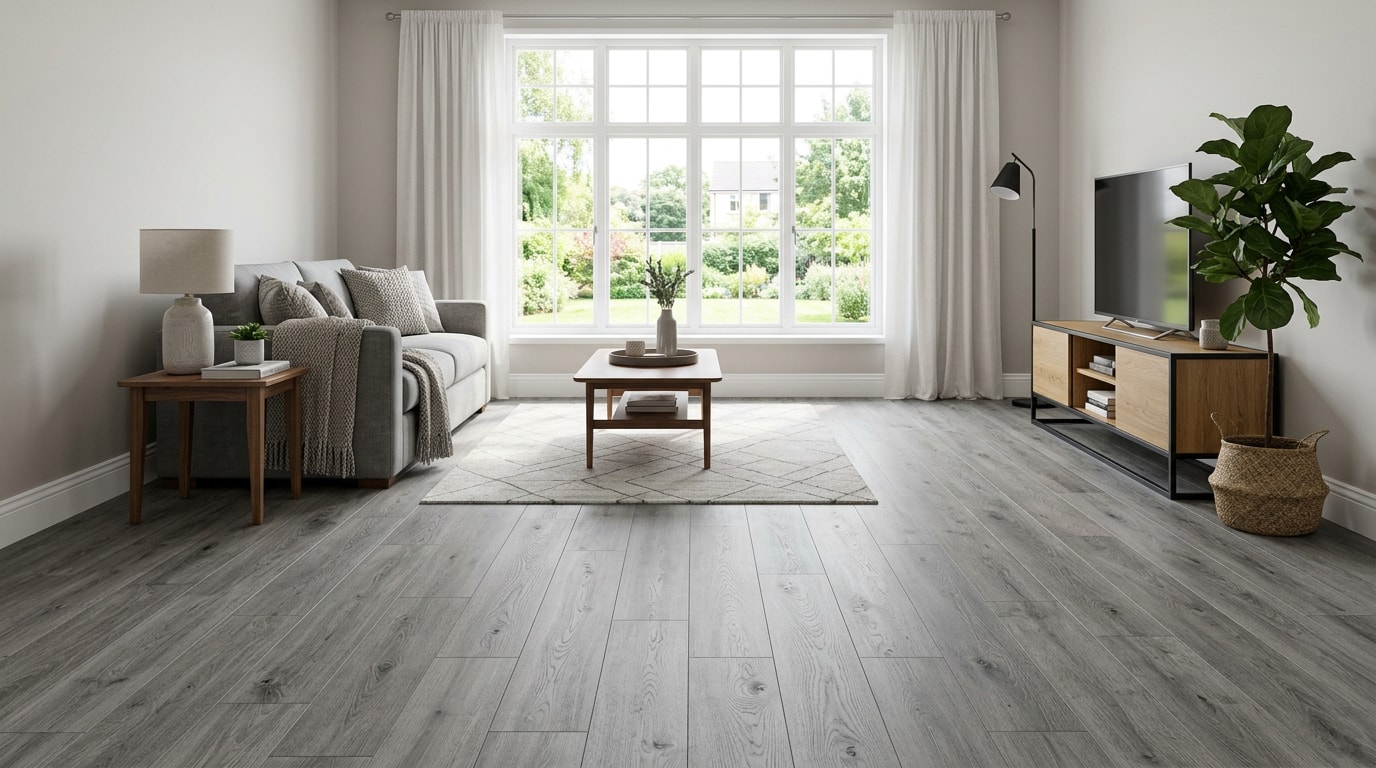
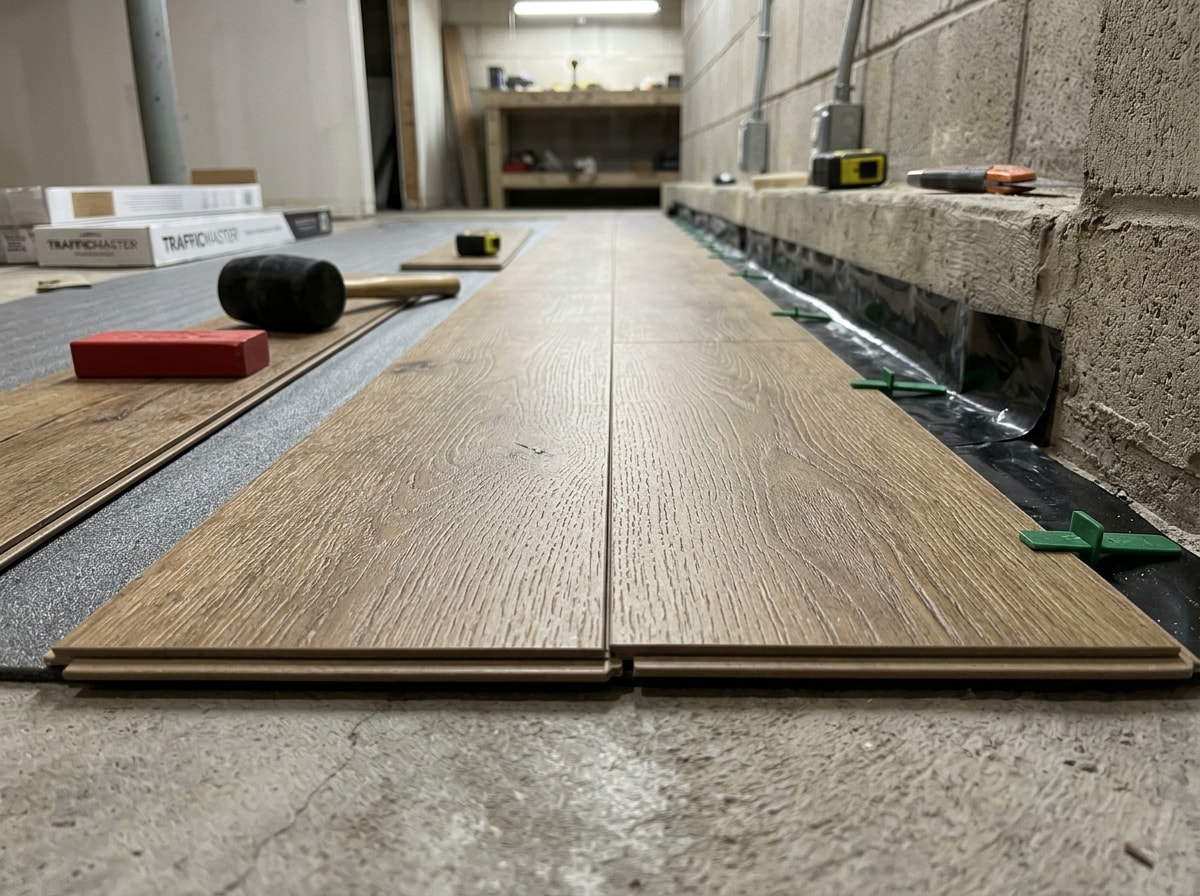
Luxury vinyl plank is one of the safest default choices for a basement floor. Made primarily from PVC, it resists water, shrugs off pets and heavy foot traffic, and comes in plank or tile formats that convincingly mimic wood or stone. It's also one of the more budget-friendly options once labor is factored in, which is why it's become the go-to for Plainfield rec rooms and basement home offices.
Tile
Ceramic and porcelain tile offer some of the best stain and water resistance available for a basement floor, though that performance comes with a higher price tag and a longer install timeline than vinyl. Because tile sits directly on cold concrete, most installers recommend a thermal break or subfloor system underneath so the finished floor doesn't feel like an icebox every January.
Laminate
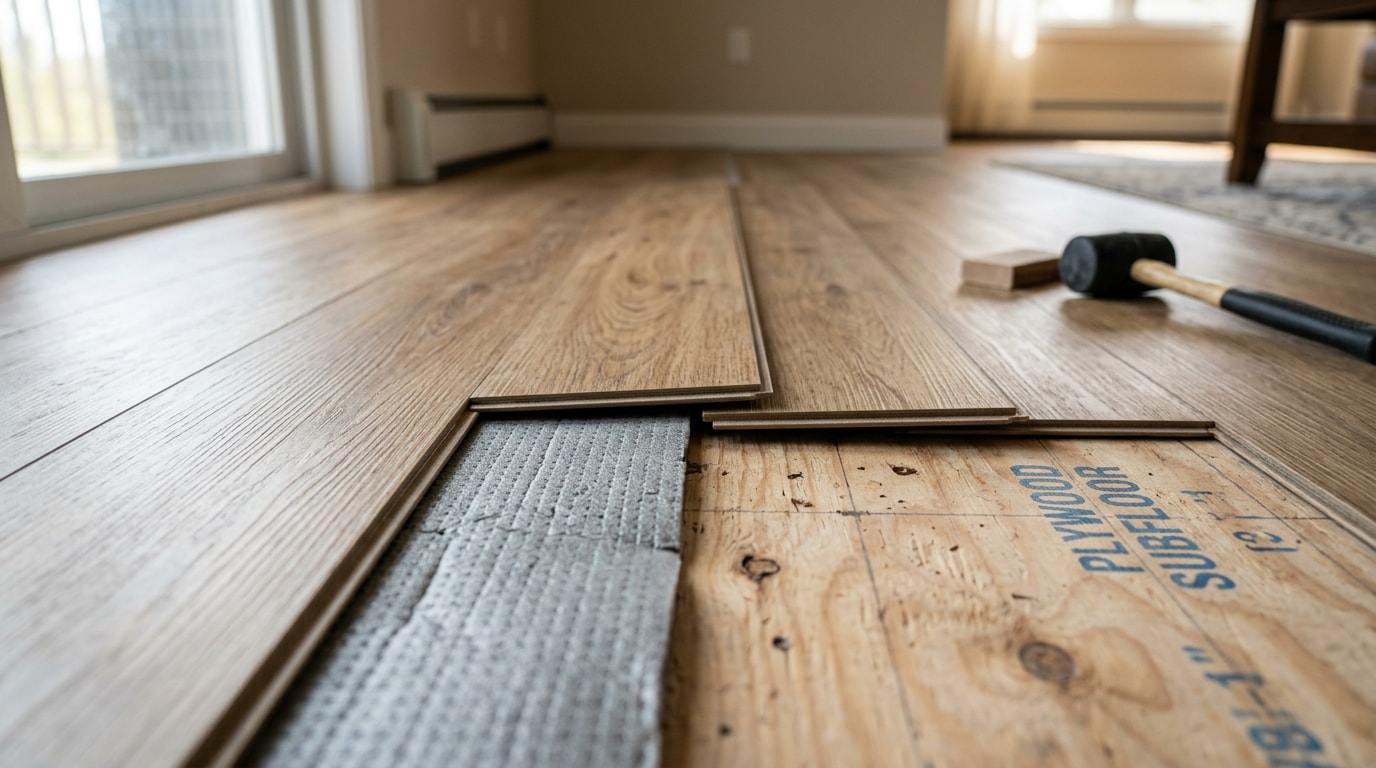
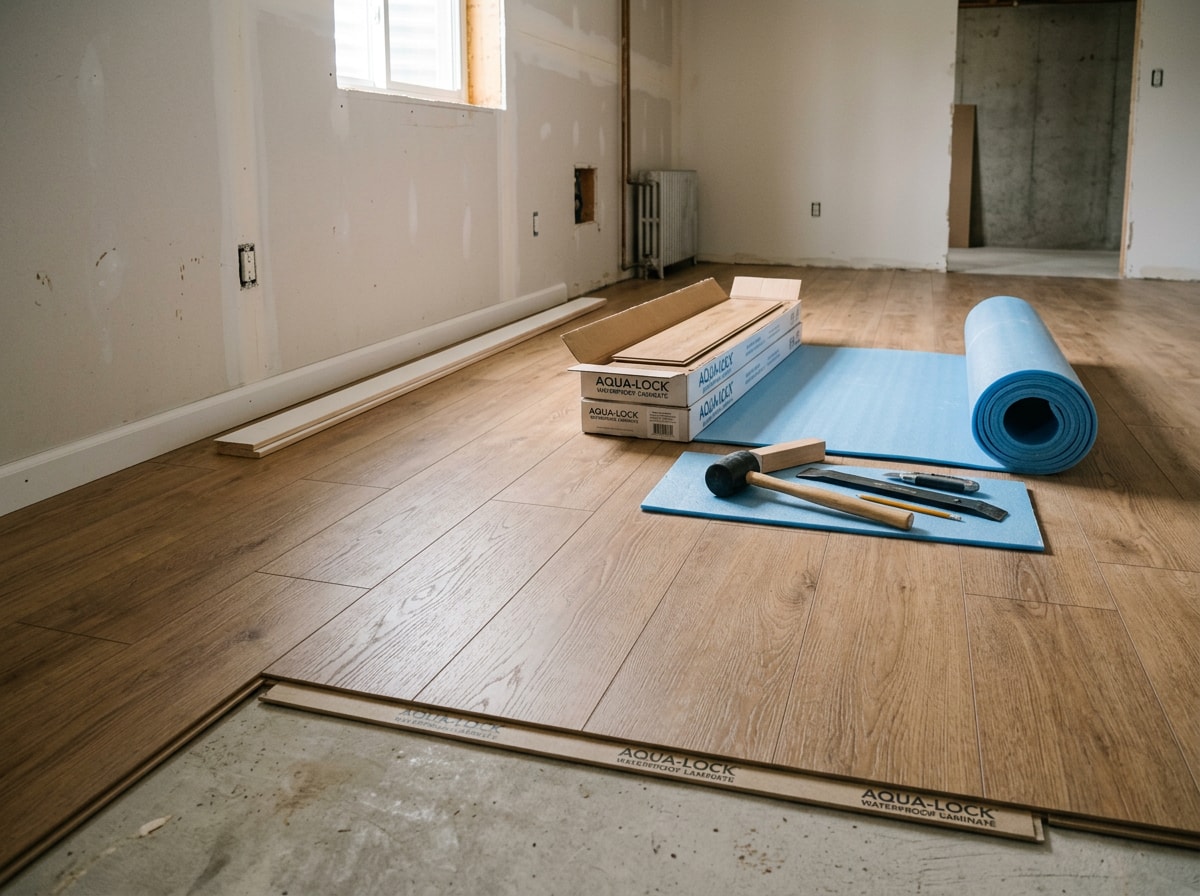
Laminate delivers a hardwood look without hardwood's moisture sensitivity, as long as you pick a water-resistant or fully waterproof product line rated for below-grade use. It installs quickly over a prepared subfloor and generally costs less than engineered wood, making it a reasonable middle ground between budget vinyl and premium tile.
Epoxy
Epoxy is a seamless, resin-based coating applied directly over concrete, and it's a strong fit for basements used as workshops, home gyms, or utility spaces rather than cozy living areas. It brings a durable, chemical-resistant surface, decorative color and flake options, slip-resistant texture add-ins, and a monolithic finish with no seams for moisture to creep into. It can also be renewed years later by sanding and recoating instead of a full tear-out.
Here's how the four stack up side by side:
| Material | Best For | Water Tolerance | Comfort Underfoot |
|---|---|---|---|
| Vinyl Plank (LVP) | Living rooms, home offices, rec rooms | Excellent | Warm, soft |
| Tile | Bathrooms, laundry areas, high-moisture zones | Best available | Cold, hard |
| Laminate | Family rooms wanting a wood look | Good (waterproof lines only) | Moderate |
| Epoxy | Workshops, gyms, utility rooms | Excellent | Hard, slip-resistant with additives |
How Much Does Basement Flooring Cost in Illinois?
Flooring installation across the Chicago metro area, which includes Plainfield, costs an average of $10 to $18 per square foot, so the larger the project, the higher the installation cost will be . That's a whole-house baseline, though; basement-specific materials usually land lower on that range because vinyl, laminate, and epoxy are inherently cheaper to install than hardwood.
| Material | Installed Cost per Sq. Ft. |
|---|---|
| Laminate |
roughly $2 to $6 per square
| foot |
|---|
| Vinyl Plank (LVP) |
$4 to $10 per square foot, including both material and labor
| Epoxy Coating |
about $3 to $12 per square foot installed, depending on prep work and the number of coats
| Ceramic/Porcelain Tile |
$8 to $15 per square foot for ceramic and $9 to $15 per square foot for porcelain
|
These figures cover flooring only, not a full basement remodel with framing, drywall, and electrical. Get a free estimate for a number specific to your square footage and material choice.
Why Moisture Testing Matters Before Any Basement Floor Goes Down
This is the step most basement flooring quotes skip, and it's the single biggest reason coatings and glue-down floors fail early. Before any vinyl, tile, or epoxy goes over a basement slab, a qualified crew should test the concrete's moisture condition rather than guess at it.
Excessive moisture in floor slabs after floor covering has been installed can cause floor covering system failures such as debonding, peaking and deterioration of finish flooring and coatings, and manufacturers of such systems generally require moisture testing before installation on concrete . The industry-standard method, in-situ relative humidity testing, follows ASTM F2170. That standard calls for three relative humidity sensors for the first 1,000 square feet, plus one more for each additional 1,000 square feet , not a single surface swipe with a handheld meter.
Why it matters for Plainfield specifically: water can enter a home by leaking in from outside or by seeping through basement floors , according to the EPA's guidance on mold and moisture control. Will County's clay-heavy soil and seasonal water table swings make that seepage risk higher than it is in homes built on sandier ground further south.
In our own installs across Will and DuPage County basements, skipped moisture testing is the single most common reason we get called back to a job someone else finished. A slab that looks and feels dry can still be transmitting enough vapor to lift vinyl seams or blister an epoxy coat within a year. Vinyl and epoxy generally tolerate humidity swings best of the four materials, while tile and laminate need a working vapor barrier underneath to perform long term.
Basement Flooring Services We Offer
A basement flooring company in Plainfield, IL should cover more than a single install type. Look for a contractor who handles the full scope, since basements often need more than a simple material swap:
- Basement flooring installation (vinyl, tile, laminate, or epoxy)
- Basement floor repair and restoration
- Basement floor leveling and resurfacing
- Basement floor coating and sealing
- Ongoing maintenance and upkeep guidance
Having one company handle installation through repair and sealing means fewer handoffs and one point of accountability if moisture issues show up later. Browse our flooring installation and repair services to see specific material options, including luxury vinyl plank installation, carpet installation, and hardwood laminate flooring.
If you're comparing vinyl types for the basement specifically, our SPC vinyl flooring guide breaks down rigid-core options that hold up particularly well over concrete.
Why Finish Your Plainfield Basement
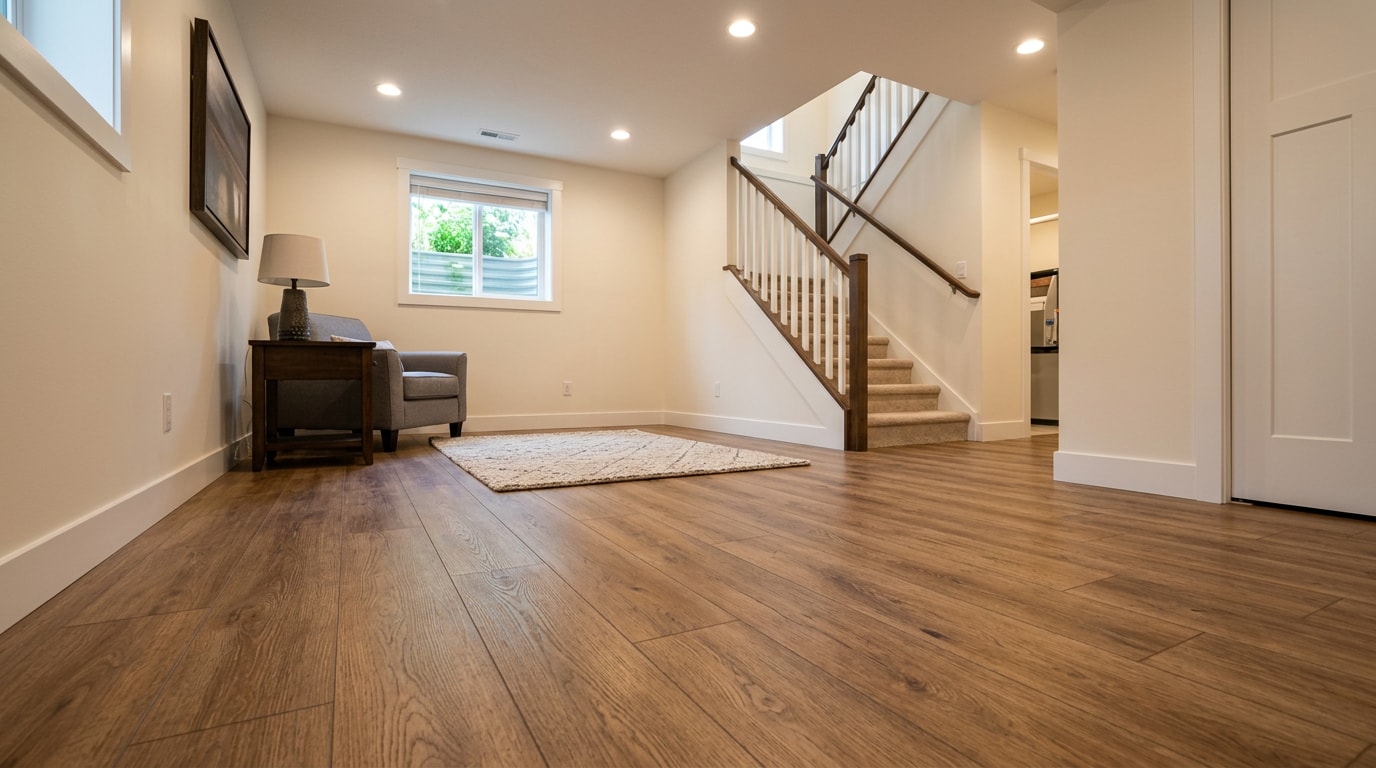
An unfinished basement is lost square footage sitting under your house. Finishing it with the right flooring system turns storage space into usable living area and helps protect the home from moisture-related damage over time.
On resale value specifically, don't trust outdated numbers still floating around online. The 2025 Cost vs Value Report put the national average basement remodel job cost at $52,012, with a resale value of $36,905, for roughly 71 percent cost recouped . That's a useful benchmark before you accept any contractor's bid, and it comes from the Journal of Light Construction's annual Cost vs Value Report, the most cited source in the remodeling industry for this kind of data.
Beyond resale, three reasons consistently come up with Plainfield homeowners:
- Moisture and mold prevention. A properly sealed, finished basement is far less hospitable to the conditions that cause long-term structural issues.
- Energy savings. Addressing air leaks and adding insulation during a remodel can lower heating and cooling costs.
- Affordable added living space. Finishing existing square footage costs far less than building an above-grade addition.
We proudly serve homeowners in Plainfield and nearby Bolingbrook. Take a look at our recent projects to see finished basement work in the area.
Advantages of a Professional Basement Flooring System
Standard above-grade flooring materials aren't engineered for below-grade conditions. A professional basement flooring system uses mold-resistant backing, water-resistant cores, and installation methods built to handle slab moisture, humidity swings, and the occasional minor seepage event.
This is why the material choices above matter so much. Vinyl and epoxy generally pair best with a fully moisture-managed basement, while tile and laminate perform best when combined with proper subfloor prep and a working vapor barrier. Getting the system right the first time avoids a costly tear-out later. Visit our homepage to see the full range of flooring and cabinetry work we handle, or get a free estimate to talk through which system fits your space.
FAQ
What is the best flooring for a basement?
Waterproof vinyl plank is generally the best all-around choice, balancing water resistance, comfort, and cost. Tile is the top pick when maximum water resistance is the priority. Epoxy suits garages, gyms, and utility-style basement spaces better than living areas.
How much does it cost to finish a basement floor in Illinois?
Budget roughly $2 to $6 per square foot for laminate, $4 to $10 for vinyl plank, $3 to $12 for epoxy, and $8 to $15 for ceramic or porcelain tile, installed. This covers flooring only, not a full basement remodel with framing and drywall.
What is the most waterproof basement flooring?
Porcelain and ceramic tile, along with rigid-core waterproof vinyl plank, are the most genuinely waterproof categories. "Waterproof" means the material can handle standing water without damage; "water-resistant" only tolerates occasional moisture exposure, not standing water.
Do I need a moisture barrier under basement flooring?
For tile and laminate, yes, in nearly every case. Vinyl plank with an attached pad sometimes builds in enough protection on its own, but a slab moisture test should confirm that before skipping a separate barrier.
Can you install hardwood flooring in a basement?
Solid hardwood is not recommended below grade; it expands, contracts, and cups with humidity changes no sealant can fully stop. Engineered hardwood with a moisture-resistant core can work in a dry, well-ventilated basement, but vinyl or laminate remains the safer bet for most Plainfield homes.
What basement flooring has the best ROI?
Vinyl and tile tend to offer the strongest return among basement flooring materials because they hold up over time and appeal broadly to future buyers.
About the Author
This guide was written with input from Nick Patel, owner and founder of SCV Floorsmith Inc. Nick holds a bachelor's degree in Operations Management and has been directly involved in the sales and installation of thousands of flooring projects since founding the company in 2014. Questions about a specific Plainfield basement? Contact our team for a free, no-pressure estimate.