SPC vinyl flooring is a rigid-core luxury vinyl plank built from a dense limestone-and-polymer core, a printed design layer, and a protective wear layer. It's 100% waterproof, resists dents better than standard vinyl, and installs with a simple click-lock system. If you're comparing it to other options for a Batavia, IL home, here's exactly how it's built, what it costs installed, and where it performs best.
What Does SPC Stand For?
SPC stands for Stone Polymer Composite, though it's used interchangeably with stone plastic composite . It's a rigid core luxury vinyl plank (LVP) that combines limestone, polyvinyl, and stabilizers into a dense, waterproof, and dent-resistant core.
That mineral-heavy core is what separates SPC from older, softer vinyl products. It doesn't flex much underfoot, which is part of why it holds up well under heavy furniture and daily foot traffic. Owing to the limestone core, SPC floors are durable, with typical warranty periods running 25 years or so.
What's Inside SPC Flooring? (Layers Explained)
SPC flooring is built in layers, and each one does a specific job. The wear layer is a tough, transparent top layer that protects the printed design layer, which uses high-definition printing for realistic wood or stone looks, sitting above the SPC core made from a limestone-based mixture that gives the plank its rigidity and stability.
Residential-grade wear layers typically run 12 to 20 mils, while commercial-grade products used in retail or office spaces range from 20 to 28 mils. For a homeowner, that mil thickness translates directly into real-world performance. A 12-mil wear layer is fine for a guest bedroom, but a busy kitchen or mudroom benefits from something closer to 20 mils.
The stone-plastic core contains no organic material, so it can't swell, warp, or delaminate from moisture exposure, which makes SPC a forgiving choice for wet rooms and below-grade spaces. Most products finish with a pre-attached underlayment for cushioning and sound dampening, plus a click-lock edge profile that lets planks snap together without glue or nails.
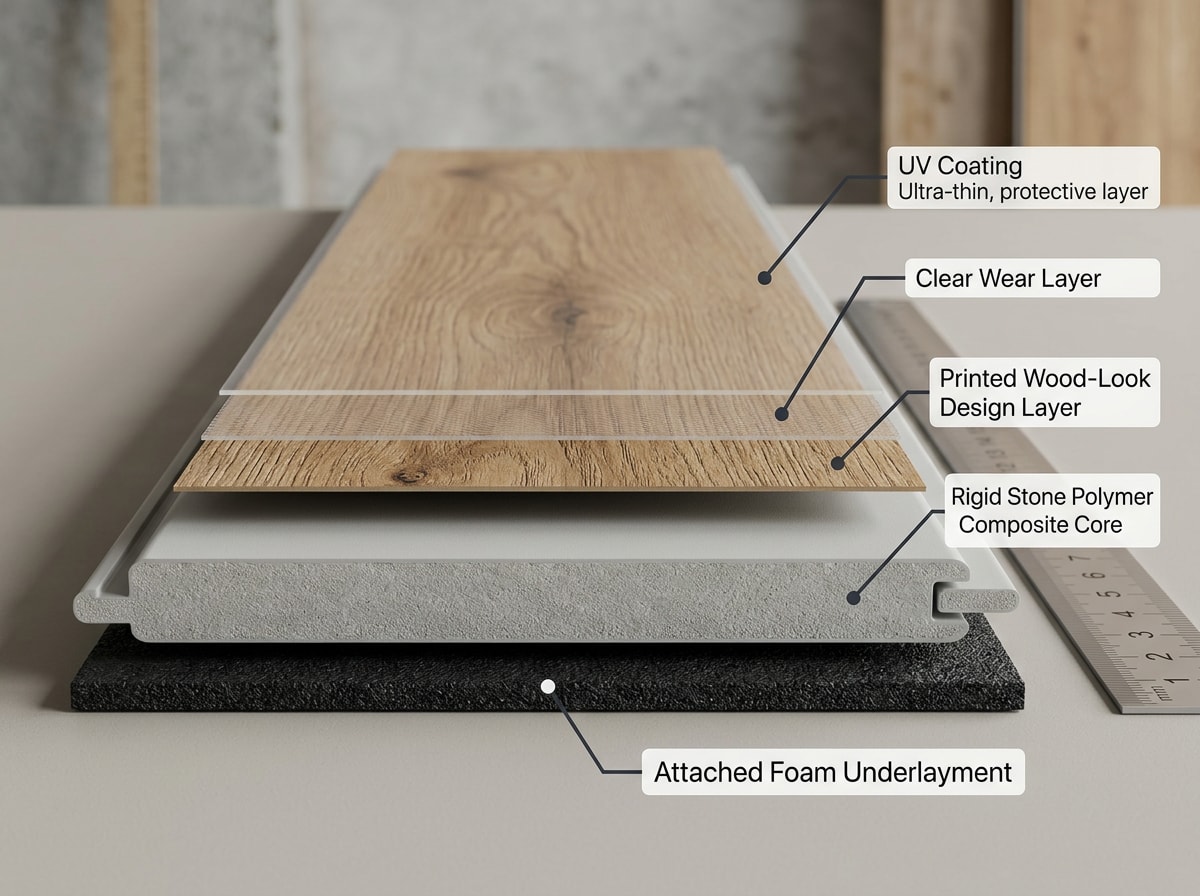
The construction of these layers isn't arbitrary. Resilient flooring products are tested against specifications like ASTM's resilient floor covering standards, which help determine abrasion, puncture, and impact resistance, flexibility, and thickness for products including vinyl composition tile and sheet vinyl . You can review the published resilient floor covering standards if you want the technical detail behind those mil ratings.
SPC vs. WPC vs. LVP vs. Laminate
Choosing between rigid-core vinyl types gets confusing fast since marketing terms overlap. Here's how the four most common options compare for a Fox Valley home.
| Feature | SPC | WPC | Traditional LVP | Laminate |
|---|---|---|---|---|
| Core material | Limestone + polymer | Wood pulp + polymer (foamed) | Flexible vinyl | Compressed wood fiber (HDF) |
| Waterproof rating | 100% waterproof | 100% waterproof | Water-resistant, not fully waterproof | Not waterproof |
| Typical thickness | 4-8mm | 6-8mm | 2-5mm | 6-12mm |
| Dent resistance | Excellent | Good | Fair | Fair to good |
| Temperature stability | Excellent | Good | Fair | Poor in humidity |
| Comfort underfoot | Firm | Softer, slightly cushioned | Soft, flexible | Firm |
| Installation method | Click-lock floating | Click-lock floating | Glue-down or peel-and-stick | Click-lock floating |
| Best fit for Batavia homes | Basements, entryways, humidity swings | Above-grade living rooms | Low-traffic rooms on a budget | Above-grade rooms only |
If WPC's softer feel interests you more than SPC's rigidity, our guide on what WPC flooring is breaks down that option in detail.
For homes around Batavia, where basements and below-grade spaces are common and humidity shifts between a muggy summer and a dry heated winter, SPC's dimensional stability matters more than it would in a climate-controlled condo elsewhere. Our installers see this directly: planks that sat tight through a Kane County winter in January often keep those same seams tight after August humidity, while a wood-fiber product in the same room can telegraph gaps.
Pros and Cons of SPC Flooring
Pros:
- 100% waterproof, not just water-resistant, making it a safe bet for kitchens, bathrooms, and basements where spills happen.
- Won't expand, contract, or warp with temperature and moisture changes the way laminate or engineered wood can.
- More impact-resistant than softer vinyl thanks to its dense core, and generally less expensive than WPC.
- Click-lock floating installation keeps labor costs down and is realistic for a motivated DIYer.
Cons:
- Feels firmer and colder underfoot than carpet, cork, or WPC, worth considering for bedrooms.
- Can't be sanded or refinished once scratched; damaged planks need replacement.
- Needs a reasonably flat subfloor, since rigid planks won't flex to hide dips the way softer vinyl can.
SPC Flooring Cost in the Fox Valley Area
SPC sits in a middle price tier: more than basic LVP, often less than WPC, and generally cheaper than hardwood or stone tile over time.
A typical residential SPC installation runs roughly $3 to $9 per square foot fully installed, covering materials, underlayment, and labor. For a standard 500-square-foot living room, that works out to about $1,500 to $4,500 total, with the final number depending heavily on the brand, wear layer thickness, and how much subfloor prep your space needs.
Material and labor costs shift by season, and Fox Valley-area contractors are no exception. Rather than relying on an old estimate, it's worth getting a current quote specific to your space. Request a free flooring estimate and a local pro can walk you through the real numbers for your project.
How SPC Flooring Is Installed
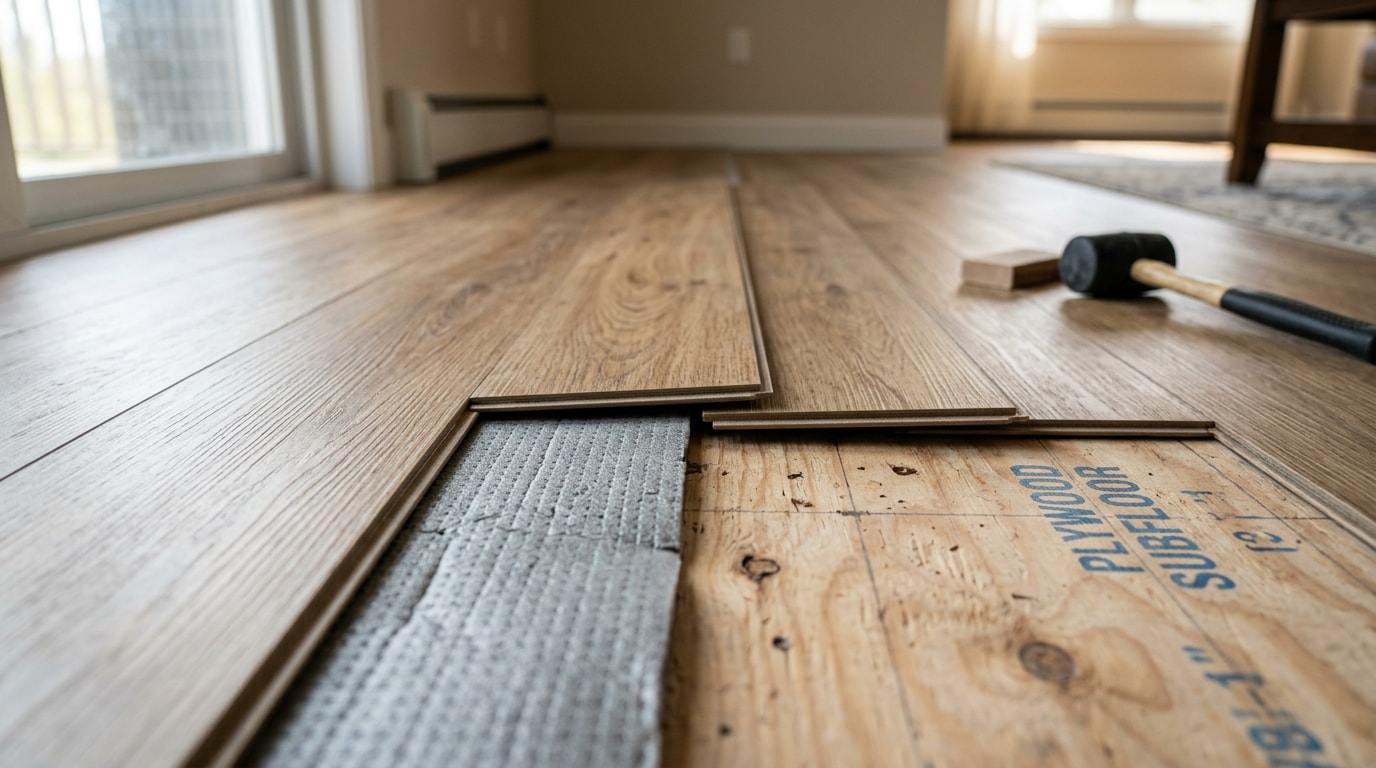
SPC installation starts with letting planks acclimate to room temperature and humidity for at least 48 hours. From there, installers:
- Clean and level the subfloor.
- Plan the layout to minimize awkward cuts.
- Float the floor into place using the click-lock edges, usually with no nails or adhesive.
This floating-floor approach follows general guidance published by the Resilient Floor Covering Institute (RFCI), the trade association for North America's resilient flooring industry , whose member resources cover installation and substrate prep standards. Skipping acclimation or subfloor prep is the most common cause of gapping or peaking after installation.
A confident DIYer can often finish a standard bedroom or small living room in a weekend, but larger homes, tricky layouts, or uneven subfloors usually go faster, and look cleaner, with a professional. Hiring out also shifts responsibility for subfloor prep and warranty compliance onto someone else. If you'd rather not handle acclimation timing and transition details yourself, our flooring installation services team can take care of the full project, including luxury vinyl plank installation.
Caring for SPC Flooring
Keeping SPC looking new doesn't take much effort:
- Sweep or vacuum regularly (hard-floor setting, not a beater bar) to clear grit before it scratches the surface.
- Damp-mop occasionally with a pH-neutral cleaner to clean without dulling the finish.
- Skip steam mops, which can push moisture into seams over time.
- Avoid wax or oil-based polishes, which leave residue that dulls the wear layer.
- Skip abrasive scrub pads and rubber-backed mats left down for long periods, since some can cause discoloration.
Best Uses for SPC Flooring
Residential Applications
SPC handles kitchens well, where spills and the occasional dishwasher leak are part of life, and it supports heavy appliances without denting. In bathrooms, standing water from showers isn't a concern the way it would be with wood or laminate.
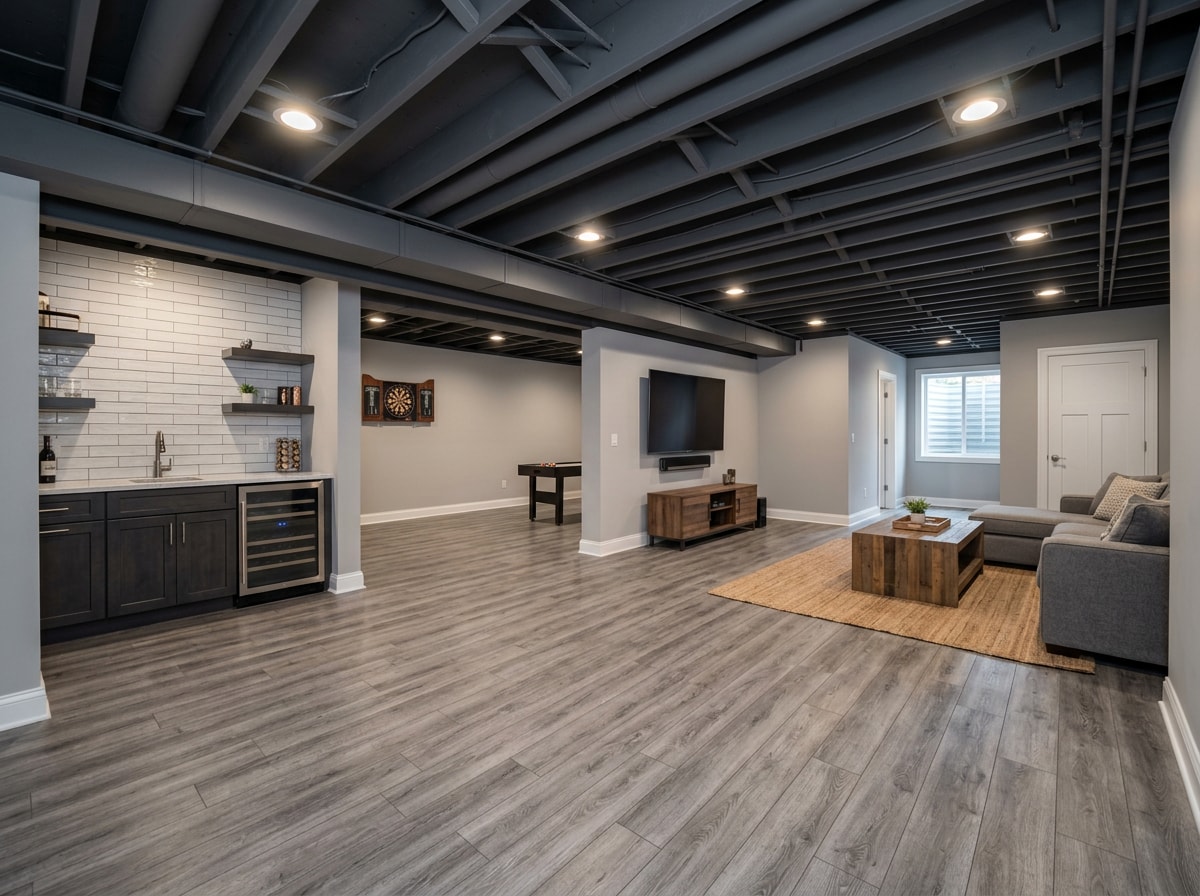
Basements are another strong fit. SPC installs directly over concrete subfloors, which matters for Batavia-area homes where below-grade spaces deal with humidity swings between seasons. Batavia's median household income of $120,056 reflects a community of homeowners investing in quality upgrades , and a waterproof basement floor is one of the more common ones we see requested. If you're planning a basement remodel, our Batavia, IL flooring page covers what to expect locally.
Commercial Applications
SPC also shows up often in retail stores, offices, and restaurants, where commercial-grade wear layers handle rolling chairs, carts, and heavy foot traffic without premature wear. Businesses evaluating options can see our commercial vinyl flooring installation services for project-specific guidance.
FAQ
Is SPC Flooring Waterproof?
Yes. SPC flooring is 100% waterproof, not just water-resistant, making it one of the more reliable options for kitchens, bathrooms, basements, and busy family homes.
How Long Does SPC Flooring Last?
Quality SPC with a 20-mil or thicker wear layer typically lasts 15 to 25 years in residential use, and warranty periods commonly run around 25 years or longer. Check the specific manufacturer warranty before buying.
Can SPC Flooring Be Installed Over Existing Flooring?
In most cases, yes. SPC can go over existing vinyl, ceramic tile, hardwood, or laminate as long as the surface is flat, clean, and structurally sound. Carpet is the exception; it needs to be removed first since it won't provide a stable, even base.
Is SPC Flooring the Same as Luxury Vinyl Plank (LVP)?
Not exactly. SPC is a type of rigid-core LVP. Standard LVP has a flexible vinyl core, while SPC uses a denser limestone-based core that makes it more rigid, more dent-resistant, and more dimensionally stable.
What Are the Disadvantages of SPC Flooring?
It feels firmer and colder underfoot than carpet or WPC, it can't be sanded or refinished once damaged, and it needs a reasonably flat subfloor to install well. It's a trade-off for the durability and waterproofing you get in return.
Is SPC Flooring Toxic?
No. SPC vinyl flooring is generally considered a healthy flooring choice when it carries third-party indoor air quality certification. FloorScore IAQ certification means a flooring product is independently certified to comply with the volatile organic compound emissions criteria of the California Section 01350 Program , and checking for that FloorScore seal is worth it if indoor air quality matters to your household. For broader context on VOCs in home materials, the EPA notes that VOCs are emitted as gases from certain solids or liquids and can have short- and long-term health effects , which is why low-VOC certification is worth checking on any hard-surface flooring, not just SPC.
Ready to see SPC flooring in person for your Batavia home? Visit {{SITE_URL}} to browse our full range of services, or get a free estimate and we'll help you figure out the right product and subfloor plan for your space.