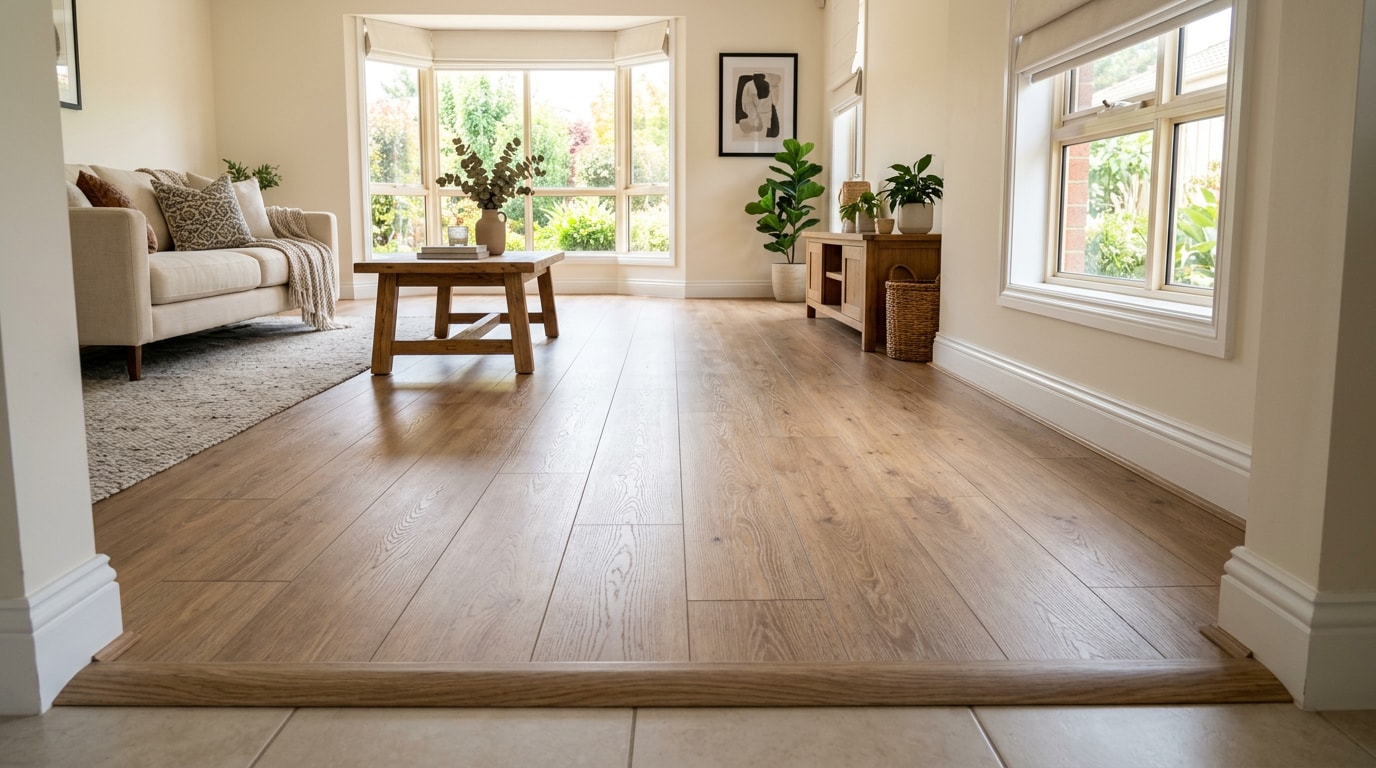
Laminate flooring is a multi-layer synthetic floor covering built to look like real wood or stone while costing less and resisting daily wear better than many natural materials. We see it specified on a huge share of the remodel jobs we quote across DuPage County, from older Wheaton bungalows to newer Naperville builds. Here's what it's actually made of, how it holds up through Illinois seasons, and what a 2026 installation runs.
What Laminate Flooring Is Made Of
Laminate is built in four bonded layers, not one solid material.
- Wear layer – a clear, hard top coating that resists scratches, stains, and fading
- Design layer – a high-resolution photographic print of wood grain or stone
- Core layer – dense fiberboard (HDF or MDF) that gives the plank its stability
- Backing layer – a moisture-resistant base layer that protects against subfloor humidity
Durability between products comes down to the AC (Abrasion Class) rating. Abrasion Class rating is a classification from EN13329, a European standard, to describe the wear resistance of laminate flooring, and it has become widely used in marketing materials for laminate flooring . The scale runs from AC1, meant for light residential use, up to AC5, built for heavy commercial traffic. Most laminate sold for homes today falls in the AC3 to AC4 range, which stands up well to pets, kids, and furniture.
The North American Laminate Flooring Association has grown into the authoritative voice of the laminate flooring industry since it was founded in 1997 , and manufacturers lean on its testing programs to back up the ratings printed on the box. That matters when you're comparing two products that look identical in a showroom but perform very differently five years into daily use.
How Laminate Flooring Holds Up in DuPage County Homes
Older laminate earned a reputation for looking plasticky and wearing through fast. That reputation is mostly outdated now.
Current products use high-resolution imaging and embossed textures that mimic real wood grain or natural stone far more convincingly than laminate made even ten years ago. The wear-layer technology behind it has also improved, which is why AC3 and AC4 products now routinely outlast their rated lifespan in normal household use.
That durability matters here specifically. A lot of DuPage County housing stock dates back several decades, and Illinois summers and winters put real stress on flooring through humidity swings and temperature changes. Laminate's dense core and sealed backing layer handle that seasonal shift better than solid hardwood, which expands and contracts more visibly, and better than cheaper vinyl composite products that can curl at the seams.
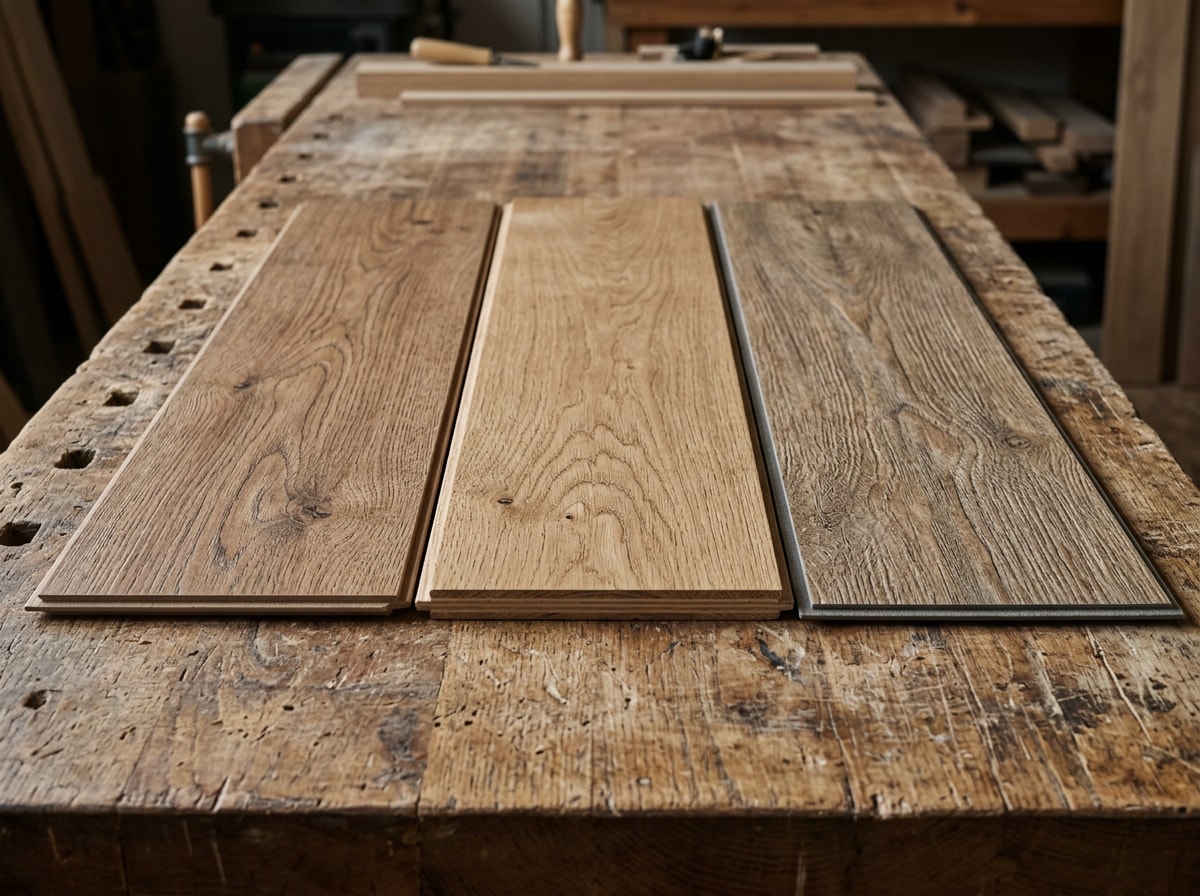
Laminate vs. Luxury Vinyl Plank vs. Engineered Hardwood
Laminate sits among several solid flooring options DuPage County homeowners weigh during a remodel. Choosing between them usually comes down to budget, moisture exposure, and how long you plan to stay in the home.
| Feature | Laminate | Luxury Vinyl Plank (LVP) | Engineered Hardwood |
|---|---|---|---|
| Moisture tolerance | Water-resistant; not for standing water | Waterproof in most products | Moderate; can warp with prolonged moisture |
| Feel underfoot | Firm, slightly warmer than tile | Firm, soft-touch options available | Warmest, true wood surface |
| Maintenance | Sweep, damp mop | Sweep, damp mop | Sweep, occasional refinishing |
| Typical lifespan | 15–25 years | 10–20 years | 20–30 years |
Moisture exposure usually decides the laminate-versus-LVP question: LVP edges ahead in basements and bathrooms, while laminate tends to win on cost and ease of installation versus hardwood. If you're weighing the vinyl side of that comparison, our luxury vinyl plank installation page covers product options in more depth, and the engineered hardwood installation page is worth a look if warmth underfoot matters more than budget.
Wood-Look and Stone-Look Laminate Styles
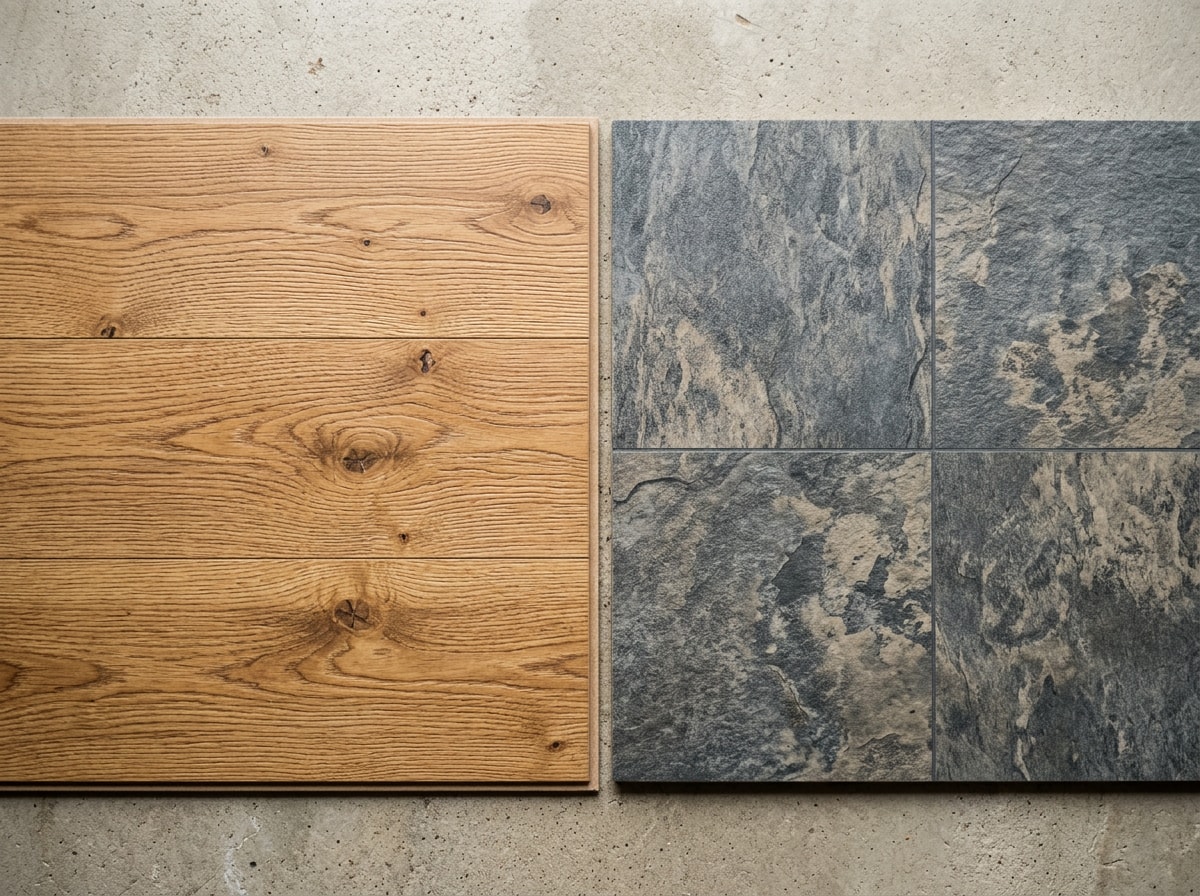
Design range is where laminate has changed the most. Stone-look laminate now sits alongside traditional wood-look styles, giving you the appearance of tile or natural stone with a warmer, softer surface underfoot than the real material.
That flexibility makes it easier to match the style to how each room actually gets used:
- Wood-look laminate tends to suit living rooms, bedrooms, and hallways
- Stone-look laminate holds up well in kitchens, mudrooms, and entryways where moisture and foot traffic run higher
If you're deciding between whole-home consistency and room-by-room matching, our hardwood laminate flooring service page has current style options for both looks.
Is Laminate the Right Choice for Your DuPage County Home?
Laminate appeals most to homeowners who want dependable performance without the upkeep real wood demands. No refinishing, no waxing, no worrying about scuffs from every chair leg.
For busy households, the two biggest draws are cost and convenience. Laminate typically costs less upfront than hardwood or stone, and routine care rarely goes beyond sweeping and occasional damp mopping.
One thing worth knowing before you buy: laminate's fiberboard core is a composite wood product, and federal data shows laminate flooring was the single biggest contributor to residential indoor air formaldehyde concentrations among the composite wood products studied . That's not a reason to avoid laminate. It's a reason to confirm the product you're buying is certified compliant. Composite wood panels and finished products manufactured or imported into the U.S. must be certified as compliant with TSCA Title VI or equivalent California Air Resources Board emission standards by an approved third-party certifier . Ask your supplier for that certification before you sign off on a product.
Ready to compare options for your own space? Request a free flooring estimate and we'll walk you through which laminate grade fits your household and budget.
2026 Laminate Flooring Costs in DuPage County
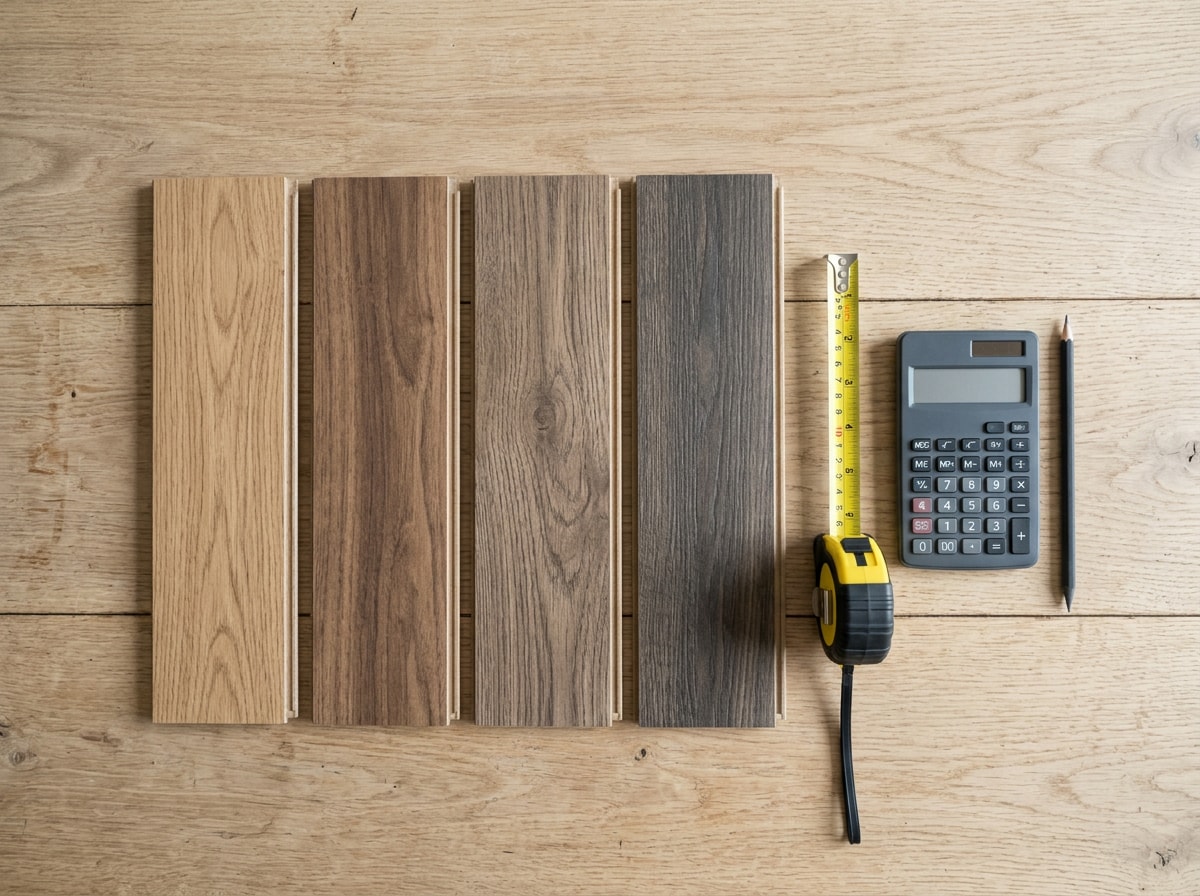
Pricing depends on square footage, product grade, and subfloor condition, but here's a realistic baseline for budgeting.
| Cost factor | Typical 2026 range |
|---|---|
| Material cost per sq. ft. | $2.50 – $7.00 |
| Installation labor per sq. ft. | $1.50 – $4.00 |
| Underlayment and transition strips | $0.50 – $1.50 per sq. ft. |
| Typical whole-room project (200–300 sq. ft.) | $1,200 – $3,500 |
What a Laminate Flooring Quote Typically Includes
- Material cost per square foot for the laminate itself
- Labor for subfloor prep and installation
- Underlayment, transition strips, and basic trim
What It Usually Doesn't Include
Most estimates leave out two things: permits and sales tax. Permit requirements for flooring work vary by municipality. For projects in unincorporated DuPage County, the Building and Zoning Department handles building projects and permits, and you can call their office to schedule an appointment before work begins. If your home sits inside a city or village, check with that municipality's building department instead, since permit rules differ from the county's.
For a number specific to your home's layout and square footage, get a free flooring estimate rather than relying on averages.
FAQ
Are laminate floors loud with kids and pets running around?
Laminate is a hard surface, so footsteps and paws carry more sound than carpet does. A quality underlayment under the laminate cuts down noise significantly, which makes it a practical choice even in busy, pet-filled households.
What is laminate flooring made of?
Laminate has four bonded layers: a clear wear layer on top, a photographic design layer beneath it, a high-density fiberboard core for stability, and a moisture-resistant backing layer.
Is laminate flooring waterproof?
Most laminate is water-resistant, not fully waterproof. It handles spills if you wipe them up quickly, but it isn't meant for standing water. Waterproof-rated laminate products exist and are worth considering for DuPage County basements or kitchens.
How long does laminate flooring last?
Quality laminate typically lasts 15 to 25 years. Traffic levels, product grade, and installation quality are the three biggest factors that determine where a specific floor lands in that range. For a deeper breakdown of what shortens or extends that lifespan, see our guide on how long laminate flooring lasts.
What's the difference between laminate and vinyl flooring?
Laminate uses a wood-fiber core, while vinyl flooring is built on a PVC core that handles moisture better. Choose vinyl for wet areas and laminate for a closer wood-look feel underfoot.
Does laminate flooring need acclimation before installation?
Yes. Laminate planks need time in the room where they'll be installed so they adjust to the home's temperature and humidity before the crew lays them, which helps prevent gaps or buckling later.
Browse more flooring guides and service details on our homepage, or head straight to contact us for a free, no-obligation estimate on your DuPage County project.