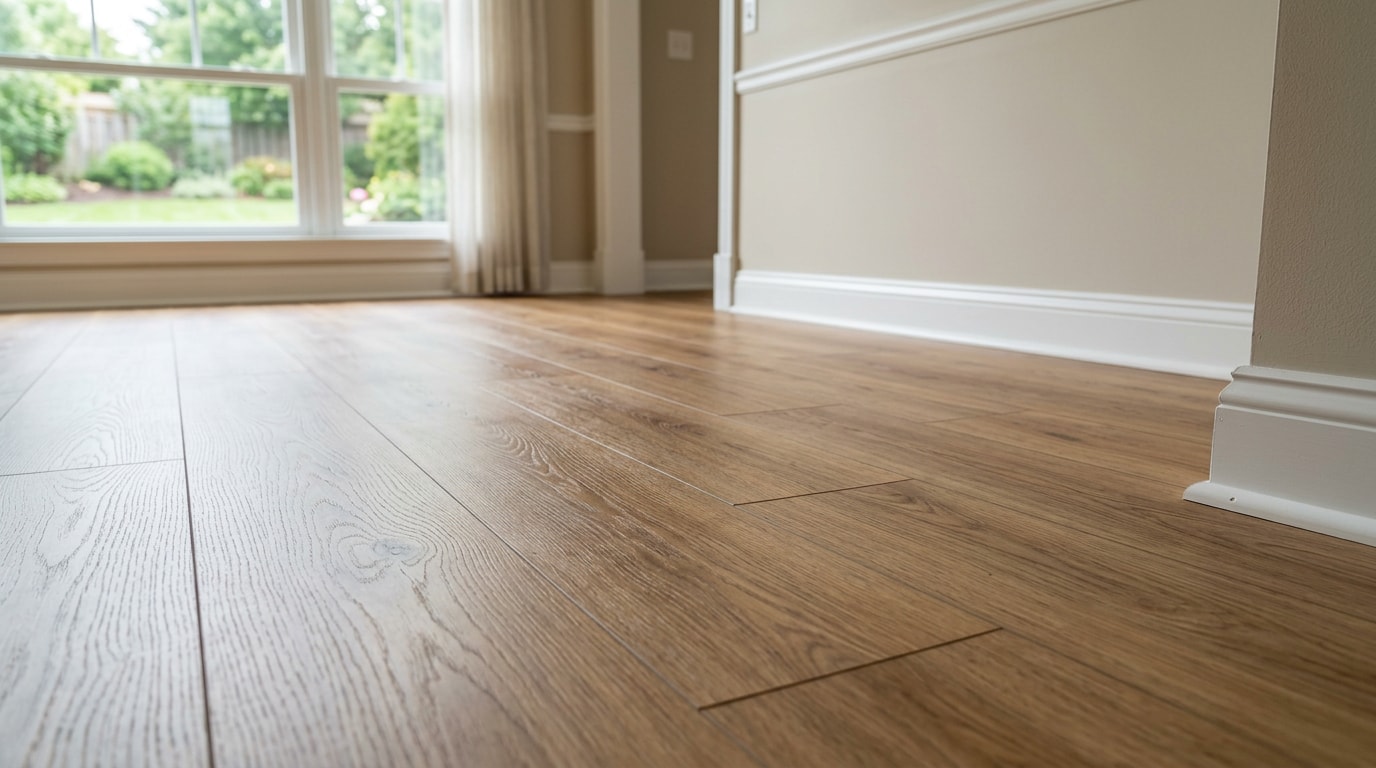
How thick is vinyl flooring in Glen Ellyn, IL homes? Anywhere from 2mm peel-and-stick tiles to 8mm-plus rigid-core planks, and the right number depends on your subfloor, your room, and your budget, not just what looks thickest on the shelf. We pull plenty of old flooring out of Glen Ellyn's 1920s-1970s housing stock, and the thickness that works on a flat, newer subfloor often fails on an older one. This guide breaks down what the mm and mil numbers actually mean so you can match thickness to your room instead of guessing.
Total Thickness vs. Wear Layer: The Two Numbers That Actually Matter
Two different measurements get thrown around when people shop for vinyl, and mixing them up is the single most common mistake we see.
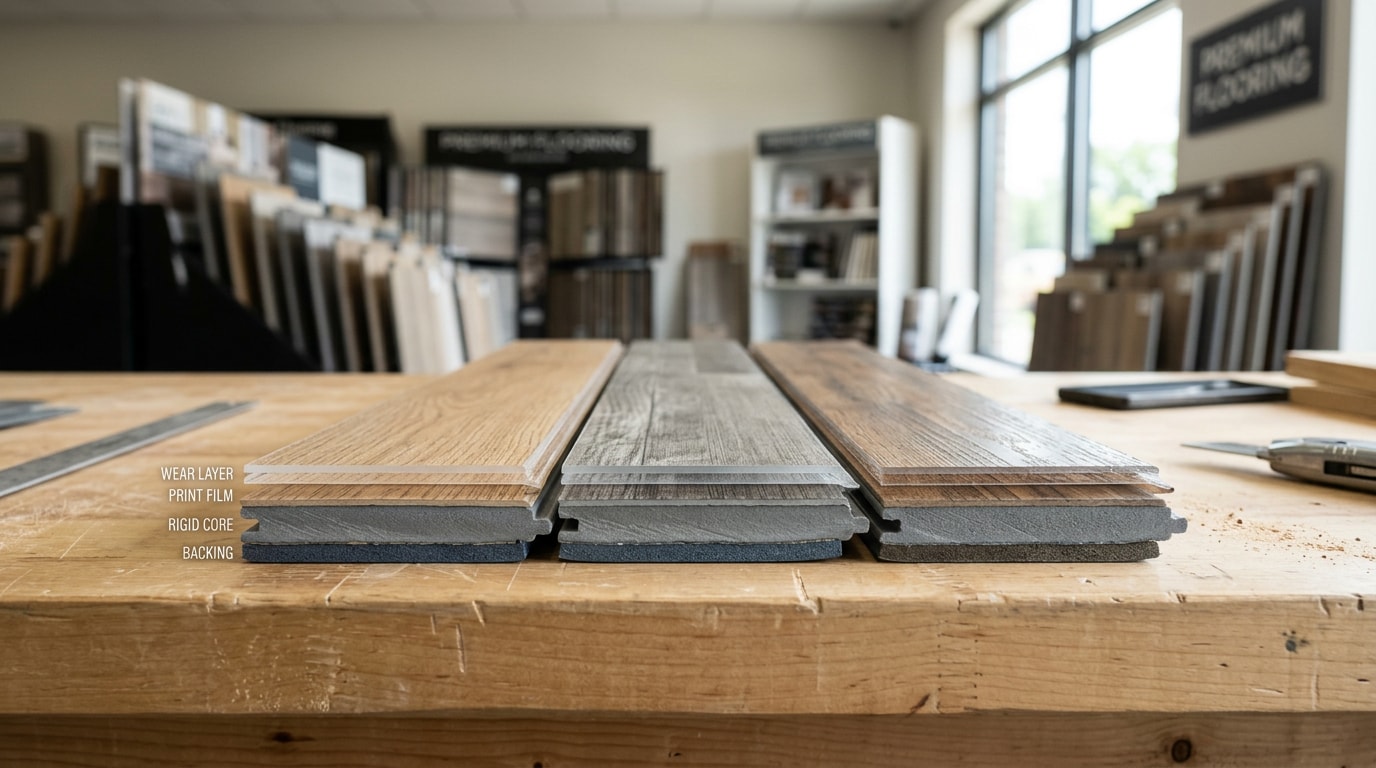
Total plank thickness is measured in millimeters, straight through every layer, wear coat, print film, core, and backing, from top to bottom. A vinyl plank typically ranges in thickness from 2 mm for lower-quality products to 8 mm or more for higher quality products , and that measurement varies since luxury vinyl flooring is comprised of four-to-five different distinct layers that include a urethane coating, the wear layer, a print film layer, the vinyl core, and the backing .
Wear layer thickness is a completely different number, measured in mils instead of millimeters. A mil is equivalent to one-thousandth of an inch (1 mil = 0.001 inch) . For perspective, a dime is about a millimeter thick, and just over 39 mils , which gives you a feel for how small these units actually are.
Here's why the distinction matters in practice:
| Plank Spec | Underfoot Feel | Scratch Resistance | Best For |
|---|---|---|---|
| 4mm plank / 20 mil wear layer | Firmer, lower profile | Excellent | Busy households, pets |
| 8mm plank / 6 mil wear layer | Soft, cushioned | Weak | Low-traffic bedrooms only |
A thin plank with a heavy wear layer will usually outlast a thick plank with a light one. Test methods for both measurements come from ASTM International, whose resilient flooring standards cover resilient flooring, which includes linoleum, vinyl composition tile, and sheet vinyl among others, and help determine abrasion, puncture, and impact resistance, flexibility, electrical resistance, thickness and more, including the dedicated thickness test method ASTM F386, which covers the determination of thickness of resilient nontextile floor coverings including tile and sheet having flat surfaces .
Vinyl Flooring Thickness by Tier (mm)
Total thickness is the starting point for matching a product to a room's traffic and subfloor condition.
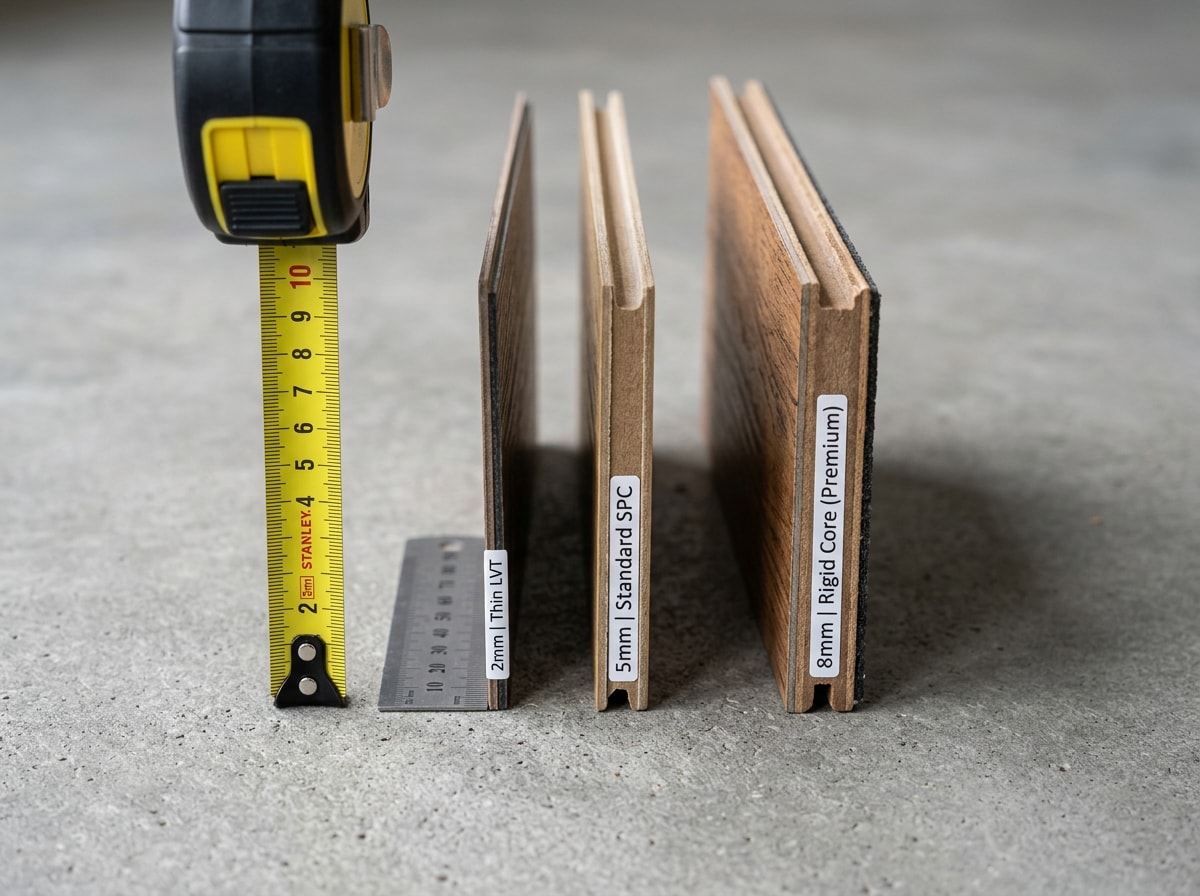
2mm to 3mm: Peel-and-Stick and Thin Glue-Down
This is the thinnest tier on the market. It offers minimal cushioning and poor sound absorption, and it demands an almost perfectly smooth subfloor, since every bump or seam underneath telegraphs straight through to the surface. We treat this tier as a short-term or budget option rather than a long-term install.
4mm to 5mm: Standard Rigid Core
This is the most common range for SPC vinyl plank. It offers a rigid, stable platform that hides minor subfloor imperfections while keeping a low profile at door clearances and transitions. It also holds its shape well through the humidity swings that come with a Midwest basement or crawlspace.
5mm to 6.5mm: Mid-Range with Attached Padding
This bracket adds a bit more attached padding for a softer step without losing the rigid-core stability of thinner planks. It's a strong fit for bedrooms, living rooms, and home offices, where comfort matters more than commercial-grade toughness.
6.5mm to 8mm+: Premium with Thick Padding
Premium planks pair a robust core with thick attached padding for a floor that feels substantial and sounds solid instead of hollow underfoot. The tradeoff: this tier costs more and needs taller transition strips at doorways into tile or hardwood rooms.
Wear Layer Mil Guide
Wear layer thickness is almost entirely about how long a floor resists scratches and scuffs before the printed pattern starts showing through, regardless of how thick the plank underneath is.
- 4 to 8 mil (light use): Fine for closets, guest rooms, or other low-traffic spaces. Not recommended for kitchens, hallways, or homes with pets.
- 12 mil (standard residential): The baseline most manufacturers build toward for everyday household use. Handles normal foot traffic and furniture movement without showing scuffs in the first year or two.
- 20 mil (heavy residential / light commercial): The practical upgrade for busy households with kids, multiple pets, or rooms that see constant traffic. It also edges into light commercial territory.
- 28 to 40+ mil (commercial grade): Built for retail stores, offices, and other high-footfall spaces. Most homeowners don't need this tier; it adds cost without a meaningful benefit in a typical house. If you're spec'ing a storefront or office buildout instead of a home, our commercial vinyl flooring installation team works in this mil range regularly.
Manufacturers that want a verifiable quality benchmark often reference the Resilient Floor Covering Institute's ASSURE Certified program, which was conceived and developed by the Resilient Floor Covering Institute (RFCI) as a way to establish uniform standards of quality for all rigid core luxury flooring products sold in North America, regardless of where they are manufactured, and applies to WPC or SPC construction . Certified products must meet ASTM F3261 characteristics testing for composition, size tolerance, product thickness, and wear layer thickness , so that badge is a quick way to confirm a listed spec is accurate rather than marketing rounding.
SPC vs. WPC: How Core Material Changes the Numbers
Total thickness only tells part of the story. The core material underneath the wear layer drives rigidity, sound, and which rooms a plank actually suits.
An SPC (stone polymer composite) core blends limestone powder with stabilizers into a dense, rigid board. Its typical thickness runs 4mm to 8mm, and it's firmer and more rigid underfoot with excellent impact resistance , which makes it a solid pick for kitchens, entryways, and basements.
A WPC (wood polymer composite) core blends polymer plastic with wood flour and a foaming agent. The foaming agent creates air pockets, making it lighter and less dense than SPC, so WPC planks are generally thicker, typically ranging from 5mm to 12mm, to achieve the necessary stability . The tradeoff is a softer, quieter step, which suits bedrooms and living rooms where comfort matters more than maximum rigidity.
Recommended Thickness by Room in a Glen Ellyn Home
There's no single "right" thickness for an entire house. Traffic, moisture exposure, and subfloor condition change room by room, and that's doubly true in a village with as much pre-1980 housing stock as Glen Ellyn.
| Room | Recommended mm | Recommended Mil | Why |
|---|---|---|---|
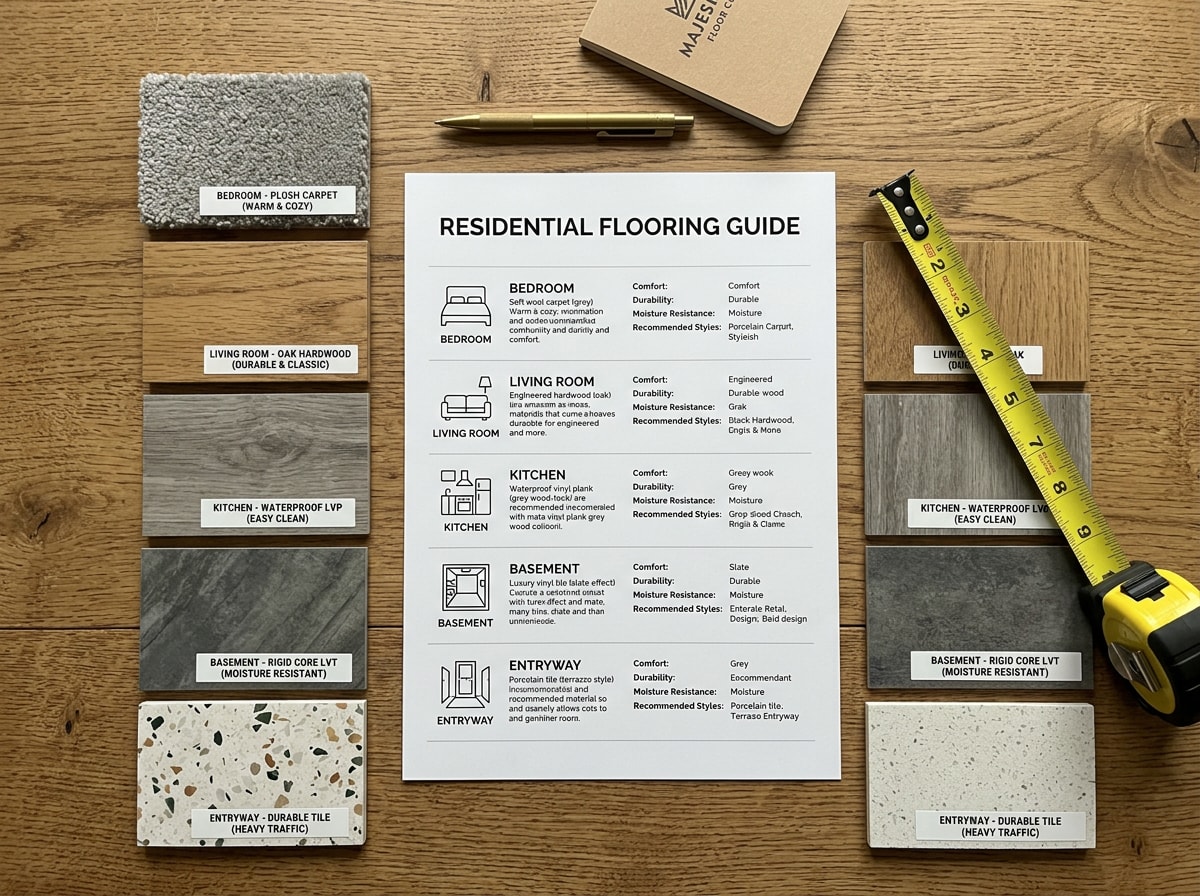
| Bedrooms | 4mm-5mm | 12 mil | Low traffic, comfort over durability |
| Living Rooms | 5mm-6.5mm | 12-20 mil | Moderate daily traffic, furniture weight |
| Kitchens | 4mm-6mm (SPC) | 20 mil | Moisture exposure, spills, dropped items |
| Basements | 4mm-5mm (SPC) | 20 mil | Concrete subfloor, moisture risk |
| Entryways | 5mm-8mm | 20-28 mil | Dirt, grit, heaviest foot traffic |
Basements are worth calling out specifically. A lot of Glen Ellyn basements sit on older concrete slabs that were never poured dead-flat, and that unevenness is exactly what a thin, flexible plank will telegraph. If you're weighing options for a specific space, our Glen Ellyn service area page covers what we typically run into on local jobs.
Subfloor Prep Changes What Thickness You Actually Need
Thickness charts are a starting point, not the final answer. The subfloor underneath drives how much of that spec you really need.
Most manufacturer installation guides point back to ASTM's concrete-floor standard. ASTM F710 covers the procedure for determining the acceptability of concrete floors for the installation of resilient flooring, and states that concrete floors for resilient flooring should be permanently dry, clean, smooth, structurally sound, and free of substances that may prevent adhesive bonding . A widely cited rule of thumb drawn from that standard is that the subfloor shall not deviate more than 3/16 of an inch in ten feet . If your slab or plywood deck falls outside that range, leveling compound is almost always the better fix, not just buying a thicker plank and hoping it hides the dip.
Thickness and installation method go hand in hand, too. A glue-down install adheres each plank directly to the subfloor and offers more stability than a floating install, but it needs more prep time and is generally a job for a pro. Loose-lay vinyl, by contrast, relies on friction and suction under each plank with no adhesive or locking joints; it's a newer approach without decades of long-term performance data behind it yet.
New vinyl also needs time to adjust to your home's temperature and humidity before installation, the same way laminate does. We cover that process in more detail in our post on laminate acclimation timing, and the same logic applies to rigid-core vinyl planks brought in from a cold truck or garage.
What Thickness Costs in a Typical Glen Ellyn Install
Thickness tier generally tracks with price. Thicker cores and heavier wear layers cost more per square foot, but they also tend to last longer under daily use.
| Thickness / Wear Layer | Typical Use Case | Relative Cost |
|---|---|---|
| 4mm plank / 12 mil | Rentals, secondary spaces | Lower |
| 5-6mm plank / 20 mil | Primary living areas | Mid-range |
| 8mm+ plank / 20+ mil | High-traffic, pet-heavy households | Premium |
Entry-level SPC products around 4mm with a 12-mil wear layer sit at the lower end of the market, which is why they're popular for rentals or secondary spaces. Mid-range WPC options in the 6mm range with a 20-mil wear layer suit most primary living areas. Premium 8mm products with 20-plus mil wear layers and thick attached padding sit at the top, priced closer to engineered hardwood but built to handle a busier household for longer.
If hardwood is also on your shortlist for comparison, our hardwood floor installation and engineered hardwood installation pages break down how those materials stack up against vinyl on cost and durability.
Getting the Spec Right the First Time
Picking a thickness off a chart is one thing. Confirming it's right for your actual subfloor, room, and household is another, and that's where a quick walk-through from an installer saves you from a costly do-over. Our flooring installation team handles both glue-down and floating vinyl installs across Glen Ellyn and the rest of DuPage County, and we can tell you within a few minutes whether your subfloor needs leveling before anything gets installed.
If you're ready to talk specs for your space, get a free estimate and we'll walk the room with you before you commit to a thickness.
FAQ
What thickness of vinyl flooring is best for residential use?
Most homes do well with 4mm to 6.5mm total thickness paired with a 12- to 20-mil wear layer. This range balances comfort, subfloor forgiveness, and everyday durability for typical household traffic.
Does thicker vinyl plank flooring last longer?
Not necessarily. Wear layer thickness drives most of the longevity difference, not total plank thickness. A thin plank with a 20-mil wear layer can outlast a thick plank with only a 6-mil layer.
What is the best wear layer thickness for pets?
A 20-mil wear layer or higher is the safer choice for households with pets. It resists claw scratches and everyday scuffs far better than lighter 6- or 12-mil options.
Can I install 2mm vinyl flooring over an uneven subfloor?
It's not recommended. Thin 2mm planks tend to telegraph subfloor flaws, so an uneven surface should be leveled first or paired with a thicker, more rigid product instead.
Is SPC or WPC better for a Glen Ellyn basement?
SPC is usually the better call for basements. Its denser, limestone-based core resists moisture and dents better than WPC's foamed core, even though WPC often feels softer underfoot in above-grade rooms.
How do I know if my subfloor is flat enough for vinyl plank?
Lay a straightedge across the floor and check the gap underneath with a tape measure. If any spot deviates more than roughly 3/16 inch over a 10-foot span, plan on self-leveling compound before installation rather than relying on a thicker plank to mask it.
Want a second opinion on your home before you buy? Visit our homepage to see our full range of flooring services, or browse recent projects for examples of vinyl installs across the area.