What is LVL flooring in Hoffman Estates? It's a bit of a trick question. LVL stands for Laminated Veneer Lumber, a structural framing material, not a floor covering at all. If you're shopping for new floors, the acronyms you actually want are LVP and LVT, and this guide shows you how to tell them apart before you spend a dime.
What Is LVL Flooring, Really?
When our crews get calls asking about "LVL flooring" in Hoffman Estates, the homeowner is almost always picturing a vinyl plank sample from a showroom, not a floor joist. That mix-up is understandable since the letters look similar, but the products couldn't be more different.
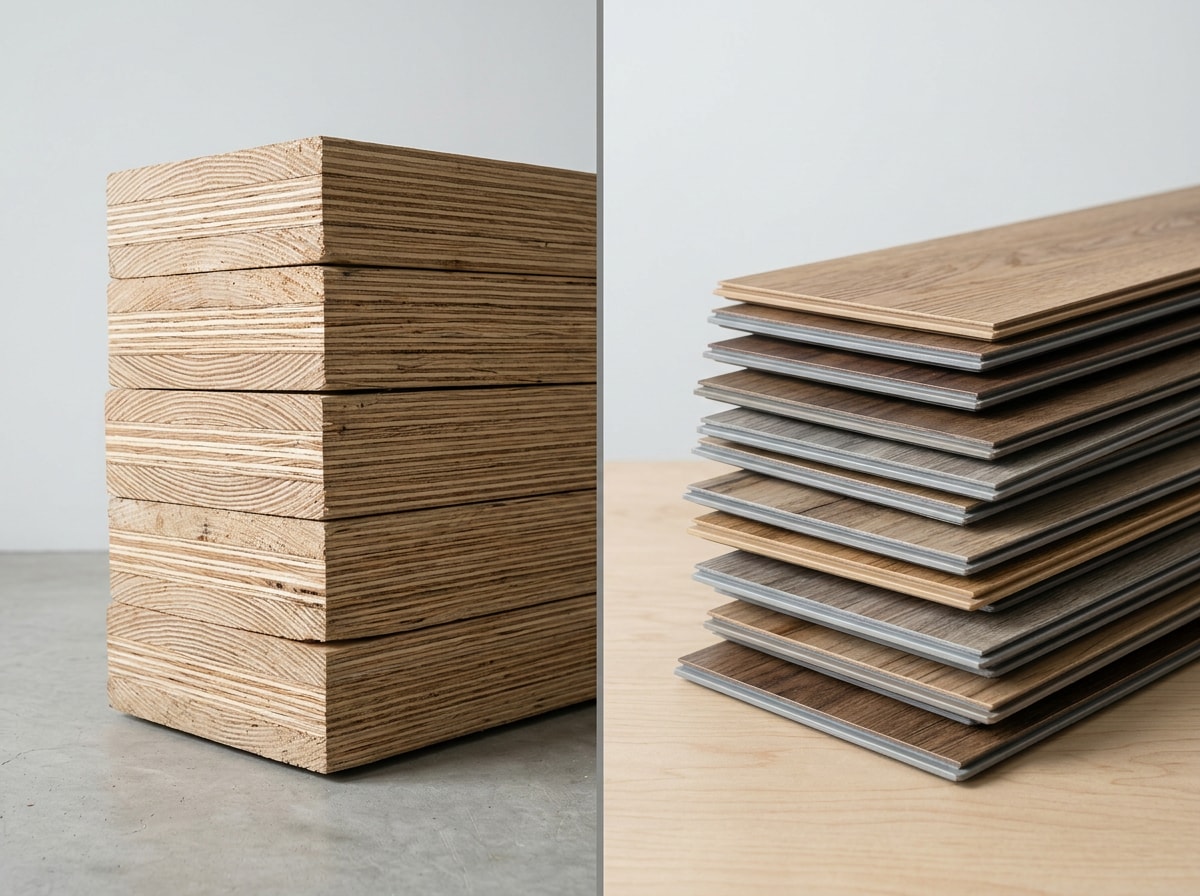
Laminated Veneer Lumber (LVL) is a structural composite lumber product manufactured by bonding thin wood veneers with exterior-grade adhesives, with veneers oriented primarily in the longitudinal direction to produce uniform, predictable strength and stiffness properties suitable for demanding structural applications. In plain terms, it's framing lumber, not a finished floor.
Builders use it for headers and beams, rim boards, and floor or roof framing members, along with columns and studs where local code allows. So LVL does sit underneath many floors, as part of the subfloor framing system, but you'll never walk on it directly or pick it out in a flooring showroom.
Is LVL the Same as LVP or LVT?
No. LVP (Luxury Vinyl Plank) and LVT (Luxury Vinyl Tile) are the vinyl flooring acronyms homeowners actually encounter when shopping, while LVL refers only to structural lumber used in framing.
Once you know the difference, shopping gets a lot simpler. Here's how each term breaks down:
- LVL – Laminated Veneer Lumber, a structural framing product (beams, headers, rim boards)
- LVP – Luxury Vinyl Plank, a vinyl floor covering shaped like wood planks
- LVT – Luxury Vinyl Tile, a vinyl floor covering shaped like stone or ceramic tile
What Is LVP (Luxury Vinyl Plank) Flooring?
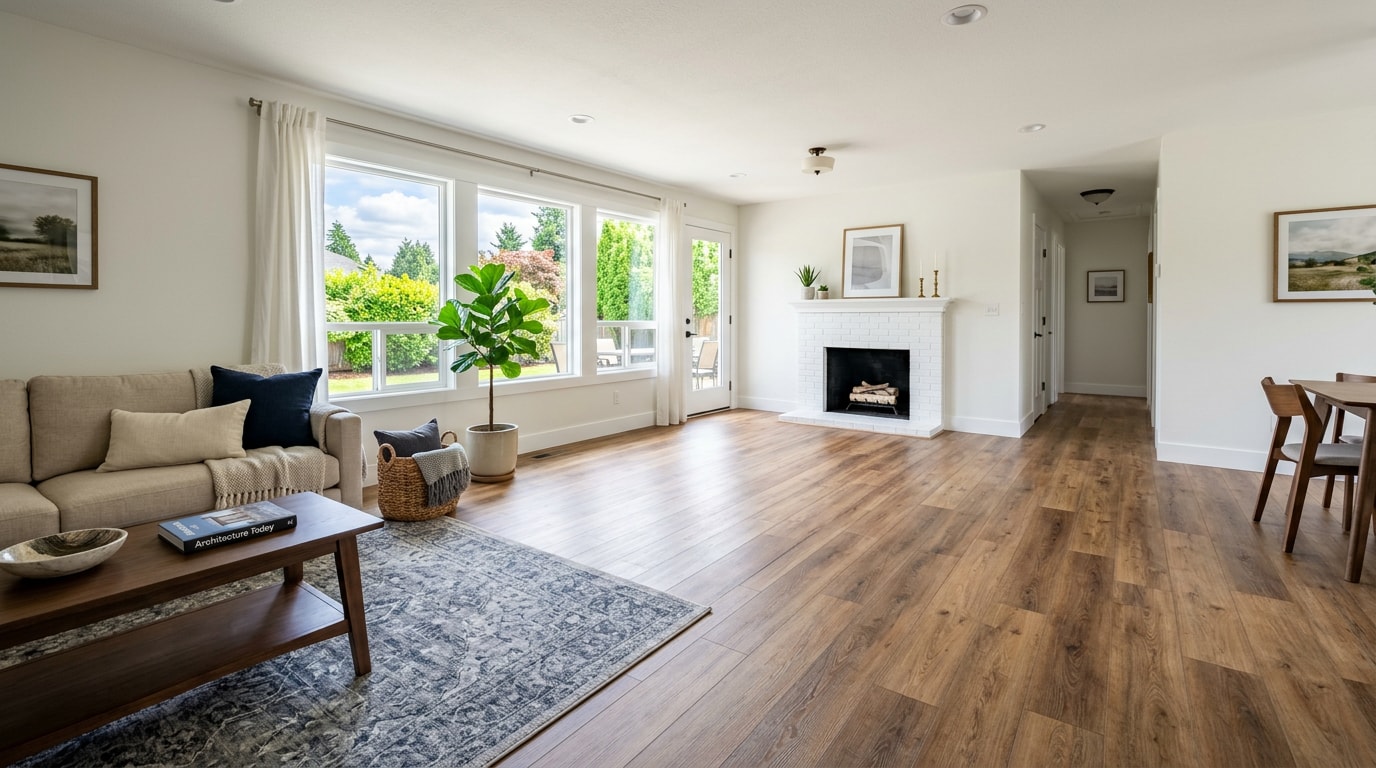
Luxury vinyl plank, or LVP, is made to look and feel like real hardwood, coming in long, narrow strips with grain patterns, knots, and textures that closely resemble natural wood flooring.
Many LVP products are waterproof and feature a protective wear layer to resist scratches, stains, and dents, which makes this flooring suitable for kitchens, bathrooms, basements, and other high-moisture areas while remaining easy to maintain and install.
That combination of durability and a wood-look finish is exactly why luxury vinyl plank installation has become one of the most requested upgrades in Hoffman Estates homes.
What Is LVT (Luxury Vinyl Tile) Flooring?
Luxury vinyl tile, or LVT, is another premium option in the vinyl flooring category, and while similar in composition to LVP, it's designed to replicate the appearance of stone or ceramic tile rather than wood.
LVP is often laid in staggered arrangements similar to hardwood flooring, whereas LVT can be installed in grid, diagonal, or herringbone patterns, offering more creative flexibility for certain spaces.
What's Inside LVP and LVT: PVC, WPC, and SPC Cores
LVP and LVT are built from multiple layers, with the core type (PVC, WPC, or SPC) playing a key role in durability and performance.
LVP is typically thicker than LVT, and the additional thickness creates a more realistic hardwood feel underfoot along with enhanced sound insulation.
Installation method tends to track with the product type. LVT often requires adhesive to secure it to the subfloor, while LVP usually features a click-lock system that allows for floating installation, making it a more straightforward DIY-friendly install with a shorter timeline. On price, LVT and LVP generally fall within a similar range, and both are more cost-effective than their tile and hardwood counterparts, which is a big part of why they've become so popular.
Want to see the WPC side of that equation up close? Our WPC flooring buying guide breaks down how wood-plastic composite cores perform against SPC in real homes.
Why LVL Still Matters for Your Floors
Even though LVL never shows up underfoot, it's worth understanding why builders rely on it so heavily, since it's often the framing hidden beneath the flooring you actually choose.
Strength, Stability, and a Real Data Point
LVL's layered-veneer construction cross-laminates wood grain, which resists warping and splitting far better than solid-sawn lumber. This isn't just marketing talk. APA's 2022 laboratory study examining dimensional changes in LVL products from multiple North American manufacturers tested 162 specimens under various moisture conditions to establish reliable adjustment factors for thickness, width, and length measurements. That kind of tested consistency is exactly why LVL outperforms standard lumber in framing applications where straightness matters.
The structural engineering behind LVL is also a subject of ongoing federal research. A study initiated by APA – The Engineered Wood Association and the LVL industry, in collaboration with the Forest Products Laboratory of the USDA, evaluated connection performance for LVL framing members. For the full technical picture, see APA – The Engineered Wood Association's structural composite lumber guide and the USDA Forest Products Laboratory's LVL connection research.
Flooring Material Options for Hoffman Estates Homes
Hardwood, engineered wood, LVP, laminate, tile, and carpet all show up regularly in Hoffman Estates renovation projects. Each one trades off differently on durability, water resistance, and cost.
| Material | Durability | Water Resistance | Approx. Cost (installed) |
|---|---|---|---|
| Solid Hardwood | High, but scratches show | Low | $$$ |
| Engineered Wood | High | Moderate | $$ |
| LVP | Very high | High | $$ |
| Laminate | Moderate | Low–Moderate | $ |
| Tile | Very high | Very high | $$ |
| Carpet | Moderate | Low | $ |
When homeowners compare hardwood against LVP specifically, LVP usually wins on moisture resistance and upkeep, while hardwood still edges ahead on resale appeal in formal living spaces. If you're weighing options for a whole-home project, our hardwood floor installation and engineered hardwood installation pages break down what each material needs in terms of subfloor prep.
The Flooring Installation Process in Hoffman Estates
Once you've settled on a material, a reliable installer walks the job in a predictable sequence rather than winging it room by room. A typical project runs through these stages:
- Plan and confirm materials – quantities, finish selections, and any local code requirements get locked in before work starts.
- Check the subfloor – moisture levels and surface condition get inspected, since this directly affects how well LVP, hardwood, or laminate performs long-term.
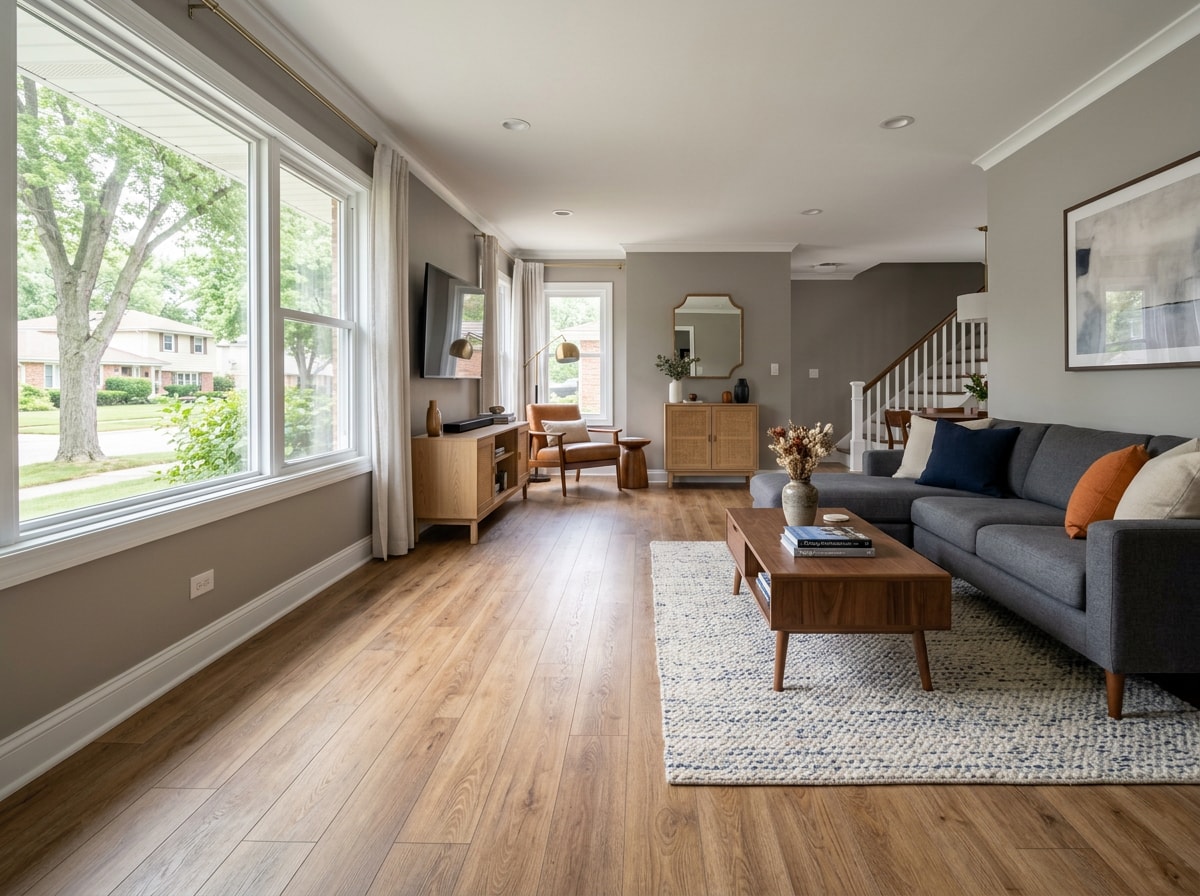
- Coordinate finishes – floor color and texture get checked against existing cabinets, trim, and wall paint so the room feels cohesive instead of mismatched.
- Install and inspect – planks, tile, or boards go down, followed by a walkthrough to catch gaps, squeaks, or transition issues before the crew leaves.
Matching flooring to trim is one of the most overlooked steps in a renovation, and it's often what separates a finished-looking home from one that feels disjointed. Browse our flooring installation and repair services to see how we handle that coordination from the first measurement to the final walkthrough, or visit our completed projects to see the finish work in person.
If your home is due for a refresh, get a free estimate and we'll walk your space before recommending a material.
FAQ
Is LVL used in flooring at all?
Only indirectly. LVL shows up in the subfloor framing of many homes (beams, headers, rim boards), but it's never the visible floor surface. If you want a floor you'll actually see and walk on, you're looking for LVP, LVT, hardwood, laminate, or tile.
What's the real difference between LVP and LVT?
LVP mimics hardwood planks; LVT mimics stone or ceramic tile. The primary difference lies in their design and the materials they imitate: luxury vinyl plank is created to resemble hardwood, while luxury vinyl tile is engineered to mimic the look of stone or ceramic tile. Installation patterns and room placement tend to follow from that distinction.
What is SPC flooring?
SPC stands for Stone Plastic (or Polymer) Composite, featuring a core typically comprised of around 60% calcium carbonate (limestone), polyvinyl chloride, and plasticizers. It's a rigid-core option used inside many LVP and LVT products, not a flooring type on its own. The Resilient Floor Covering Institute's rigid-core certification program covers both SPC and WPC cores under its ASSURE Certified standard.
How long does a flooring project take in Hoffman Estates?
Timelines depend on square footage, material choice, and how accessible the space is for crews. A single room often wraps up in one to two days, while whole-home projects can take one to two weeks.
Do you serve Hoffman Estates and nearby suburbs?
Yes. We cover Hoffman Estates along with nearby Northwest Chicagoland communities like Palatine, Barrington, and Arlington Heights. Visit {{SITE_URL}} or contact us to confirm your address before scheduling an estimate.