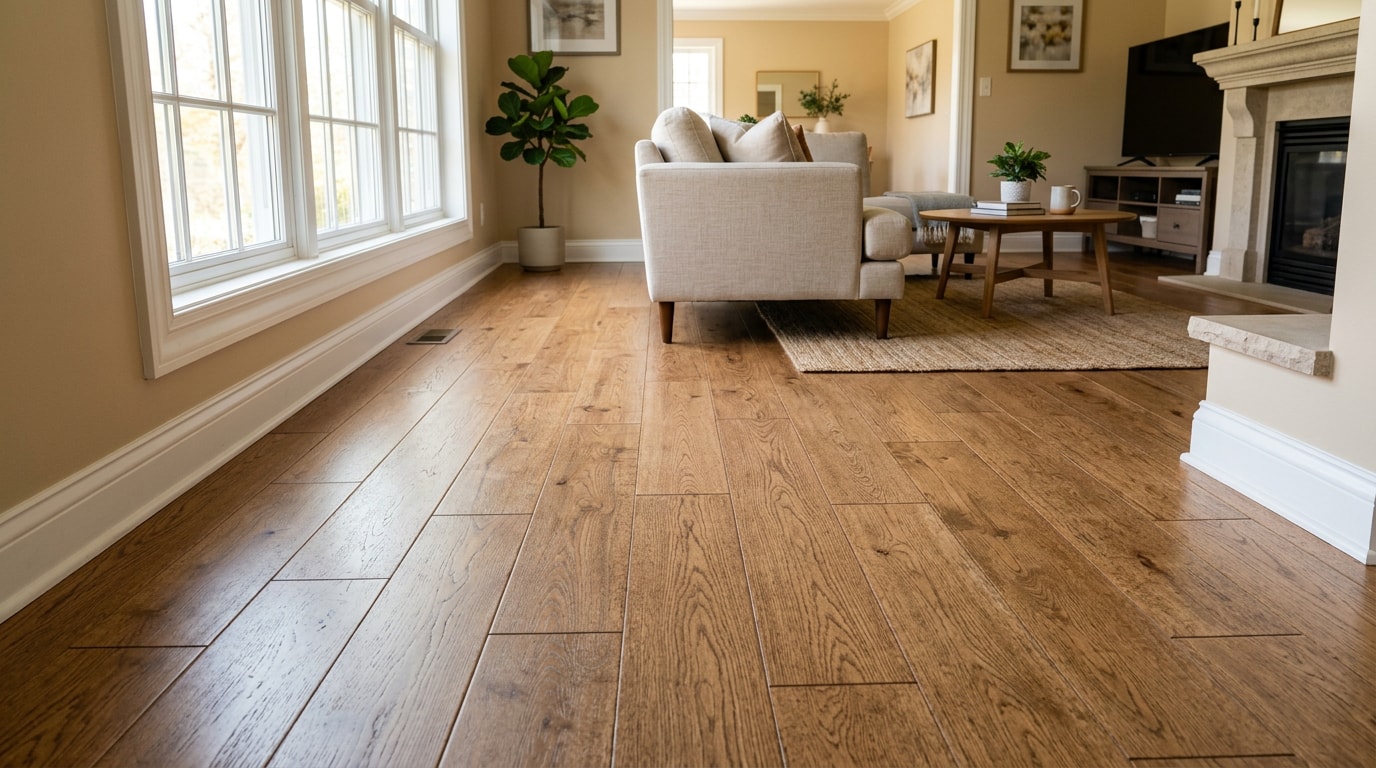
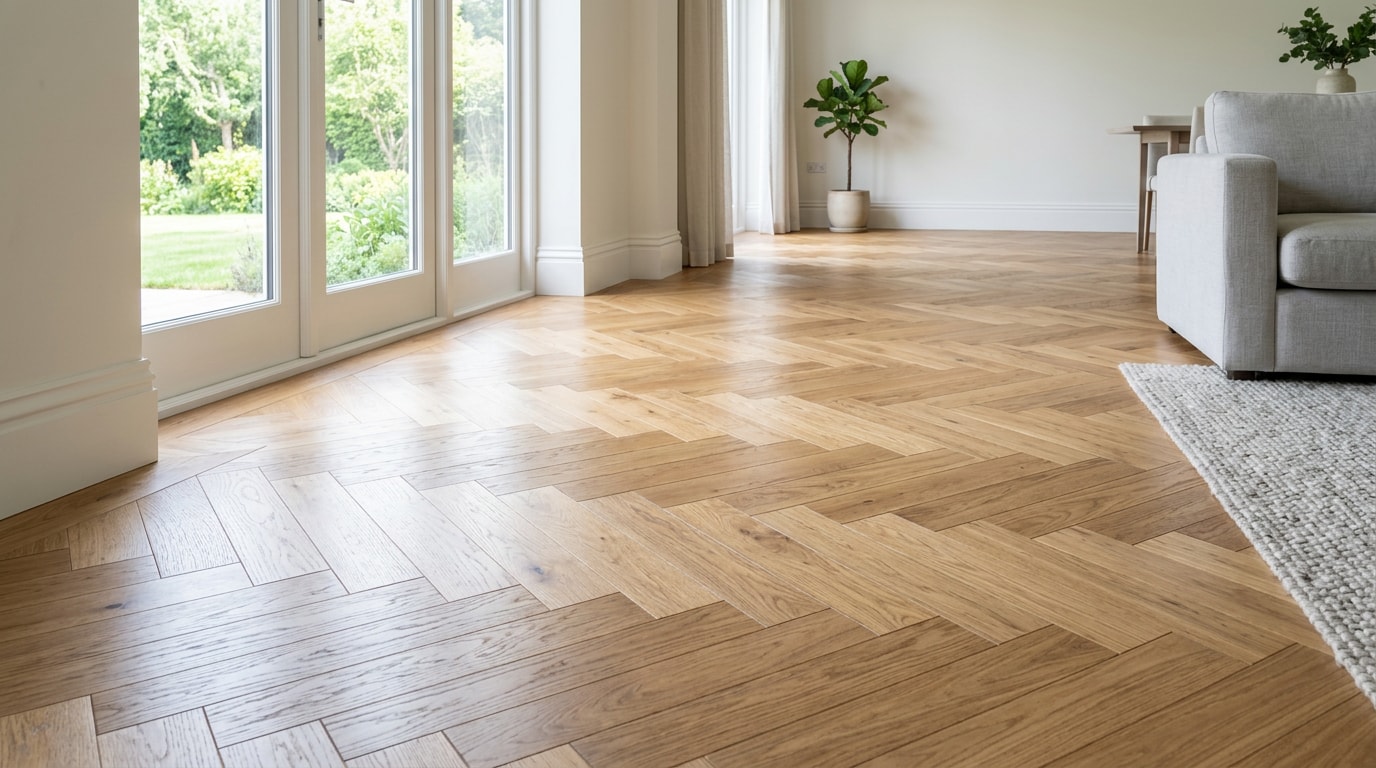
Quality flooring work in Aurora, IL starts with matching the right material to your home's subfloor and humidity swings. Worn carpet, scratched hardwood, and cracked tile each need a different fix, and guessing wrong gets expensive once boards cup or seams peak. Here's how an Aurora installation actually goes, from subfloor check to final walkthrough.
Flooring Services We Offer in Aurora, IL
Aurora's housing stock runs from century-old homes near downtown to newer builds on the Far East Side, so the right flooring choice depends heavily on the subfloor underneath. Our crews work across the full range of materials:
- Hardwood Floor Installation — solid wood, nail-down or glue-down
- Engineered Hardwood Installation — floats or glues over concrete
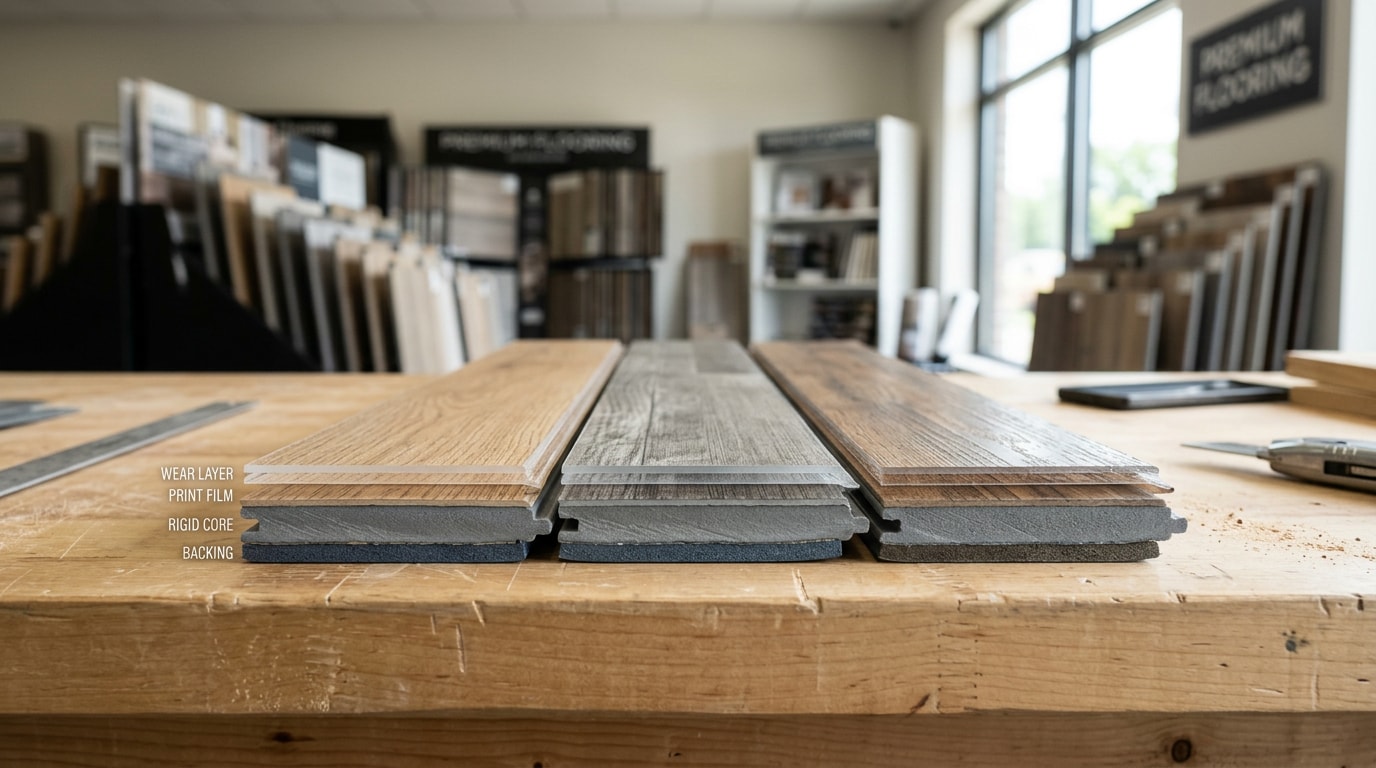
- Luxury Vinyl Plank Installation — waterproof, budget-friendly
- Carpet Installation — bedrooms, basements, stairs
- Hardwood Laminate Flooring — durable, low-maintenance
- Hardwood Floor Sanding and Refinishing — for existing wood floors
Full details on every option live on our flooring installation and repair page.
Hardwood & Engineered Hardwood
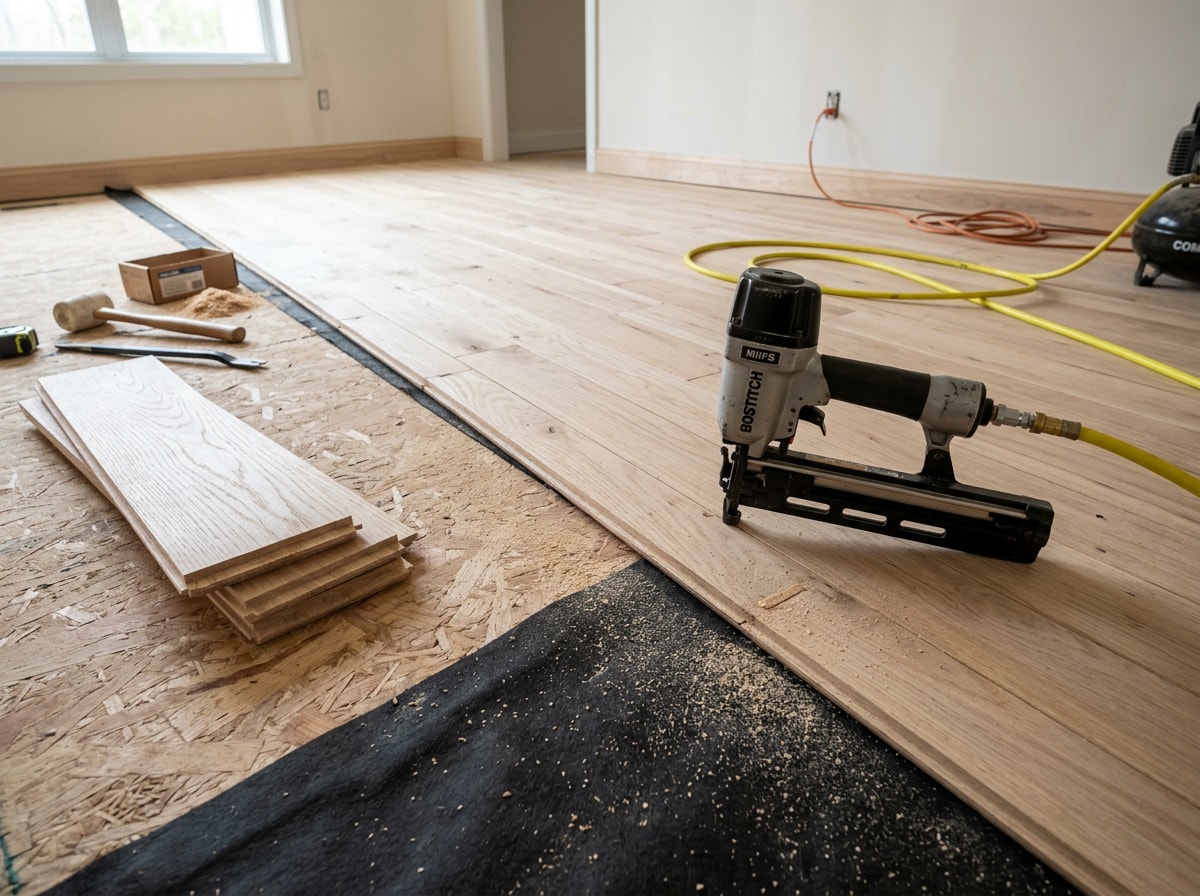
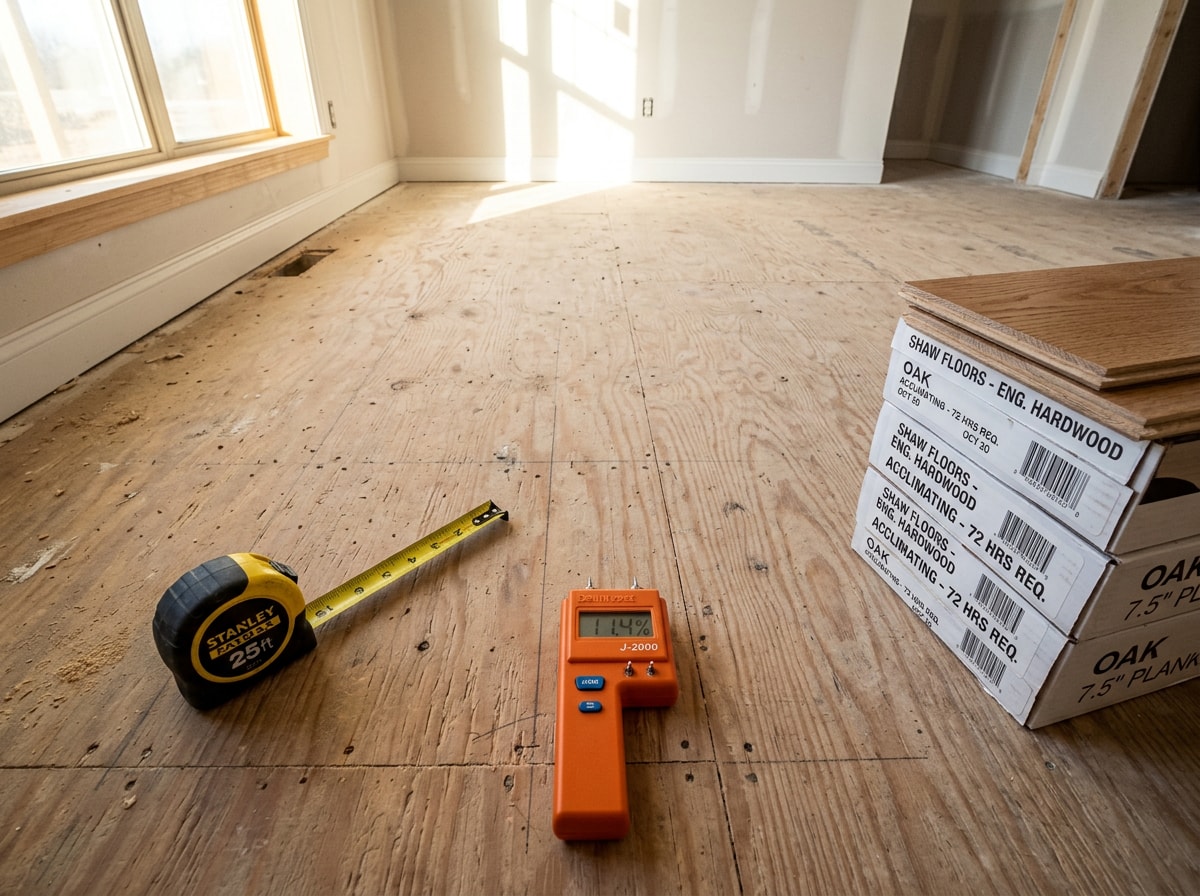
Solid hardwood generally needs a wood subfloor for nail-down installation. Engineered hardwood is more flexible and can float or glue directly over concrete, which matters in Aurora homes with slab-on-grade additions or finished basements. Before we recommend a method, we test subfloor moisture and flatness rather than guessing, following NWFA technical guidelines for acclimation and moisture tolerances.
Vinyl, Laminate & Carpet
Luxury vinyl plank holds up well in kitchens and entries where moisture is a concern, while laminate offers a similar look at a lower price point. Both need proper acclimation time indoors before installation, a step we cover in detail in our laminate acclimation guide written for a nearby Arlington Heights install. Carpet remains the top pick for bedrooms and stairs, where padding quality affects comfort and lifespan as much as the carpet itself.
How Aurora's Climate Affects Your Flooring Choice
Chicago-area homes swing from humid summers to dry, heated winters every year, and that swing moves wood. The NWFA recommends maintaining the environment at 60° to 80° and 30 percent to 50 percent relative humidity for wood flooring to perform well long-term. In an older Aurora bungalow without whole-house humidity control, that range can be hard to hold through January and July alike.
This is one reason engineered hardwood and LVP have gotten popular for additions and finished basements near the Fox River: their layered or waterproof construction tolerates seasonal movement better than solid wood over concrete. It's also why new carpet, vinyl, or laminate should air out before anyone moves back in. VOCs are emitted as gases from certain solids or liquids, and products can release organic compounds while being used and, to some degree, while stored , so we recommend ventilating the room for a day or two after any new installation, a tip backed by the EPA's indoor air quality guidance.
Why Aurora Homeowners Trust Our Flooring Team
Trust comes down to clean job sites, honest timelines, and work that fits Aurora's mix of older and newer homes. Every installer on our crew works under Illinois-required coverage: Illinois law requires employers to provide workers' compensation insurance for almost everyone who is hired, injured, or whose employment is localized in Illinois , and if you have one employee, even a part-time employee, you must obtain workers' compensation insurance , per the Illinois Workers' Compensation Commission. That coverage protects your home if something goes wrong mid-project.
You can see completed Aurora-area installs in our project gallery, and reach our team directly through the contact page with questions before you book.
How a Flooring Project Works, Start to Finish
Most projects follow the same basic sequence:
- Free in-home estimate — we bring samples to view under your actual lighting, not a showroom's.
- Subfloor check — moisture and flatness testing before any material is ordered.
- Prep and installation — old flooring removed, subfloor corrected if needed, new material installed.
- Walkthrough and cleanup — final inspection with you before we leave the site.
Installation method changes the timeline more than people expect:
| Method | Subfloor Needed | Typical Timeline | Best For |
|---|---|---|---|
| Nail-down | Wood subfloor | 2–4 days | Solid hardwood, traditional homes |
| Glue-down | Concrete or wood | 2–4 days | Engineered hardwood, basements |
| Floating | Wood or concrete | 1–2 days | Laminate, LVP, engineered hardwood |
Ready to put a date on the calendar? Get a free estimate and we'll walk the space with you before anything is ordered.
Permits & Pricing Basics in Aurora
Flooring cost depends on material, square footage, and how much subfloor repair is needed, so a flat per-square-foot number rarely holds up across different homes. Simple floor replacement usually doesn't require a permit, but projects that touch subfloor structure or add square footage often do. Aurora's permit list includes categories like Single Family Residential Remodel alongside new construction and additions, so it's worth a quick check before a larger job starts. The City of Aurora's permit page covers residential, commercial, and outside agency permits and is the fastest way to confirm what your specific project needs, available at the City of Aurora's permit list.
Commercial Flooring in Aurora
Offices, retail spaces, and multi-unit properties need flooring that holds up to heavier daily traffic than a typical home sees. We handle Commercial Flooring Services across Aurora, including Commercial Hardwood Installation, Commercial Vinyl Flooring Installation, and Commercial Carpet Installation.
Areas We Serve Near Aurora, IL
Beyond Aurora, IL itself, we regularly work in:
- Naperville, IL
- Batavia, IL
- Plainfield, IL
- Bolingbrook, IL
- Oak Brook, IL
- St. Charles, IL
- Geneva, IL
- Lisle, IL
See the full list of towns we cover, including all of DuPage County, IL, on our homepage.
FAQ
How much does flooring installation cost in Aurora, IL?
Cost varies by material type, square footage, and subfloor prep needed, so a single per-square-foot figure rarely applies across every home. Hardwood, tile, vinyl, and carpet each carry different material and labor costs. Request a free estimate for a number specific to your space.
How long does a typical flooring project take?
A small bedroom with laminate or LVP can finish in a day. Whole-floor hardwood projects can take a week or more, mostly depending on subfloor condition and installation method. We confirm a schedule once materials are selected.
Do I need a permit for flooring installation in Aurora, IL?
Simple floor replacement usually doesn't require one. Projects that change subfloor structure or add square footage often do. Check the City of Aurora permit list before work begins on a larger remodel.
What flooring services are available in Aurora?
We install hardwood, engineered hardwood, laminate, luxury vinyl plank, and carpet, plus hardwood sanding and refinishing. Commercial flooring is available too, covering offices, retail, and multi-unit properties.
What's the best flooring for Aurora's humid summers and dry winters?
Engineered hardwood and LVP tend to handle seasonal humidity swings better than solid hardwood, especially over concrete or in finished basements. Solid hardwood still works well in rooms where indoor humidity stays closer to the NWFA's recommended 30–50% range year-round.
Do you offer flooring installation for commercial spaces in Aurora?
Yes. We install commercial hardwood, vinyl, and carpet for offices, retail spaces, and multi-unit buildings across Aurora and nearby suburbs.
What areas near Aurora do you serve?
We serve Aurora along with Naperville, Batavia, Plainfield, Bolingbrook, Oak Brook, St. Charles, Geneva, Lisle, and the rest of DuPage County. See our homepage for the complete coverage area.