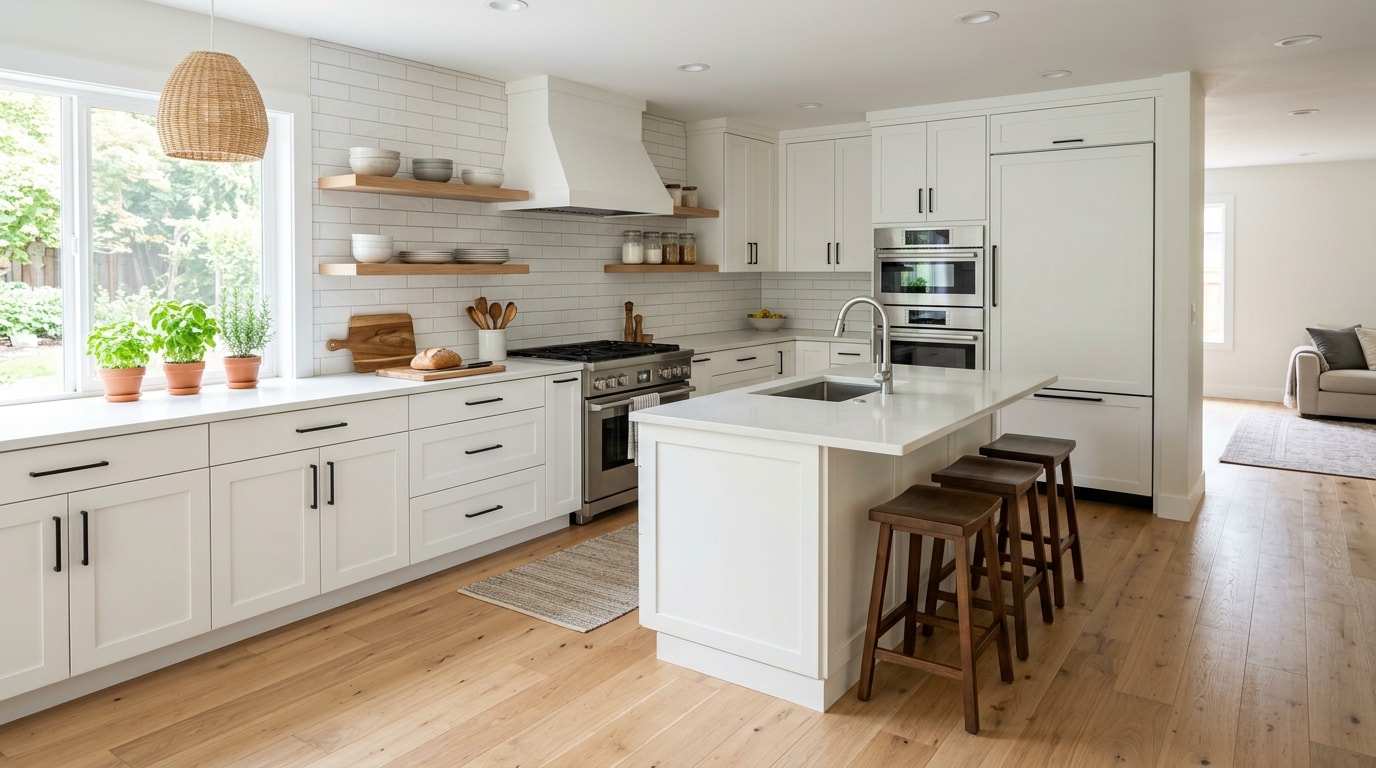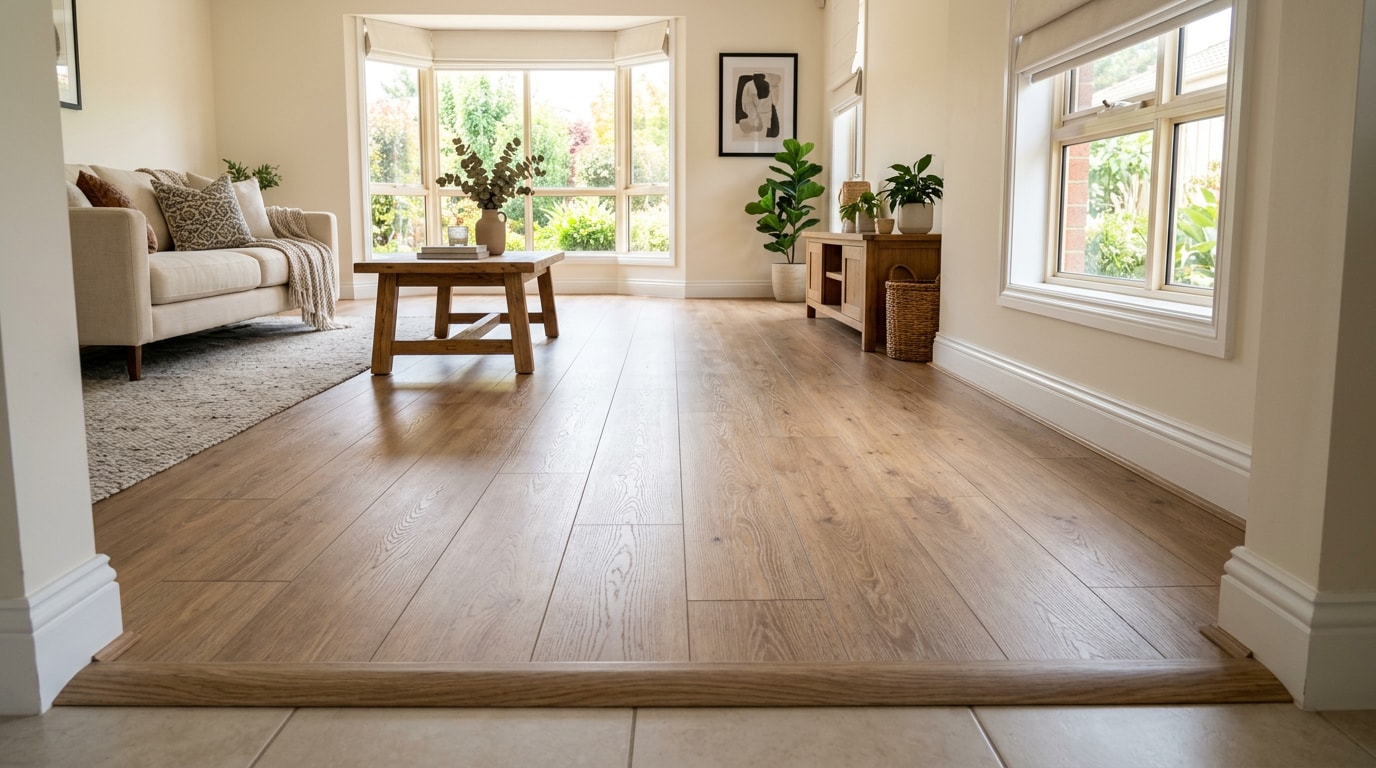
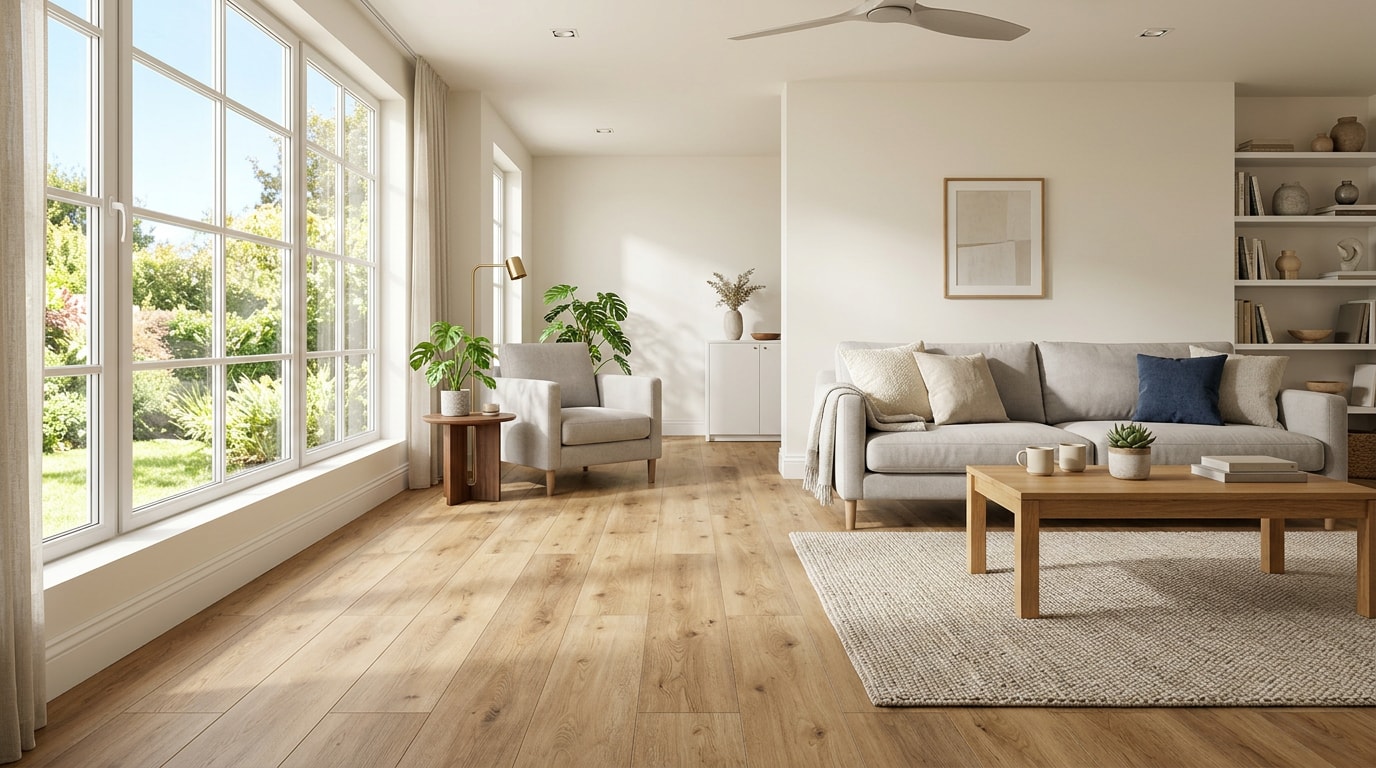
Yes, vinyl flooring does expand and contract in St. Charles, IL homes as indoor temperatures and humidity shift through the year. The movement is usually small, a sixteenth to a quarter inch across a room, and it's normal when the floor was installed with the right expansion gap. Here's exactly why it happens, how much to expect in a Fox Valley home, and how to stop small seasonal gaps from turning into a buckled floor.
Visit SCV Floorsmith Inc. to see our services and request a free estimate.
Does Vinyl Flooring Expand in St. Charles Homes?
Vinyl flooring can expand and contract as the temperatures within a building change, slightly shrinking when temperatures drop and expanding when they rise. That's true everywhere vinyl is installed, but St. Charles adds its own wrinkle: a Midwest climate that swings from humid summers to dry, furnace-heated winters.
This kind of movement is rarely a sign of a defective product. It's almost always the floor behaving exactly the way it's engineered to, provided it had room to move in the first place. Problems only show up when that room wasn't built into the install.
Our crews see this most often in sunrooms, rooms with large south-facing windows, and finished basements across St. Charles and the surrounding Fox Valley, where temperature swings between rooms are sharpest.
What Causes Vinyl Flooring to Expand?
Vinyl is made from PVC, a plastic that reacts to temperature and humidity changes, undergoing slight dimensional shifts as it absorbs heat or moisture. A few specific triggers matter most:
- Temperature swings. Direct sun through a window, a room near a heat vent, or a hot attic above a ceiling all push vinyl toward the warmer end of its range.
- Humidity. Moisture in the air gets absorbed into the material and the subfloor beneath it.
- Subfloor moisture. A damp slab or unsealed plywood subfloor can feed moisture into the vinyl from underneath, independent of room temperature.
- Installation method.
Vinyl does not expand as dramatically as hardwood or laminate flooring , but floating, glued, and sheet installations each respond differently to the same conditions.
St. Charles' Climate Makes This More Noticeable
St. Charles sits in a full four-season climate, and that's more relevant here than generic national flooring advice suggests. Local weather data shows humidity swings hard across the calendar: January and February average around 83% relative humidity, the most humid months of the year , while October runs closer to 74%, the least humid month.
That gap matters for vinyl. Damp winter air plus a furnace running for months means indoor humidity can actually spike in cold months even as the air outside feels dry, while summer brings its own moisture load through open windows and AC cycling. A floor near an exterior wall, a sunroom, or a walkout basement will show more seasonal movement than a steady interior hallway, simply because those rooms see bigger daily temperature and humidity shifts.
If you're planning new flooring and want it sized and acclimated correctly for these conditions, our flooring installation team accounts for Fox Valley seasonal swings on every project.
Types of Vinyl Flooring and How Each One Moves
Not every vinyl product reacts the same way.
- Sheet vinyl comes in large, glued-down sections, so it has little room to move and rarely shows visible gaps once installed.
- Floating LVP/LVT (click-lock) planks are designed to shift slightly at the seams, which is intentional, not a defect.
- Glue-down LVT sits in between: bonded to the subfloor, so it moves less than a floating floor but is still made from the same temperature-sensitive vinyl.
- Rigid core (SPC/WPC) vinyl has a denser core than traditional flexible vinyl and tends to be more dimensionally stable, though it's not immune to movement.
Luxury Vinyl Plank (LVP) and Luxury Vinyl Tile (LVT)
Most modern click-lock LVP is built to float, which means the planks are designed to slide slightly against each other and absorb normal movement without pressing against walls or cabinets. That's different from older glue-down vinyl, which is anchored down and has far less freedom to shift.
If you're weighing a floating LVP install for a St. Charles home, our luxury vinyl plank installation page breaks down which click-lock systems hold up best in rooms with more temperature swing, like sunrooms and walkouts.
How Much Expansion Gap Does Vinyl Flooring Need?
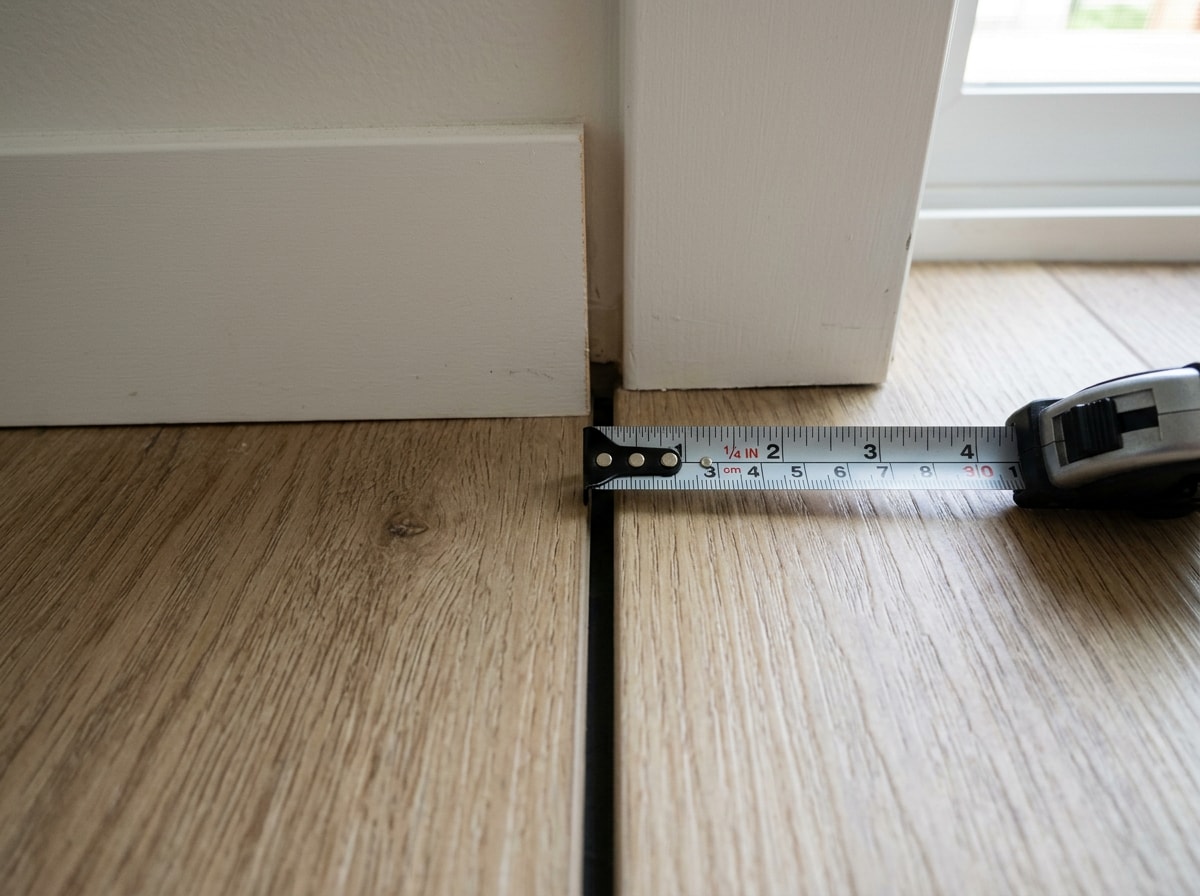
Gap sizing isn't one-size-fits-all; it depends on the product and installation method. For existing vinyl, resilient tile, and similar floating floors, the expansion space left at vertical obstructions is generally equal to the thickness of the material being installed. Some manufacturer guides go further: floor molding and transition strips typically need to provide a 3/8-inch expansion space to allow for expansion and contraction.
| Vinyl Type | Installation Method | Typical Perimeter Gap |
|---|---|---|
| Floating LVP/LVT (click-lock) | Floats over underlayment | 1/4" to 3/8" |
| Glue-down LVT | Bonded directly to subfloor | Minimal, check manufacturer spec |
| Sheet vinyl | Glued, large format | Covered by trim, minimal gap |
| Rigid core (SPC/WPC) | Floating, more stable core | Around 1/4" |
Larger or longer rooms may need a bigger gap or a transition strip to break up the run, since more linear feet means more total movement to absorb. Manufacturer instructions always override general rules of thumb, so check the spec sheet for your specific product before cutting the first plank.
Signs of Vinyl Flooring Expansion Problems
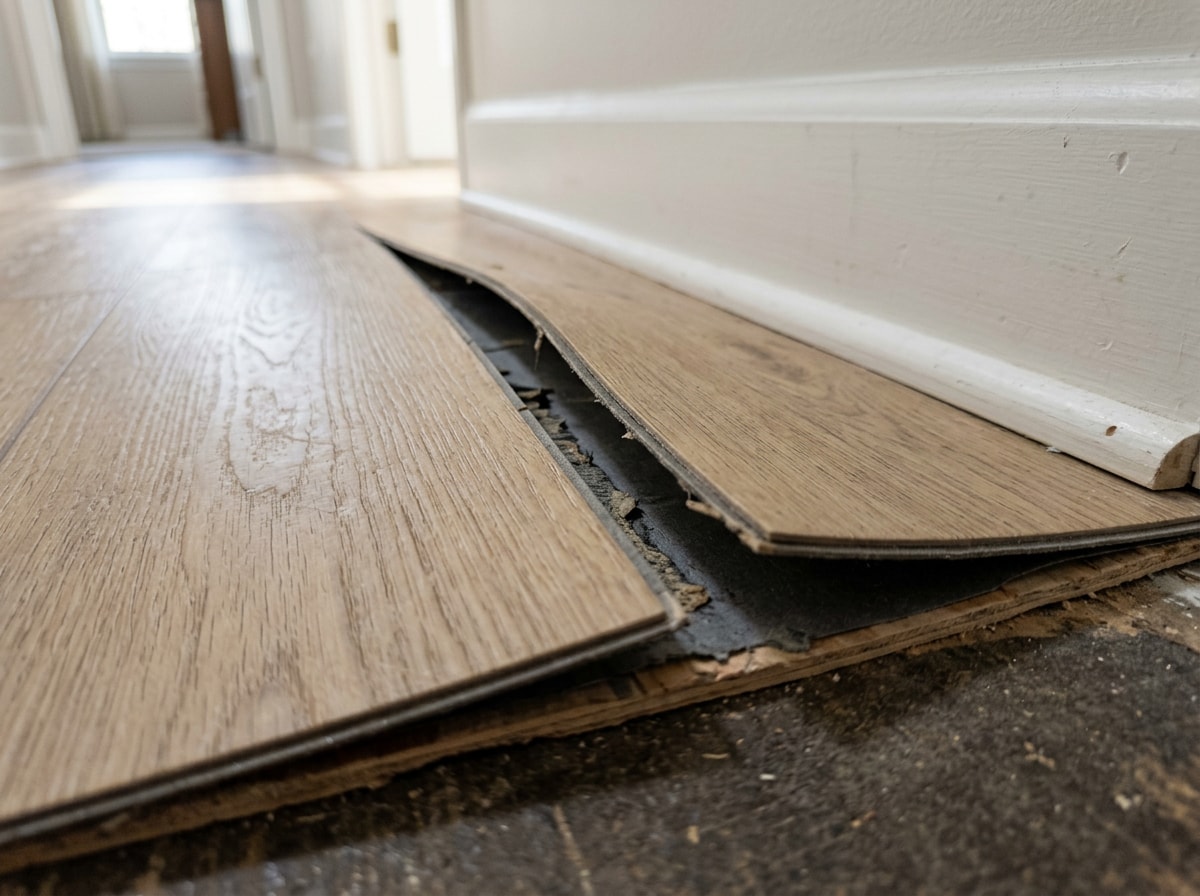
Seasonal gaps that open slightly in winter and close back up in summer are normal and cosmetic. Watch instead for these warning signs, which point to an installation issue rather than the weather alone:
- Seams that visibly separate and stay separated across seasons
- Planks that feel raised or "peaked" along their edges
- Corners lifting away from the subfloor near windows or exterior walls
- Planks popping fully out of their locking seams
- Soft or spongy spots that suggest moisture trapped underneath
Buckling happens when the floor has nowhere left to expand and pushes upward instead, usually because the original gap was too small, got filled with caulk or debris, or furniture and trim pinned the edge down. If you're dealing with any of this already, it's worth having it looked at before it spreads.
Preventing Vinyl Flooring Expansion Problems
Temperature and humidity control is the biggest lever homeowners have. Illinois health guidance recommends keeping indoor relative humidity between 30% and 60% year-round, treating levels below 30% in winter and above 60% in summer as unacceptable.
Federal guidance similarly points to keeping indoor humidity below 60 percent, ideally between 30 and 50 percent. Staying in that range protects your vinyl along with the rest of the house.
A few practical habits help:
- Run a dehumidifier in basements and humid rooms during summer.
- Keep the furnace humidifier set reasonably in winter instead of letting indoor air run bone-dry.
- Never caulk or permanently seal an expansion gap.
- Keep heavy furniture from pinning planks flush against a wall or trim.
- Address any subfloor moisture before installation, not after.
Good subfloor prep matters just as much as climate control. The subfloor needs to be clean, dry, and level before vinyl goes down, since hidden moisture or unevenness causes problems no amount of HVAC management will fix on its own. Heavy furniture and appliances concentrate weight on a few small contact points, which is why floors that can't flex properly near those spots are more prone to visible buckling; our guide on protecting vinyl flooring from heavy furniture covers how to avoid that specific problem.
If you're planning a new install or already seeing warning signs in an existing floor, it's worth getting eyes on it before a small gap turns into a bigger repair. Request a free estimate and we'll walk the space, check subfloor conditions, and recommend a product suited to how that room actually behaves through the seasons.
FAQ
Does vinyl flooring need an expansion gap?
Yes, most vinyl flooring needs an expansion gap, especially floating click-lock LVP. This small space left along walls and fixed objects lets the floor move with temperature and humidity changes without buckling or warping. Skipping it is one of the most common causes of expansion problems later.
Does vinyl flooring expand in heat?
Yes. Heat causes the material to soften slightly and increase in size, while cooler temperatures pull it back down. The effect is usually minor in a climate-controlled room, but spaces with direct sun or nearby heat sources show more noticeable movement.
Does vinyl flooring expand more in summer or winter in St. Charles?
Both seasons cause movement, just in different directions. St. Charles homes tend to see more expansion during humid summer months and more contraction during the dry winter heating season, which lines up with the humidity swings covered above.
How much does vinyl flooring actually expand?
Most quality vinyl flooring moves by a fraction of an inch across a typical room, not inches. A properly sized expansion gap is built to absorb that normal range of movement.
Can heavy furniture stop vinyl flooring from expanding properly?
Heavy furniture and appliances concentrate weight on a few small contact points, and the floor around those points still needs to move. If furniture pins a plank flush against a wall or trim, it can force movement elsewhere and contribute to buckling.
Can buckled vinyl flooring from expansion be repaired?
Minor buckling can sometimes be corrected by widening the expansion gap, removing trapped debris or caulk, and letting the floor re-acclimate. More severe buckling, popped seams, or subfloor moisture damage usually requires replacing the affected planks.