Learning how to repair laminate flooring water damage in Bartlett, IL fast can save you thousands, because once water reaches the fiberboard core of a plank, the clock on mold and permanent swelling starts immediately. Finished basements, sump pump backups, and the humidity swings between Chicagoland summers and winters put Bartlett homes at extra risk. This guide walks through the warning signs, a step-by-step repair process, real cost ranges, and the point where the damage is bad enough to call a professional.
Signs of Laminate Flooring Water Damage
In Bartlett's basements and lower levels, water problems often start quietly. A sump pump running behind during a storm, or summer condensation building up unnoticed, can soak the underside of a floor for hours before anything shows on the surface.
Watch for these signs:
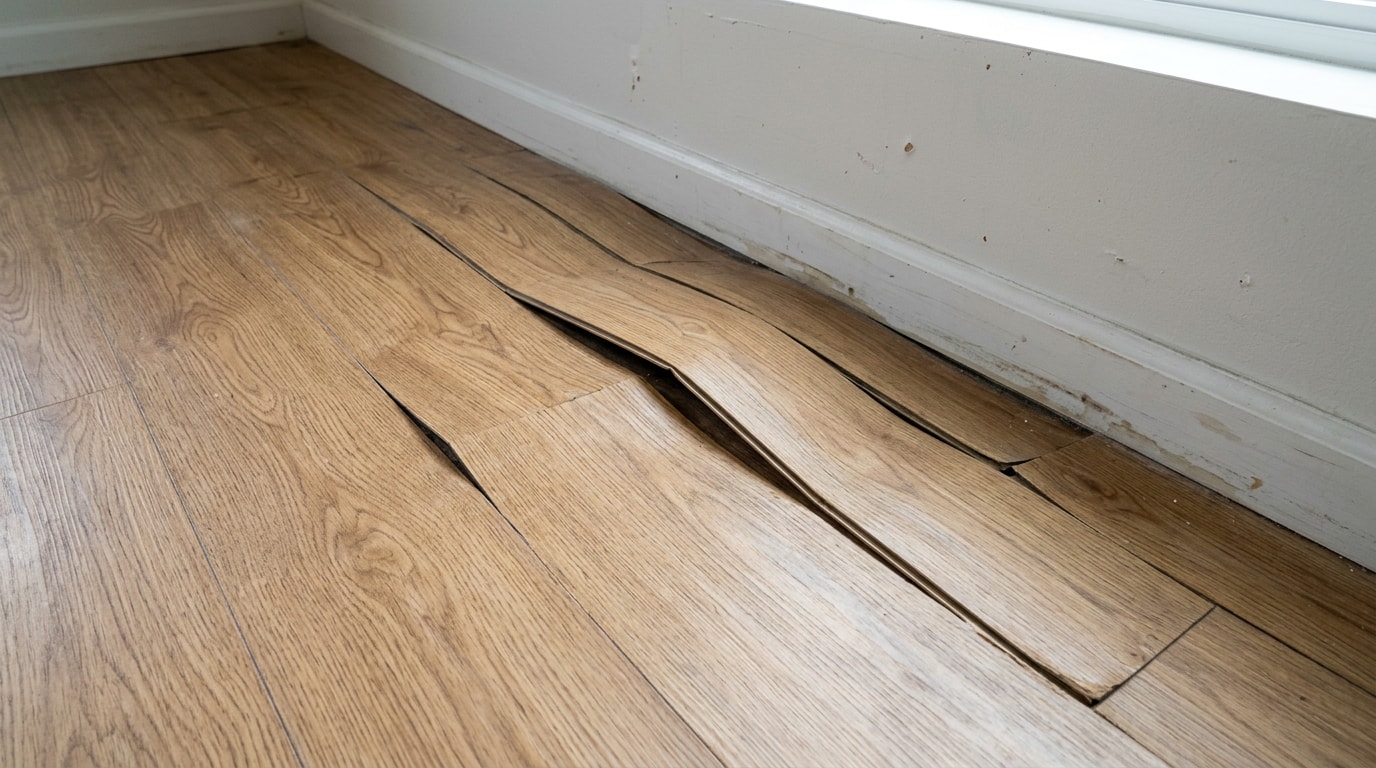
- Swollen planks at the seams
- Warping, cupping, or boards that no longer sit flat
- Soft or spongy spots underfoot
- Discoloration or dark staining
- A musty smell, which often means mold under the surface
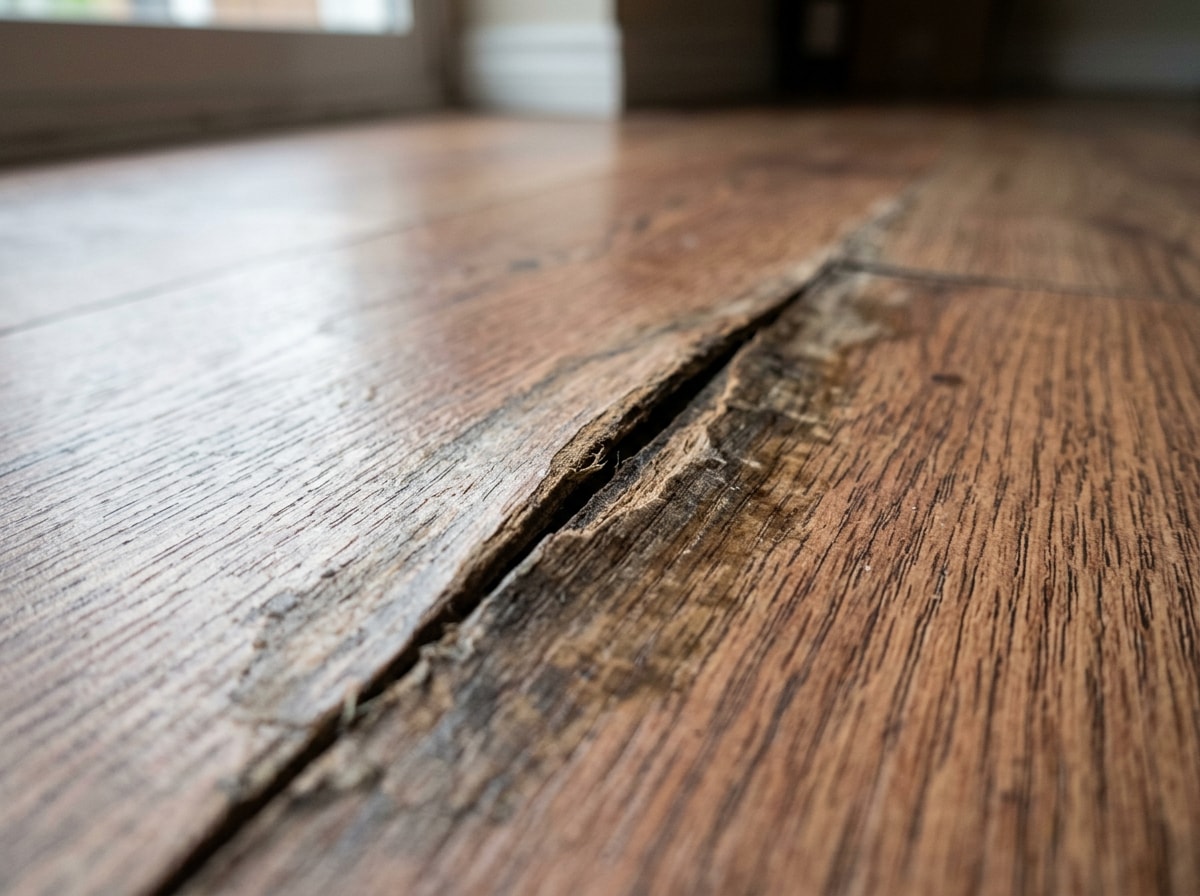
Standard laminate planks use a compressed fiberboard core, not solid wood, so once that core swells it rarely returns to its original shape. Mold risk adds urgency to acting fast: water-damaged areas dried within 24–48 hours of a leak or spill will, in most cases, not grow mold . Past that window, odds shift quickly toward remediation instead of a simple repair.
Can Water-Damaged Laminate Flooring Be Repaired, or Does It Need Replacement?
Whether a water-damaged floor can be repaired or needs full replacement comes down to two things: how much water got underneath it, and how long it sat before anyone found it.
When Repair Works
A damaged laminate floor can usually be repaired, not replaced, when:
- The water exposure was brief
- Only a few planks show swelling or discoloration
- The subfloor underneath is still dry and solid
- There's no mold or mildew
This describes minor water damage caused by a quick spill, a short-lived appliance leak, or a pet accident wiped up fast. If that matches what you're seeing, a basic tool kit and an afternoon are usually enough.
When Replacement Is Necessary
Replacement becomes the better call when:
- Water sat under the floor for an extended stretch
- Multiple planks or large sections show warping or buckling
- The subfloor has absorbed moisture
- Mold has developed underneath
- Planks feel soft underfoot
Here's a data point most repair guides skip: laminate sold under the NALFA LF-01 performance standard is tested against a specific swelling limit, and the maximum thickness swell rating allowed is 20% for residential floors and 16% for light commercial or commercial floors . Once a plank's core swells past that threshold, the fiberboard doesn't contract back the way solid wood sometimes does, which is why manufacturers treat that level of swelling as permanent rather than repairable. If you want to compare how your existing floor was rated for moisture resistance, our hardwood laminate flooring page covers what to look for before buying replacement planks.
How to Repair Water-Damaged Laminate Flooring: Step-by-Step
This sequence applies to minor, localized water damage, not sewage backups or whole-room flooding, which need professional remediation. A small DIY repair typically takes a weekend.
Step 1: Stop the Source of Water Find and stop the water source before doing anything else. Shut off the appliance's supply valve, or the main line if a burst pipe is suspected, until a plumber inspects it.
Step 2: Remove Standing Water Soak up standing water as quickly as possible with a wet vacuum, towels, or a mop. The less time water sits on the surface, the better your chances of saving the floor.
Step 3: Inspect and Mark the Damaged Areas Walk the entire floor looking for discoloration, bubbling, cupping, crowning, cracks, or buckling. Press down on each plank, feeling for movement or sponginess. Mark every affected board with painter's tape.
Step 4: Remove Baseboards and Trim Carefully pry off baseboards and trim along the affected wall with a flat bar. Set the pieces aside in order so reinstallation goes faster later.
Step 5: Remove the Damaged Planks Starting from the nearest wall, lift the marked planks along their seams rather than forcing them loose. Check the subfloor underneath each removed plank. Water under laminate often does more damage below the surface than what's visible from above.
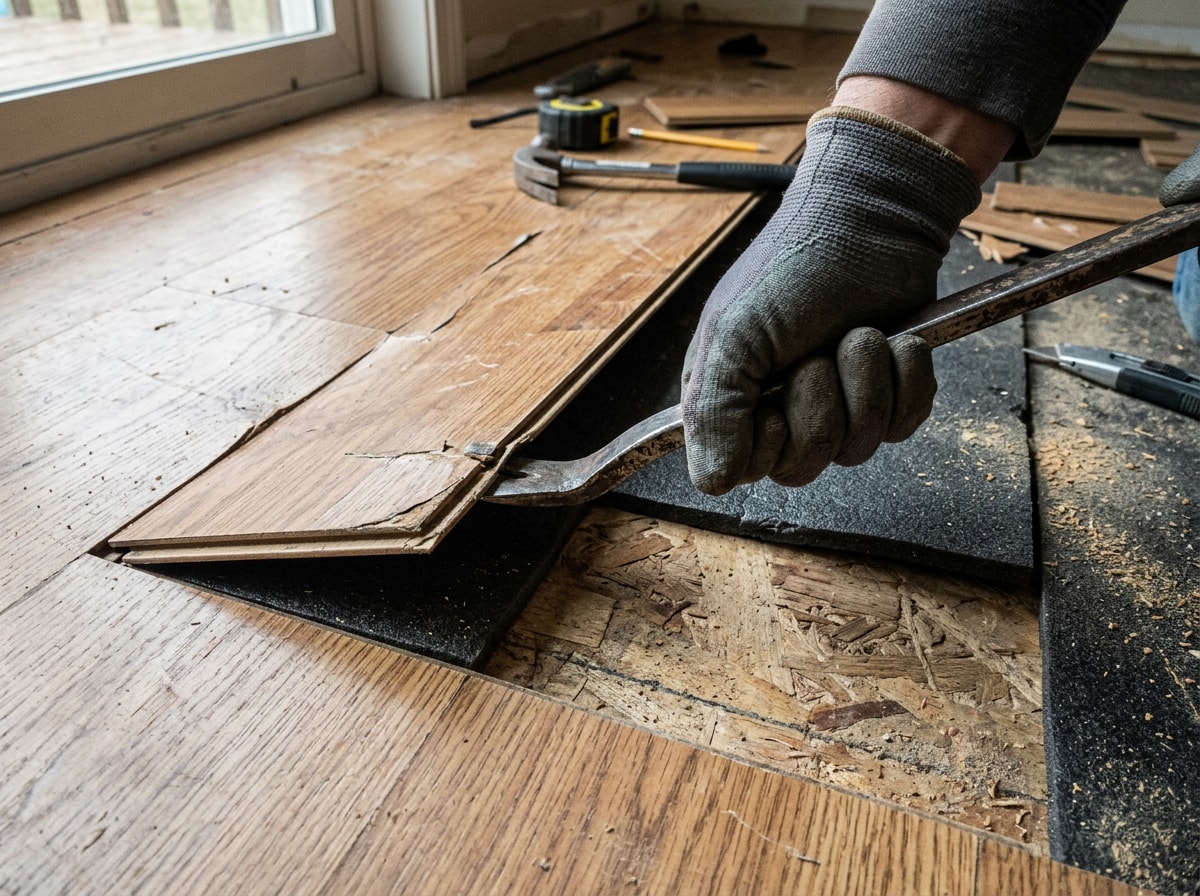
Step 6: Dry the Subfloor and Install Replacement Planks Use fans, a dehumidifier, and open windows to dry the subfloor and surrounding planks completely before installing anything new. Rushing this step traps moisture and invites a repeat repair. Once everything tests dry, install replacement planks that match the original batch or dye lot as closely as possible, then reattach the trim.
If the damage looks beyond this scope, our flooring installation and repair team handles everything from single-plank swaps to full subfloor replacement for homeowners across Bartlett.
How Much Does It Cost to Repair Laminate Flooring Water Damage?
Costs vary by how much flooring is affected and whether damage reaches the subfloor. The table below reflects the general scope-based ranges contractors in the Chicagoland area typically see; your exact number depends on plank matching, labor access, and subfloor condition.
| Repair Scope | What's Involved | Typical Range |
|---|---|---|
| Minor, localized repair | 1–3 planks, dry subfloor, no trim replacement | Lower end of the cost spectrum |
| Moderate repair | Multiple planks, trim removal, plank matching | Mid-range |
| Extensive repair or replacement | Large sections, subfloor drying, possible mold treatment | Highest end |
Water damage is a common and costly reason homeowners file claims in the first place: about one in 60 insured homes has a property damage claim caused by water damage or freezing in a given year. Homeowners insurance often covers sudden events like a burst pipe, though gradual leaks are frequently excluded, so it's worth checking your policy before you start tearing up planks. For an exact number on your project, request a free estimate and we'll scope the repair in person.
DIY vs. Hiring a Professional
Replacing a few planks yourself works if the damage is limited and the subfloor is already dry. Hiring a pro is usually worth it for speed and a clean, matched look, especially once mismatched planks become obvious across a larger area.
Call a professional if you notice:
- Mold or a musty smell once planks come up
- Soft, damp, or discolored subfloor
- Water that sat for more than 24–48 hours before discovery
- Damage spanning more than a single room
As a flooring contractor serving Bartlett and the surrounding suburbs, SCV Floorsmith has pulled up enough basement laminate after sump pump failures to know the subfloor is almost always wetter than the surface lets on. That's the detail DIYers miss most often, and it's usually what turns a one-day plank swap into a bigger job. If you're also weighing how much life is left in your current floor before deciding to repair versus replace, our guide on how long laminate flooring typically lasts breaks down the factors that shorten or extend its lifespan.
FAQ
Can water-damaged laminate flooring be repaired?
It depends on the cause and severity. Minor spills that dry quickly may only need a plank or two replaced. Severe swelling, visible mold, or subfloor damage usually means replacing entire sections. Checking the subfloor condition is the clearest way to know which category applies.
How do you repair water-damaged laminate flooring?
Stop the water source, remove standing water, and pull up the affected planks. Dry the subfloor completely before installing replacements. Skipping the drying step traps moisture and can lead to mold later. For anything beyond a small, localized area, call a professional restoration or flooring service.
How long does it take for water to damage laminate flooring?
Water can begin damaging laminate within 1 to 2 hours once moisture works into the seams and reaches the fiberboard core. Swelling often starts within 24 hours, and warping or buckling typically shows up by 48 to 72 hours. In Bartlett's finished basements, this timeline often moves faster because lower levels hold more ambient humidity and dry more slowly than above-grade rooms.
Can you just replace one board of laminate flooring?
Yes, as long as the surrounding planks and subfloor are dry and undamaged. Laminate's click-lock system allows single boards to be removed and swapped without redoing the whole floor, provided you can source a matching plank from the original batch or an inconspicuous area of the room.
Does homeowners insurance cover laminate flooring water damage?
Often, if the cause was sudden and accidental, such as a burst pipe or failed appliance. Gradual leaks, groundwater seepage, and general wear are typically excluded. Review your policy's water damage section and document the damage with photos before starting repairs.
How much does it cost to repair water-damaged laminate flooring?
Cost depends on how many planks are affected and whether the subfloor needs drying or replacement. A handful of planks is far less expensive than a job that involves subfloor drying, mold treatment, or full-room replacement. A free estimate gives you an exact number for your specific damage.