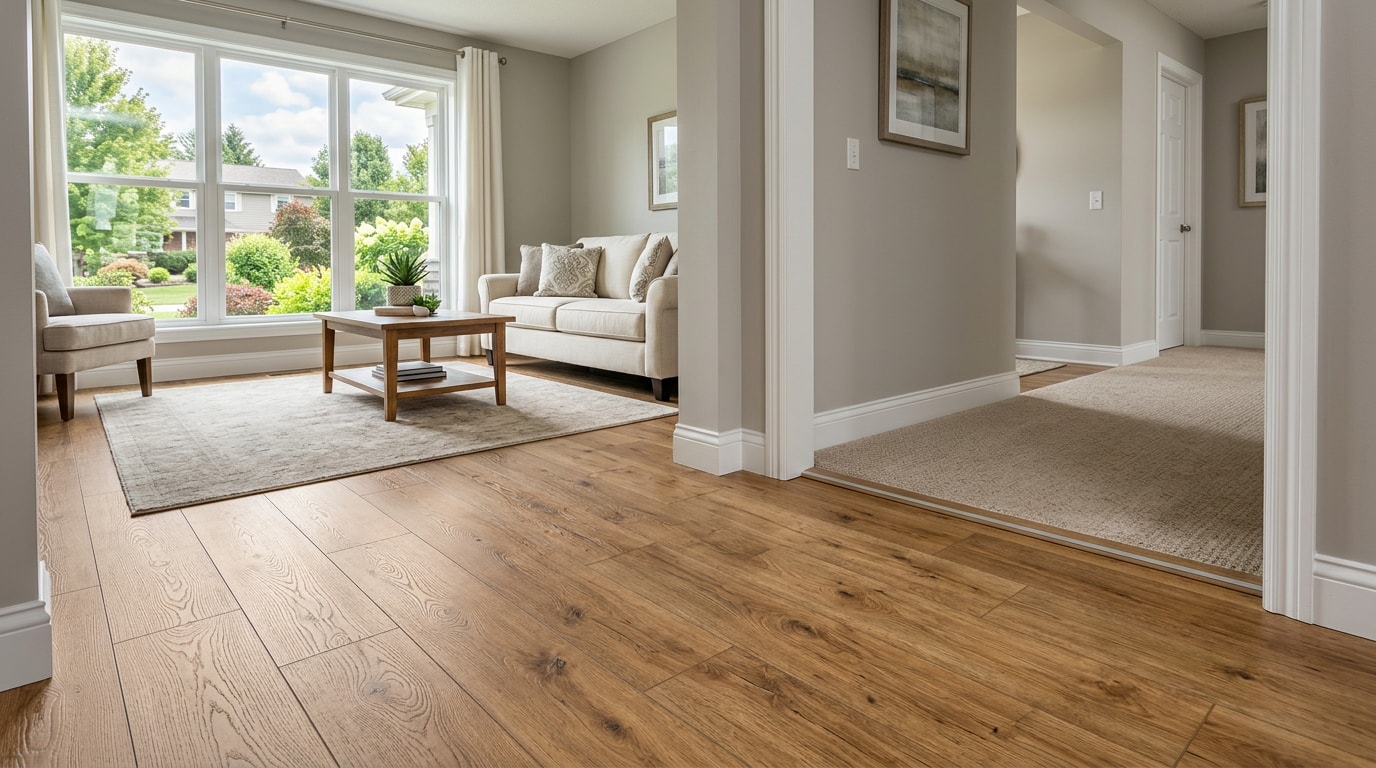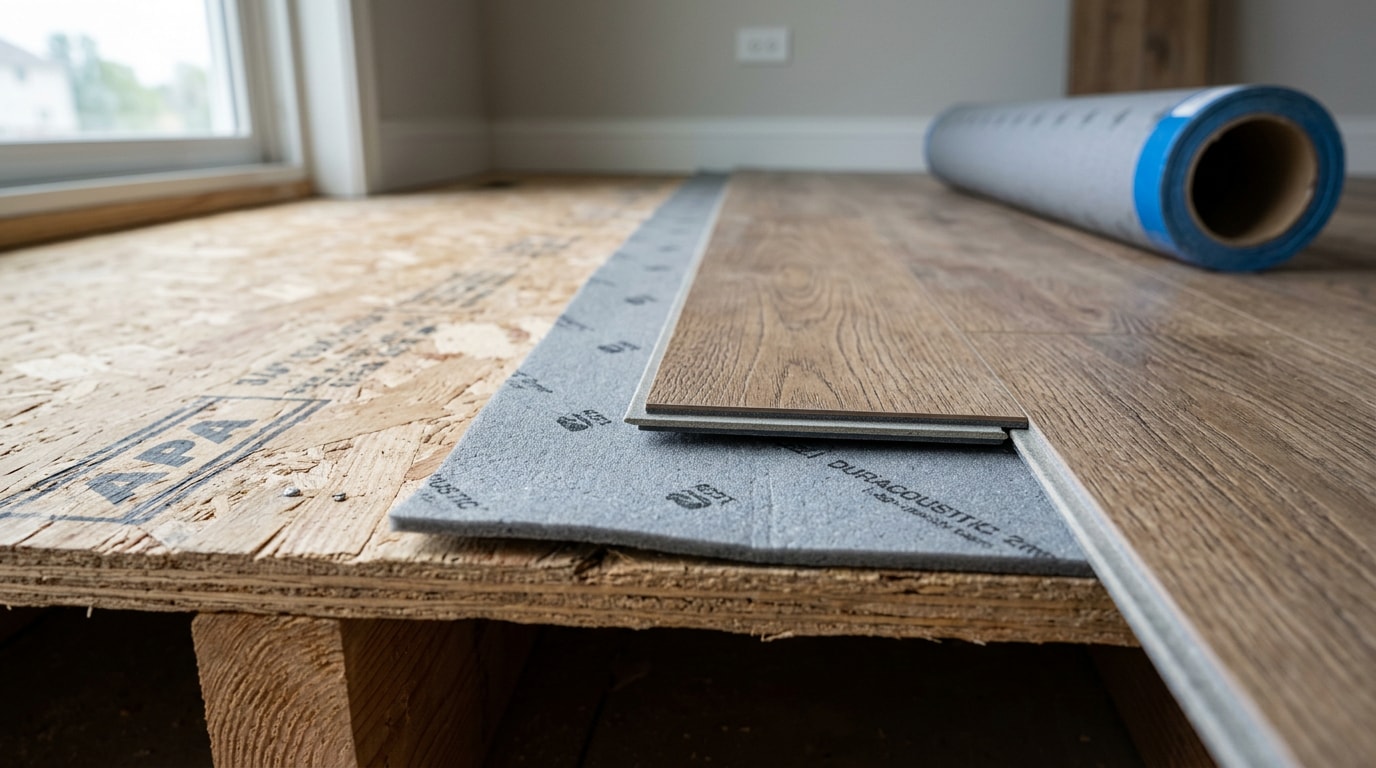
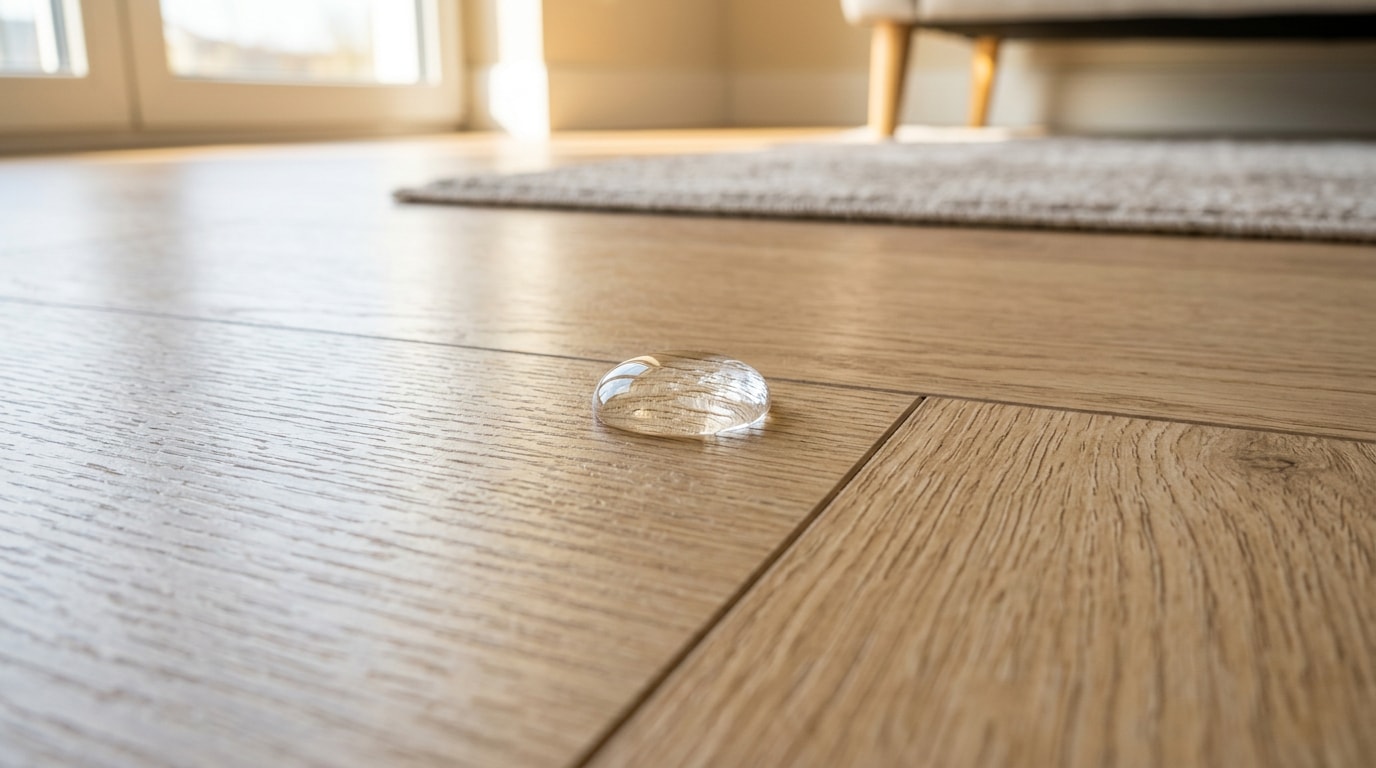
Can laminate flooring get wet in a Winfield, IL home without ruining it? A little, briefly, yes, but standing water, wet mopping, or a slow leak under the planks almost always causes damage that can't be undone. Here's what actually happens when moisture gets past the surface, how to protect the seams before trouble starts, and the exact steps to take if water is already under your floor.
Are Laminate Floors Waterproof?
Laminate flooring can handle a quick spill wiped up within a few minutes. It is not built to survive standing water, wet-mopping, or prolonged dampness. Those conditions almost always cause lasting damage.
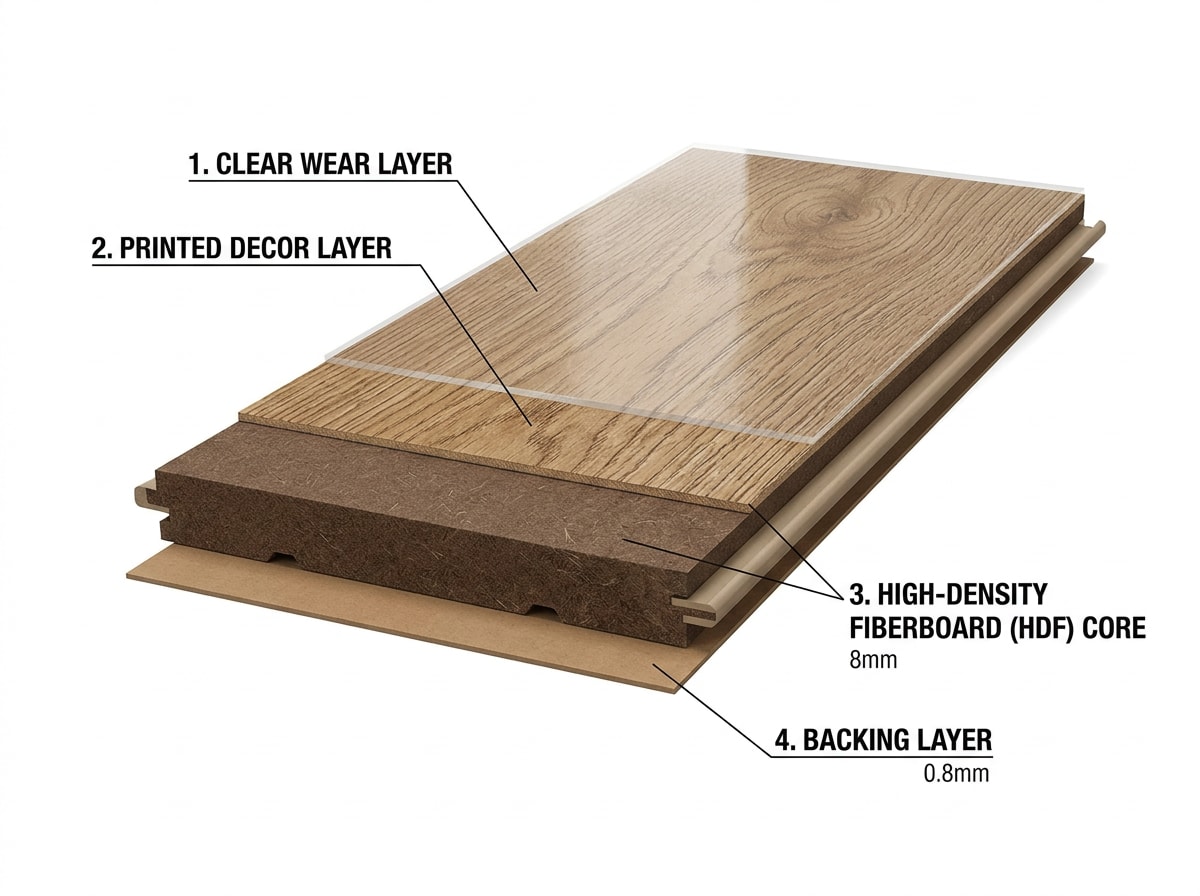
The reason comes down to construction. A standard laminate plank has a high-density fiberboard (HDF) core topped with a printed design layer and a clear wear layer. That core is compressed wood fiber, and wood fiber absorbs water. Once moisture works past the seams or the protective top coat, the core swells, and swelling in laminate rarely reverses.
Manufacturers now sell water-resistant and waterproof laminate lines built with denser cores, wax-infused edges, and locking systems designed to resist standing water for a limited window. These claims are backed by independent testing from the North American Laminate Flooring Association, whose Surface Swell Test evaluates the ability of an assembled laminate floor joint system to withstand prolonged water exposure, simulating real-world moisture conditions . Standard laminate carries no such rating, so treat it as moisture-tolerant at best, not flood-proof.
On jobs across Winfield and the rest of DuPage County, our crews see the same failure pattern every spring: a floating laminate floor installed directly over a basement slab with no vapor barrier, where moisture wicks up from the concrete long before anyone notices a visible leak. If you're unsure which product line your floor uses, our team can confirm it during a free estimate before you spend money guessing.
What Happens When Water Gets Under Laminate Flooring
Once water reaches the core, damage follows a predictable pattern:
- Swelling first — the fiberboard absorbs moisture and pushes planks upward into visible bubbling or raised seams.
- Warping next — edges curl and the floor develops an uneven, wavy feel underfoot.
- Discoloration — often shows up along joints where water pools longest.
- Mold risk — if moisture sits trapped under the planks, mold can begin growing in the underlayment and subfloor within days, not weeks.
That timeline isn't a guess. When things get wet, dry them quickly, within 24 to 48 hours, since in general all wet areas should be completely dried within 48 hours to prevent mold from growing. Past that window, you're no longer just drying a floor, you're dealing with a mold problem too.
None of this damage reverses itself. Once the core swells, the plank needs replacing, not drying out and hoping.
Comparing Flooring Options for Moisture-Prone Rooms
If a room floods regularly or sits near a water source, it helps to know what each flooring type can actually tolerate before you install anything.
| Flooring Type | Tolerance to Standing Water | Best Use |
|---|---|---|
| Standard laminate | Minutes only | Living rooms, bedrooms, low-moisture areas |
| Water-resistant laminate | Hours, if cleaned up promptly | Kitchens, mudrooms with quick cleanup habits |
| Waterproof laminate | Longer exposure, still not flood-proof | Entryways, half-baths |
| Luxury vinyl plank (LVP) | Fully waterproof core | Basements, bathrooms, laundry rooms |
For rooms where water is a constant risk, it's often cheaper in the long run to install luxury vinyl plank instead of retrofitting laminate seams over and over.
How to Protect Laminate Flooring Joints From Water
The seams between planks are the weakest point in any laminate floor, since that's where water finds the fastest path to the core. Applying a clear silicone sealant or flexible caulking along high-risk zones, sink bases, dishwasher fronts, exterior entry doors, and bathroom thresholds, adds real protection that most DIY installs skip.
A few notes before you grab a tube of caulk:
- Use a sealant rated specifically for flooring joints, not general-purpose caulk. Some adhesives discolor laminate's finish over time.
- Check your manufacturer's installation and warranty guidance first. Many brands specify exactly which joints need sealing in moisture-prone rooms.
- If your current floor was installed without sealed joints, a professional flooring installation team can usually retrofit seams in problem areas without pulling up the whole floor.
Indoor humidity matters here too. Keeping relative humidity under control reduces how much moisture laminate seams are exposed to in the first place. Keeping the relative humidity lower helps to reduce moisture problems in homes, and when relative humidity rises above 50%, moisture problems may occur. That's worth watching in Winfield basements especially, where humid summer air and a cool slab combine to push condensation right where floating laminate sits.
Common Mistakes That Cause Laminate Water Damage
Most laminate flooring mistakes come down to habit, not bad luck.
- Wet mopping laminate with a soaked mop or bucket of water. Switch to a barely damp microfiber mop instead.
- Using steam cleaners, which force hot moisture directly into seams. Stick to dry or spray-mist products made for laminate.
- Letting spills sit, even small ones near the fridge or sink. Wipe up liquid within minutes, not hours.
- Pet accidents that go unnoticed overnight. A quick wipe and dry towel pass prevents most damage if caught early.
- Skipping entry mats, which lets tracked-in rain and snowmelt sit on the floor edge. One mat at every exterior door cuts a lot of long-term risk.
How to Dry Laminate Flooring With Water Under It
If water has already made it under the planks, the first few hours matter more than anything else you do afterward.
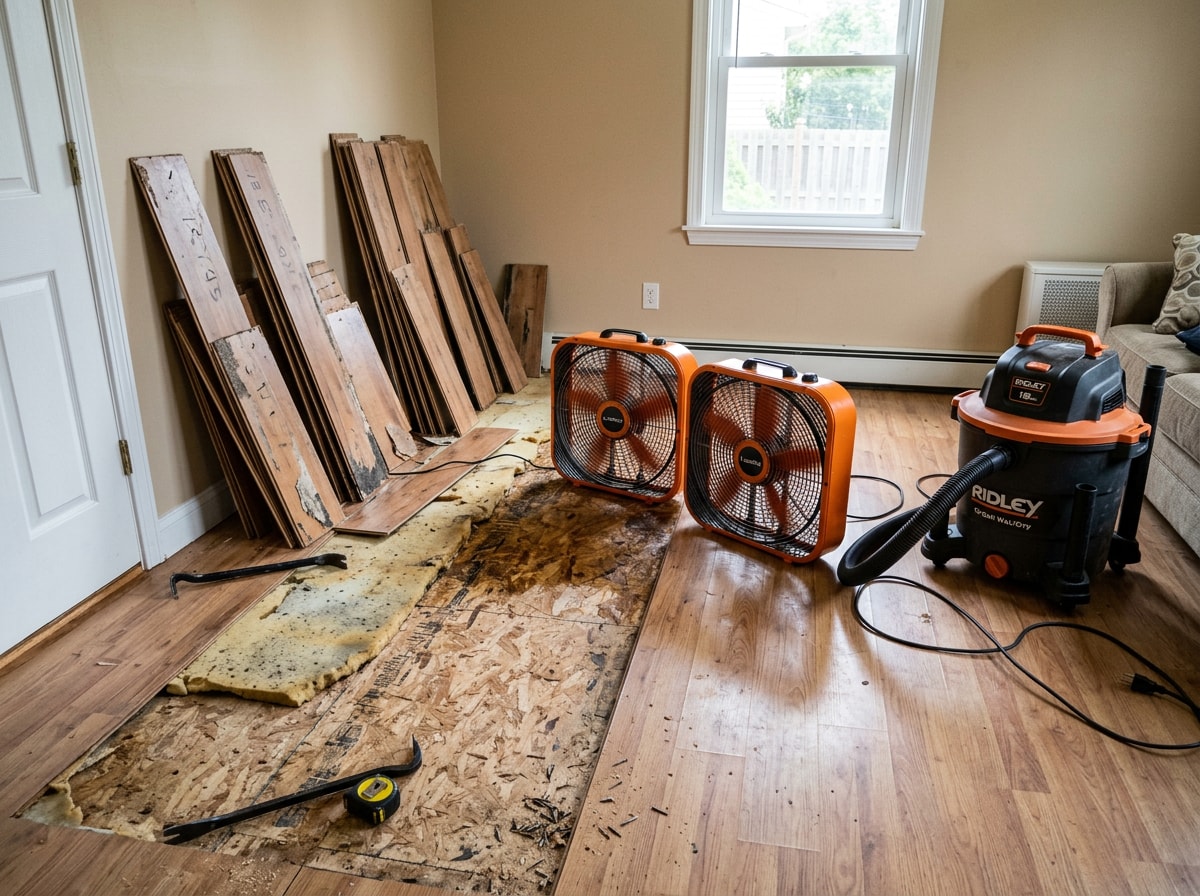
Step 1: Soak Up Standing Water and Inspect the Boards
Start by soaking up any standing water with towels or a wet/dry vacuum. Don't wait for it to evaporate on its own. Once the surface is dry, run your hand along each plank near the affected area to check for soft spots, swelling, or lifting. This tells you which boards are salvageable and which need to come up.
Step 2: Dry and Disinfect the Subfloor
If boards need to be lifted, the exposed subfloor and underlayment must dry completely before anything goes back down. Run fans and a dehumidifier for at least 24 to 48 hours, and disinfect the subfloor to stop bacteria or mold from taking hold in the humid gap. Skipping this step is the most common reason laminate underlayment ends up moldy within weeks of a "fixed" floor.
Step 3: Replace the Damaged Sections
Boards that have visibly swollen, warped, or delaminated won't flatten back out. Replace them rather than reinstalling damaged planks. This is also a reasonable point to upgrade: swapping the repaired area for water-resistant laminate or vinyl plank gives that zone real protection against the next spill. For a closer look at repairing a specific water-damaged section, see our laminate flooring water damage repair guide.
A flooring replacement specialist can usually match new planks closely enough that the repair isn't obvious, and can check the subfloor for hidden moisture while they're at it.
When to Call a Professional vs. DIY
A surface spill wiped up in minutes is a DIY job every time. Call a professional when:
- Water sat under the planks for more than a few hours.
- You smell a musty odor after a leak, even if the floor looks dry.
- More than one or two boards show swelling or lifting.
- The leak came from a slab or crawlspace, not an appliance you can see.
Homeowners throughout Winfield and nearby DuPage County can reach out through our contact page for a free estimate before small water damage turns into a full floor replacement. You can also browse recent completed projects to see how closely we match replacement planks to existing floors.
FAQ
Can I Install Laminate Flooring in Bathrooms or Laundry Rooms?
Standard laminate isn't recommended for bathrooms or laundry rooms, even though it's physically possible to install it there. These rooms see frequent splashing, condensation, and the occasional overflow, so a waterproof laminate line, vinyl plank, or SPC product is a safer long-term choice.
How Do I Protect My Laminate From Water?
Clean spills the moment they happen, place mats at entry points and near sinks, and seal plank seams in moisture-prone rooms. Skip steam cleaners and wet mops in favor of a barely damp microfiber cloth for routine cleaning.
Is Laminate Flooring Ruined If It Gets Wet?
It depends on how long the water sat and where it reached. A quick wipe-up on the surface usually causes no damage at all. Water that soaks into seams or sits under the planks for more than a day typically can't be reversed.
Is Water-Resistant Laminate the Same as Waterproof Laminate?
No. Water-resistant laminate survives short spills if you clean them up quickly. Waterproof laminate is built to handle standing water for a longer, tested window, but even waterproof products aren't meant for permanent submersion or a flooded basement.
Will Mold Grow Under Laminate Flooring That Got Wet?
Yes, if the moisture isn't dried out fast enough. Trapped water under floating laminate creates a dark, humid pocket in the underlayment, exactly the conditions mold needs to take hold within days.
Can You Fix Swollen Laminate Flooring, or Does It Need Replacing?
Swollen laminate boards don't flatten back out once the core has expanded. The fix is replacing the affected planks, not trying to dry and reuse them.
Does Homeowners Insurance Cover Laminate Water Damage?
It depends on the cause and your policy. Sudden, accidental damage, like a burst supply line, is often covered, while damage from a slow leak you ignored for months typically isn't. Check your specific policy or ask your agent before assuming either way.
Whether you're dealing with a fresh spill or a floor that's already warped, getting ahead of laminate water damage is almost always cheaper than replacing an entire room. Our team has helped homeowners across the western suburbs make that call, and SCV FloorSmith is ready to take a look at yours. Get a free estimate and find out whether your floor needs a repair or a smarter upgrade.