Protecting vinyl flooring from heavy furniture in Streamwood, IL comes down to three things: the right pads under furniture legs, smart moving habits, and knowing how your floor was installed. Skip any one of these and a sofa or dresser can leave a permanent dent within months. Here's exactly what works, backed by the same indentation standards flooring manufacturers test their products against.
Can Heavy Furniture Damage Vinyl Flooring?
Yes. Heavy furniture damages vinyl flooring in three ways: indentation from concentrated weight on narrow legs, scratches from shifting pieces, and punctures from sharp or uneven edges.
Small, repeated movements add up too. Sliding a dining chair back from the table a few times a day eventually shows up as visible wear.
Dents form because the full weight of a sofa or cabinet rests on just a few small contact points instead of spreading across the floor. Industry testing bodies maintain exact procedures for measuring this. The governing test method covers procedures to determine short-term indentation and residual indentation of resilient flooring when subjected to concentrated loads. Manufacturers run planks through this test before rating them for heavy-use rooms, which is why two vinyl products that look identical can hold up very differently under the same recliner.
How Much Weight Can Vinyl Flooring Hold?
Vinyl flooring doesn't carry a single "maximum weight" number the way a shelf bracket does. Instead, manufacturers apply a fixed static load to a sample plank and measure how much it indents, then whether it recovers.
A published specification sheet for 3mm luxury vinyl plank shows how specific that testing gets: the product carried a static load limit of 250 psi with no visually apparent indentation, and an average residual indentation under 8% per the resilient-flooring indentation standard . That kind of data point, straight from a manufacturer's technical sheet, is a far more useful guide than a generic pound figure, because real-world performance depends on plank thickness, wear-layer quality, and how the floor was installed.
Because most furniture spans several planks rather than resting on one, bulky pieces like sofas, dressers, and even refrigerators are generally safe on properly installed vinyl flooring. The installation method matters more than the furniture's total weight.
Click-Lock vs. Glue-Down Vinyl Plank Flooring
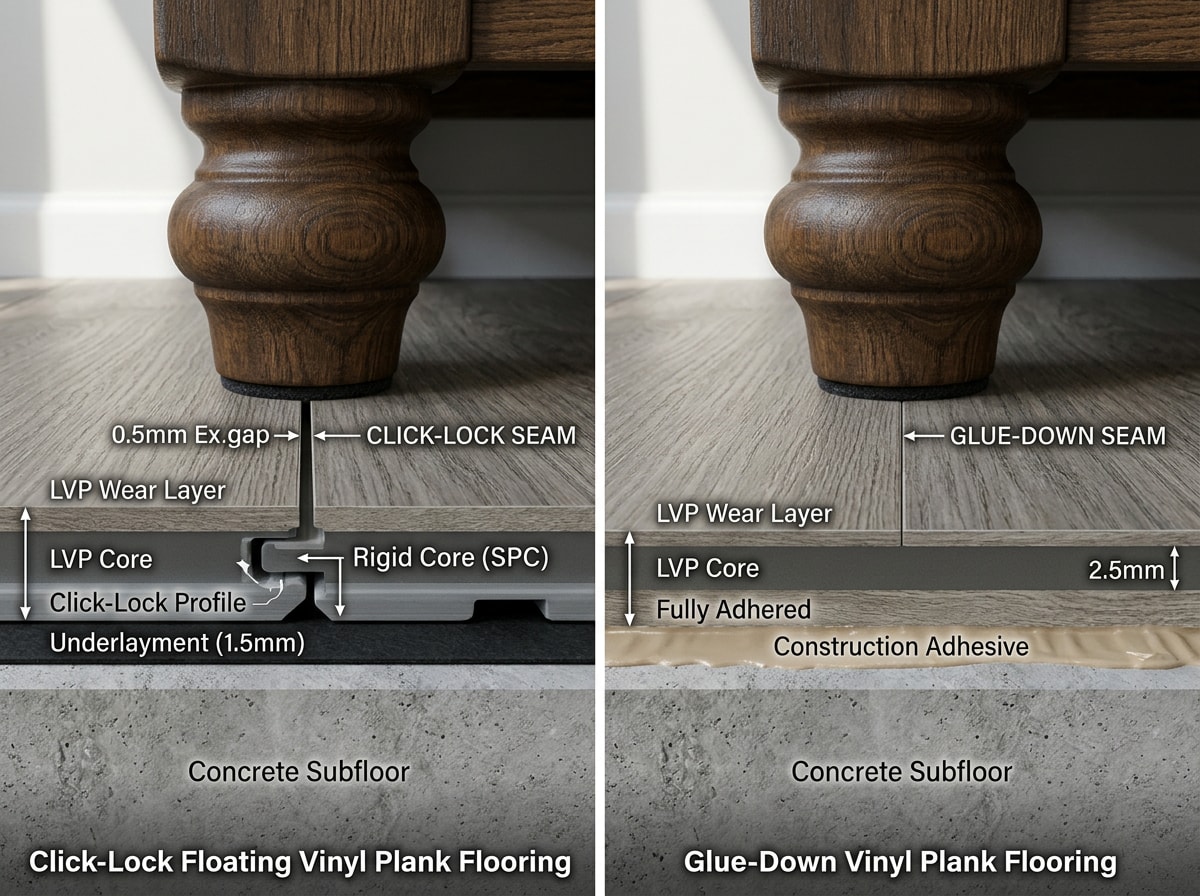
Click-lock vinyl "floats" above the subfloor, so it's more sensitive to concentrated point-loads and can shift slightly under heavy, frequently moved items. Glue-down vinyl is bonded directly to the subfloor, which generally handles heavy, stationary furniture with less risk of movement.
| Installation Type | Movement Risk | Dent Risk | Recommended Protection |
|---|---|---|---|
| Click-lock (floating) | Higher | Moderate | Felt pads, coasters, avoid dragging |
| Glue-down | Lower | Moderate | Floor protectors, wide-base furniture |
On Streamwood jobs with concrete slab subfloors, we typically install click-lock SPC product over a thin underlayment for retrofit projects, then walk clients through felt-pad placement before the first piece of furniture goes back in the room. That one extra step prevents most of the callbacks we'd otherwise get about dented corners near a sofa leg.
Heavy furniture is fine on click-lock vinyl, and the same protective habits work on glue-down planks too, though click-lock floors deserve extra caution under heavy appliances. If you're unsure which type is installed in your home, our luxury vinyl plank installation team can confirm it in a few minutes during a walkthrough.
Preparation Before Placing Heavy Furniture
Three simple tools handle most of the furniture protection a Streamwood home needs: pads, coasters or sliders, and rugs. Set these up before the piece goes into its final spot, not after you notice a dent.
Use Furniture Pads
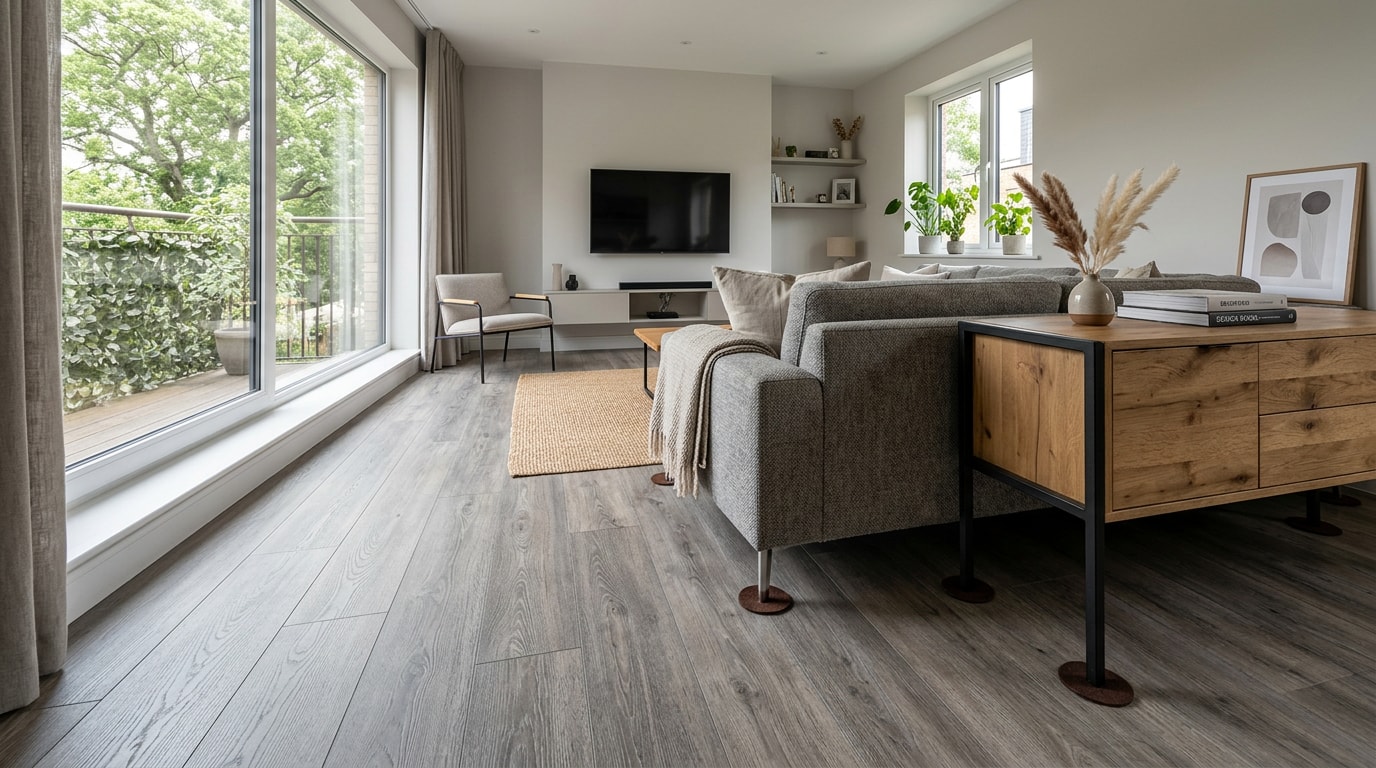
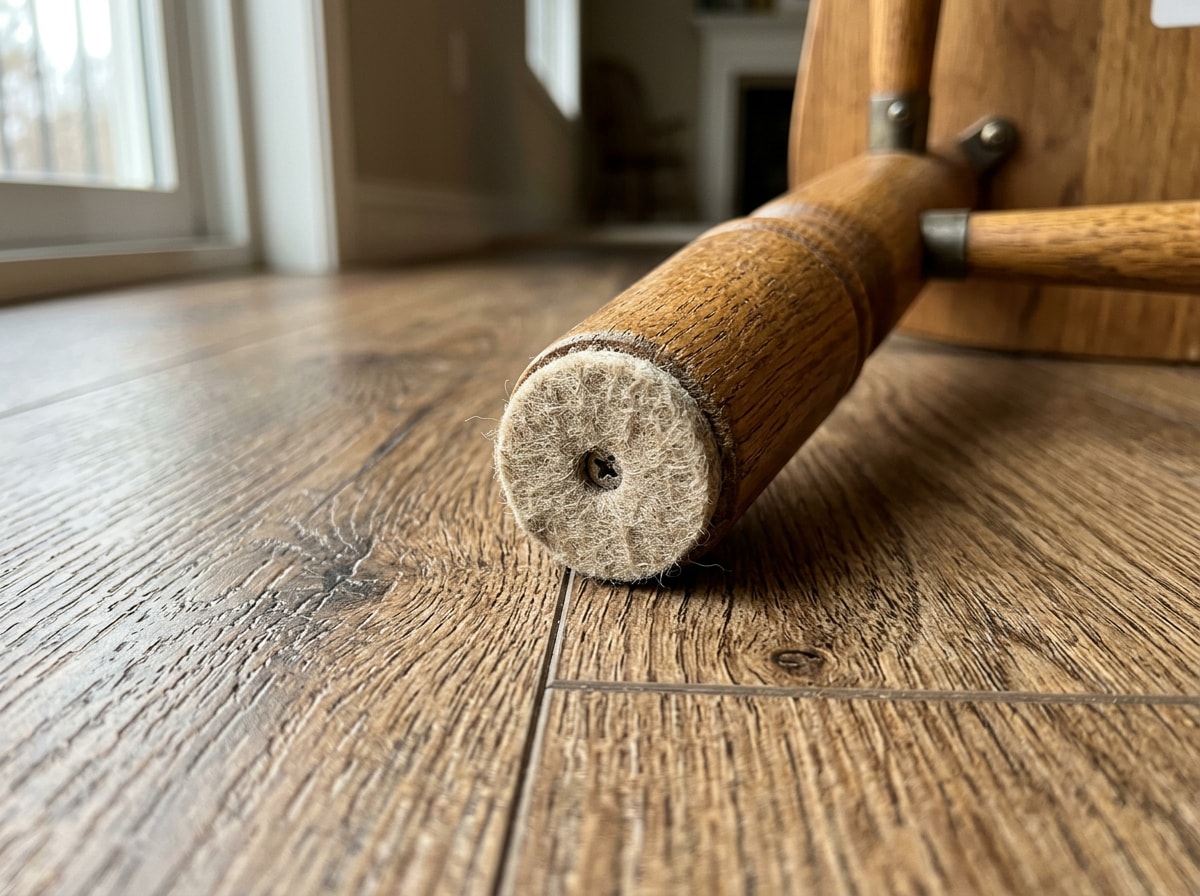
Felt pads under furniture legs create a cushion between the furniture and the vinyl, preventing both scratches and dents. Rubber pads are a poor choice for vinyl flooring, because the rubber can react with the surface and leave a permanent stain.
Silicone and nylon glide pads sit in between. They resist staining better than rubber and move smoothly, but they don't cushion weight as effectively as felt.
- Felt works best under stationary furniture like sofas and dressers.
- Silicone or nylon suits pieces you move occasionally, like dining chairs.
- Rubber should be avoided altogether on vinyl.
This isn't vinyl-specific advice invented for marketing copy, either. Soft plastic or fabric-faced glides placed under furniture legs prevent scuffing and scratching, since that kind of impact can dent any floor surface. Check pads every few months and replace them once they thin out or harden.
Use Furniture Coasters & Sliders
For heavy, rarely-moved items like sofas or dining tables, furniture coasters are a smart investment, as long as they're sized correctly for the furniture's legs or base. For pieces that need to shift occasionally, pair sliders with felt pads cut to match the furniture's footprint.
If you're planning a larger layout change or a full room remodel, our luxury vinyl plank installation team can recommend load-rated plank products suited to heavier furniture arrangements before anything gets installed.
Protect with Area Rugs or Mats
Rugs or mats under and around heavy furniture add a buffer layer that reduces direct contact and wear on the vinyl beneath it. Choose rugs with non-rubber, non-latex backing, since those materials cause the same discoloration issues as rubber furniture pads.
Habits for Moving Heavy Furniture
Dragging heavy furniture across vinyl flooring is one of the fastest ways to cause scratches and tears. When moving heavy furniture, don't slide it across the floor; pick it up completely instead to protect the flooring underneath.
Use dollies, sliders, or furniture straps to keep weight evenly distributed during a move, and get a second person to help with anything large or awkward. Moving day carries real risk of accidental damage simply because the pieces are heavy and hard to handle solo.
If you're planning a big move or remodel in Streamwood, a quick walkthrough with a flooring pro can flag problem areas before furniture goes back in place. Get a free estimate before moving day to confirm your floor can handle the layout you have in mind.
Vinyl floors also need the right layer underneath them to perform as expected over time, especially in older Streamwood homes with uneven subfloors. Our guide on underlayment requirements for vinyl flooring covers what to check before heavy furniture goes back in a renovated room.
For homeowners comparing installation types or planning a full flooring project, our flooring installation and repair team serves Streamwood and the surrounding area, and you can browse past work on our projects page or start on the homepage.
FAQ
Can I use any type of furniture pad on vinyl flooring?
No. Felt pads are generally the safest choice. Rubber pads should be avoided, since they can stain or discolor vinyl over time. Silicone and nylon glides are a reasonable middle option for furniture you move often.
Can heavy furniture cause permanent damage to vinyl flooring?
Yes. Unsupported or improperly moved furniture can cause permanent indentations, scratches, or tears. Most of this damage is preventable with pads, coasters, and careful moving habits.
How much weight can vinyl plank flooring hold?
There's no single weight limit for vinyl plank. Manufacturers test it under a fixed static load and measure indentation and recovery instead. Most household furniture, including sofas, dressers, and refrigerators, is safe on properly installed vinyl because the weight spreads across multiple planks.
What's the safest way to move heavy appliances across vinyl flooring?
Lift rather than drag. Use a dolly or appliance straps, and place a sheet of plywood or a hard protective mat under the path of travel if you're moving something especially heavy, like a refrigerator or washer.
How can I protect my vinyl flooring from heavy furniture?
Use felt pads, coasters, or sliders under furniture legs, add rugs in high-traffic zones, and always lift rather than drag heavy pieces. If you're unsure what your floor can handle, contact us for a free estimate.
About the Author
This guide was written by the installation team at SC FloorSmith, a Streamwood-area flooring contractor that installs and repairs vinyl, hardwood, and laminate flooring throughout DuPage and Cook County. Questions about a specific floor or furniture layout? Reach out through our contact page for a free, no-obligation estimate.